Kansas Tolls Rise 4 Percent. The K-TAG Gap Is Bigger
Kansas Turnpike tolls go up on September 1. Trucks with five or more axles pay 4 percent more and cars pay 3 percent. A truck running the full 236 miles pays 13 to 23 cents a mile with a K-TAG and 27 to 46 cents without one. Carry the transponder and the increase stops mattering.
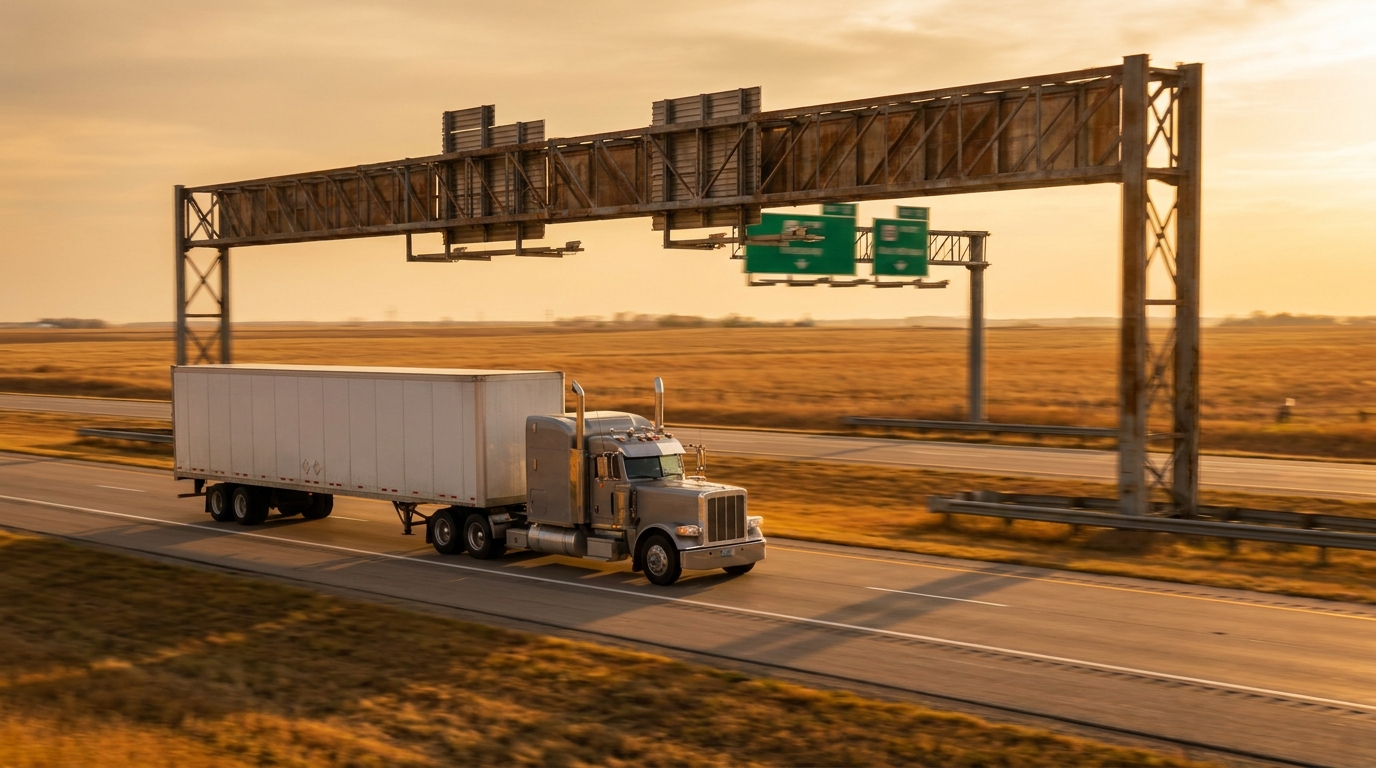
Kansas Turnpike tolls go up on September 1, and the increase is not the expensive part. Commercial vehicles with five or more axles pay 4 percent more. Passenger vehicles with one to four axles pay 3 percent more. Both numbers are small next to the one almost nobody checks.
Here is that other number. A truck running the full length of the turnpike pays 13 to 23 cents per mile with a K-TAG, and 27 to 46 cents per mile without one. Same road, same truck, same day. The transponder is worth roughly double the toll increase in a single crossing. Check that a K-TAG is mounted and readable before your next Kansas run.
Run the math on your own truck
The Kansas Turnpike is 236 miles long. Take the top of the current range and put the two lanes side by side:
- With a K-TAG, at 23 cents: about 54 dollars for the full run.
- Without one, at 46 cents: about 108 dollars for the same miles.
- The 4 percent increase on that 23-cent rate: roughly 2 dollars more on the full crossing.
Read that list twice. The rate change costs you about two dollars. Showing up without a transponder costs you about fifty. If you cross Kansas twice a month, the transponder gap is over a thousand dollars a year, and it never shows up as a line item anybody argues about.
Why the rates are going up
The increase is tied to an investment plan of nearly 500 million dollars across the system, spread over a three-year toll adjustment. The Kansas Turnpike Authority says the money goes to preserving what works and modernizing what does not.
- Redevelopment of the Emporia service area, which is a stop plenty of drivers already use.
- Interstate 70 widening projects.
- Interchange improvements and technology upgrades at locations across the state.
"Our responsibility is to preserve what works, modernize where needed and prepare the system for future demands," said Steve Hewitt, CEO of the Kansas Turnpike Authority. The authority says about 13 percent of the commerce driving the state's economy moves across its system, which is the argument for spending the money and also the reason the bill lands on freight.
Why the range is a range
The 13-to-23 and 27-to-46 numbers are not a typo. Toll rates on a turnpike are set by vehicle class and by the entrance and exit you actually use, so two trucks on the same road on the same day pay different cents per mile. What lands on your settlement depends on your axle count and on where you got on.
That is why the useful move is not memorizing a rate. It is pulling your own last three Kansas crossings and dividing the toll by the miles you ran. That number is your real rate, it already includes whatever class you fall into, and it is the only one worth carrying into a rate conversation with a broker.
A three-year adjustment is a schedule, not an event
The authority described this as a three-year toll adjustment. Read that as a calendar. The cost of running Kansas is on a planned path, and a rate you accepted before this September stops matching the road under it. Fleets that reprice once a year absorb the difference quietly, which is another way of saying the driver absorbs it.
What to do before September 1
- If you run Kansas at all, get the transponder. Not because tolls went up. Because the no-tag rate is a different price list, and it has been the whole time.
- Check that the tag is actually mounted and readable. A transponder in the glovebox bills like no transponder at all.
- Update your lane rate for Kansas runs. A three-year adjustment means this is not the last one; the number you quote today should not be the number you quoted in 2024.
- Watch construction on I-70 while the work runs. Widening projects change lane counts and shoulder access, and that is where the schedule gets eaten.
Tolls you cannot avoid, so the savings have to come from the truck: fuel burned by bad alignment, tires scrubbed off by a chassis out of spec, brake work found late. That is the work at thetrucksavers.com, and the cost beat continues here at Truck Savers News. Get the weekly TSN newsletter and see the increases before they hit your settlement.
Original source
Rates, dates and quotes verified against the trade report: Land Line Media, "Tolls going up on Kansas Turnpike".