International Recalls 15,628 MV and HV Trucks
A battery-cable routing defect can short and overheat in certain International MV and HV trucks. Fleets should check VINs and arrange the free repair.
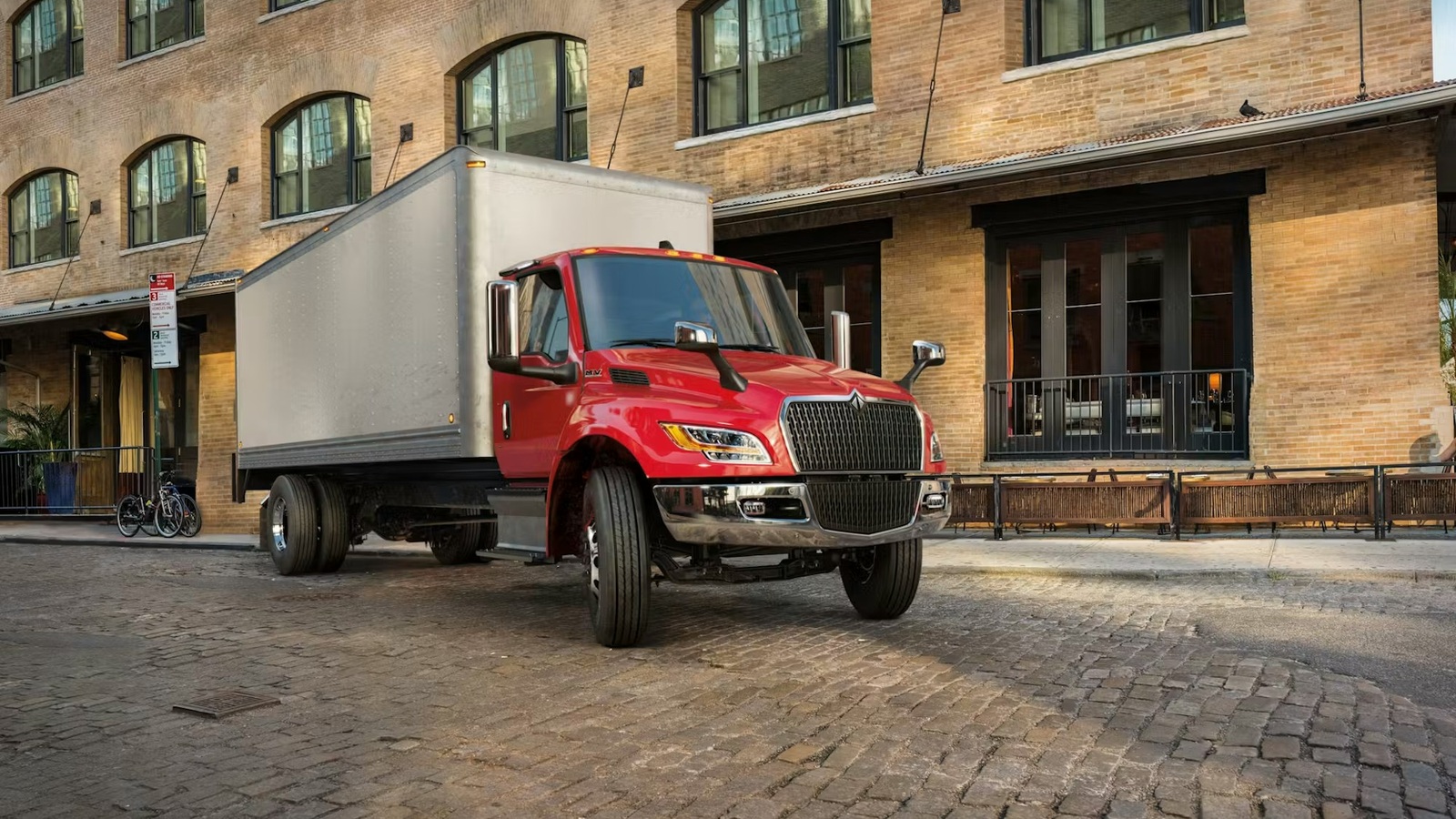
International is recalling 15,628 MV and HV commercial trucks because a battery interconnect cable can touch nearby hardware, short and create enough heat to raise a fire risk. The campaign affects specific model years and configurations, so an owner-operator should check the full VIN instead of assuming that every MV or HV is included.
Which International trucks are in recall 26V459?
The affected population includes certain 2021 and 2023–2027 International MV trucks, along with certain 2026–2027 International HV trucks. The suspect vehicles were built from September 21, 2020, through June 16, 2026, with particular feature codes and battery configurations. Model year is only the first filter; the VIN is the reliable way to confirm whether a truck is covered.
The campaign lists 15,628 potentially affected trucks. It also replaces and expands an earlier campaign, 25V534. That detail matters: a truck that already received the earlier repair still needs the new remedy completed. Fleets should not close the file merely because an old recall invoice appears in the maintenance record.
What can happen at the battery box?
Manufacturing variation can leave the positive battery interconnect cable close enough to the auxiliary stud and hold-down bracket for contact to occur. Normal vibration and movement can then turn that contact point into a short circuit. The immediate concern is electrical heat; the larger safety concern is a possible fire.
The federal record does not label this as a “Park It” or “Park Outside” campaign. That is not permission to ignore a hot-cable smell, smoke, melted insulation, repeated electrical faults or unusual heat around the battery box. A driver who notices those signs should stop in a safe location, shut the unit down when it can be done safely, keep people away from the hazard and call the carrier’s maintenance contact or roadside support. Do not touch a hot cable or improvise a repair beside the road.
Why this matters to an owner-operator or small fleet
A battery-cable fault is not only a starting problem. It can remove a revenue truck from service, damage nearby wiring and hardware, interrupt a delivery and create an emergency response. For a small fleet, the practical risk grows when affected units are spread across terminals or when the earlier campaign is mistakenly treated as final.
The disciplined response is inexpensive: build a VIN list, check every unit, mark the result, schedule the covered repair and keep the completed campaign record. Do not calculate savings or downtime from a generic industry average. Record the real appointment time, shop time and out-of-service hours for each truck so dispatch can plan around facts.
What is the free repair?
Authorized dealers will install plastic saddles on the positive interconnect cable. When the configuration requires it, they will also install wind laces and a J-bolt between each battery. The remedy is provided at no charge. Owner notification letters are expected to be mailed September 14, 2026, but operators do not need to wait for a letter before checking a VIN and contacting an authorized dealer.
The manufacturer’s campaign number is 26510, and its customer-service number is 1-800-448-7825. When calling, have the complete 17-character VIN, unit number, current mileage, operating location and any prior 25V534 paperwork ready. Ask the dealer to confirm parts availability and estimated shop time before removing the truck from dispatch.
What the road hero should check
- Run the full VIN for every 2021 or 2023–2027 MV and every 2026–2027 HV in the fleet.
- Search the maintenance file for campaign 25V534; an earlier repair does not cancel the new 26V459 remedy.
- Before dispatch, look for damaged insulation, looseness, heat discoloration or unusual cable contact around the battery box without touching energized components.
- Pay attention to a burning odor, smoke, intermittent power, slow cranking or repeated electrical faults and report the exact conditions.
- Do not move, bend or secure battery cables with an improvised roadside fix.
- Confirm the authorized dealer appointment, repair scope and no-charge status in writing.
- After service, retain the closed repair order with the VIN and campaign number in the truck’s maintenance file.
- Continue the normal pre-trip inspection of tires, brakes, lights, fluid leaks and secure battery mounting; a recall repair does not replace preventive maintenance.
If you need a documented pre-route battery-cable inspection or help organizing corrective maintenance while you arrange the authorized recall remedy, contact The Truck Savers. This inspection support does not replace the free recall work at an authorized International dealer.
Quick answers for carriers and drivers
What changed? Campaign 26V459 expands the affected MV population, adds certain HV trucks and requires a new remedy even on vehicles repaired under 25V534.
Who is affected? Owners of specific 2021 and 2023–2027 MV trucks and 2026–2027 HV trucks. VIN confirmation is required.
When does it take effect? The recall is active now; owner letters are expected September 14, 2026.
What should a carrier do? Reconcile the VIN list, contact an authorized dealer, schedule the free repair and preserve the completed record.
How can it affect costs? The repair itself is free, but unplanned electrical damage or downtime can disrupt dispatch. Plan the appointment using the fleet’s real operating schedule.
How can it affect safety? Cable contact can cause a short circuit, excessive heat and a possible fire.
What preventive maintenance is recommended? Inspect cable condition and routing without touching energized parts, keep batteries secure, document warning signs and continue the complete pre-trip inspection.
The truck warns you. The problem is when nobody listens.
Original sources
National Highway Traffic Safety Administration — campaign 26V459
Heavy Duty Trucking — affected population and build-date report