Heating Oil Exchange: Read the Supply Timetable
The heating oil exchange has a supply timetable. Check product, location and dates before revising your trip budget.
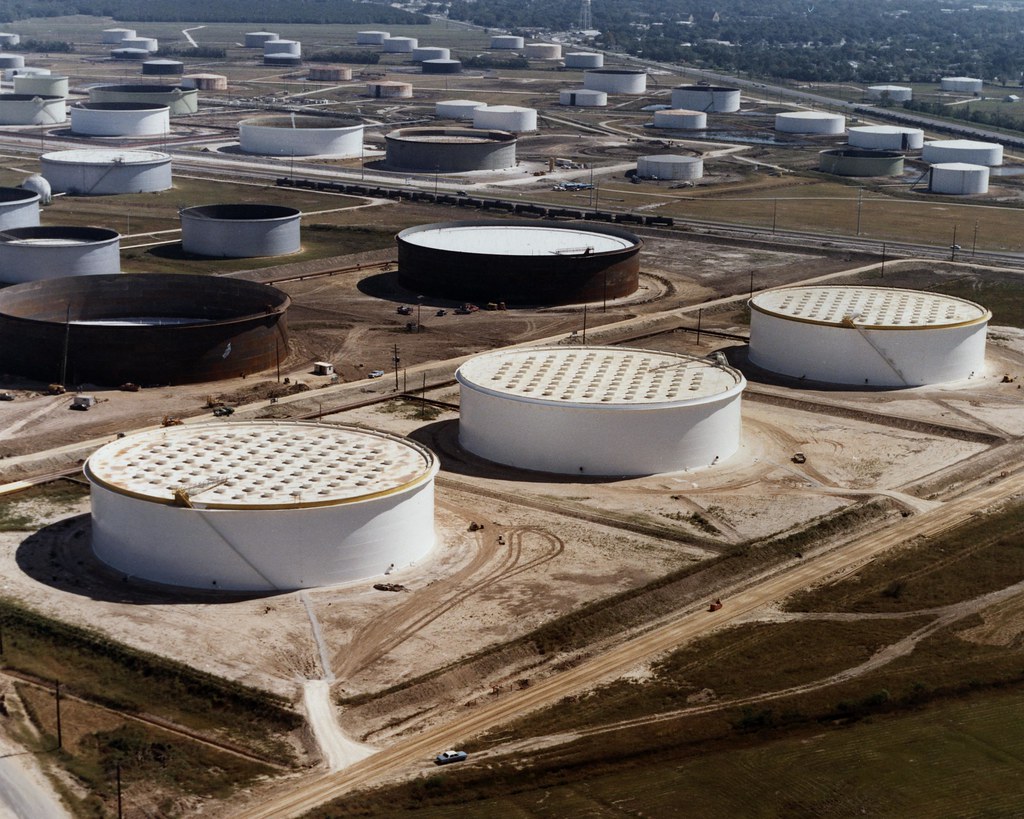
Archive illustration: crude-oil storage near Nederland, Texas; not a NEHHOR site or the announced transfer. Photo: U.S. Department of Energy, U.S. government work, unmodified. Photo source.
The Department of Energy announced an exchange of heating oil on October 21, 2026. For a carrier planning Northeast trips, the immediate task is to read the product, location and timetable correctly. The announcement is useful supply information; it does not establish the price or availability of highway diesel at your next fuel stop.
DOE is soliciting an exchange of up to 315,000 barrels of ultra-low sulfur distillate from the Northeast Home Heating Oil Reserve. Companies borrowing the product must return an equal volume plus a premium. The agency identifies storage in South Portland, Maine; Boston, Massachusetts; and New Haven, Connecticut, with transfers or deliveries scheduled for completion by November 13.
The announced volume is a ceiling
Read “up to” as part of the number. A solicitation is different from an award, and an award is different from a completed transfer. Keep those stages separate in your dispatch notes. Calling the entire announced volume delivered today would give your team a supply picture that the announcement does not establish.
Imagine a small carrier considering a Northeast reload for next week. One employee sees the reserve headline and assumes fuel will be cheaper. Another has a current route quote showing no such reduction. The practical response is to keep the quote as the planning input and the announcement as a development to monitor. This is an illustrative scenario, not a reported carrier experience.
Heating oil is the subject of this solicitation
The agency describes a heating-oil supply measure. Its statement does not provide a retail truck-stop price, a carrier fuel-card offer or an instruction to put this particular reserve product into a truck. Do not use the phrase ultra-low sulfur by itself as a substitute for identifying the product and its intended use.
For procurement, ask your supplier to identify the fuel being quoted and the requirements it satisfies for your equipment. Keep that answer with the order. This guide does not determine interchangeability or provide instructions for handling fuel. The useful office habit is to avoid replacing a product specification with a headline about a different purchase channel.
Match the dates to the decision you actually face
DOE says bids are due October 27 at 11 a.m. Central Time. That cutoff concerns the solicitation, not the time a driver should arrive at a retail pump. Likewise, the November transfer timetable is not a promise about a specific station. Label each date with the action it governs before sharing it internally.
If your dispatcher is choosing between two loads, keep a short worksheet for each: planned route, expected fuel stops, gallons used in the estimate, current quoted price and quote timestamp. Record any uncertainty beside the assumption. A dated estimate can be checked again; an unsupported promise of cheaper fuel is much harder to audit afterward.
Keep the trip arithmetic transparent
Use a clearly marked hypothetical example to test sensitivity. If a trip budget includes 150 gallons, a ten-cent change in the price assumption changes that line by $15. That is arithmetic, not a prediction of what this exchange will do. Apply your own route quantities and actual offers before changing an accepted load or customer quote.
Make the rest of the comparison consistent. Use the same trip boundary when comparing alternatives, and identify whether a figure is an estimate, an authorization or a receipt. If someone changes only the fuel-price assumption, show that change explicitly rather than presenting a completely new profit figure with no explanation.
Ask useful questions at the next supplier call
- Which product and location does this quote cover?
- When was the price checked, and how long is it valid?
- Is the quoted quantity actually available through this purchase channel?
- Which part of the trip budget changes if the offer changes?
- Who will recheck the information before dispatch?
These are suggested purchasing questions, not additional conditions imposed by DOE. They help a small operation turn a broad supply story into a manageable decision. If the supplier cannot confirm availability, leave it unconfirmed. Do not turn a possible future purchase into a completed one simply to finish the worksheet.
Carry the evidence forward after the trip
After fueling, compare the actual receipt with the assumption used when the trip was accepted. Record why they differed if you can establish the reason. A different price on a receipt does not by itself demonstrate that the reserve exchange caused it. Preserve the distinction between an observed result and an explanation that still needs evidence.
For your next route review, use the Truck Savers Finder to research businesses along the route, then confirm the relevant services and terms directly. The directory is a starting point, not proof of fuel inventory. Keep the new supply announcement in view while making dispatch decisions from current, specific information.
Original source: U.S. Department of Energy, October 21, 2026 heating-oil reserve exchange announcement. The carrier scenario, worksheet and price-sensitivity example are TSN editorial analysis.