Hazmat Registration: Check the Proof Aboard the Tractor
The hazmat certificate has its own registration period. Match the company and current proof before a covered trip.
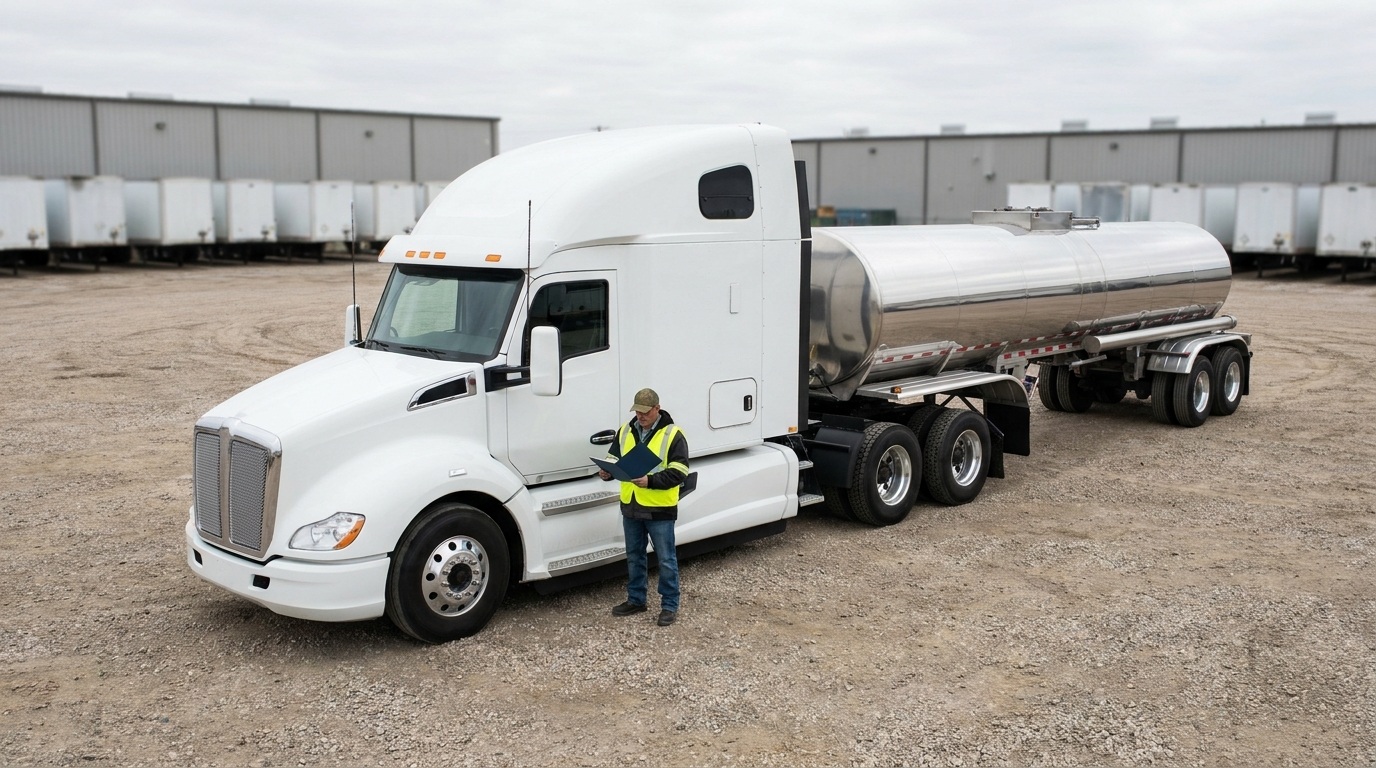
AI-generated editorial illustration; not a documentary photograph.
A USDOT number is not the same document as a PHMSA hazardous materials registration certificate. Before a trip involving materials and quantities that trigger registration, the carrier needs to identify the applicable requirement and the current proof carried aboard the truck or tractor. PHMSA's registration guidance lists the 2026–2027 registration year as July 1, 2026, through June 30, 2027. A certificate's issue date alone does not tell you which registration period it covers.
This is a document check, not a conclusion that every load called hazmat requires the same registration, permit or placard. The applicable materials, quantities, packaging and activity matter. The useful question for a small fleet is narrower: when this shipment requires PHMSA registration, does the responsible company hold it, and can the driver present the current proof for the vehicle performing the trip?
Read the covered period, not just the printing date
PHMSA says a certificate identifies the assigned registration number, the registration year or multi-year period, the issue or reissue date and expiration date. A recently printed copy can therefore represent an existing registration period rather than a new year of coverage. Conversely, a multi-year registration cannot be dismissed merely because the original issue date is older than the current calendar year.
Read those fields together. For the listed 2026–2027 registration year, the period crosses New Year's Day and ends June 30, 2027. January 1 is not the end of that registration year. A fleet document checklist should use the actual covered period and expiration rather than assuming that all annual paperwork expires in December. This prevents an internal reminder from contradicting the certificate it is meant to track.
What the driver needs aboard
PHMSA's recordkeeping guidance says motor carriers must carry a copy of the current registration certificate, or another document bearing the current year's registration number identified as the U.S. DOT Hazmat Reg. No., aboard the truck or truck tractor used for covered transportation. The guidance separately requires the registration statement and certificate to be retained at the principal place of business for three years.
An office file and an onboard document serve different purposes. Having the certificate in an employee's inbox does not by itself demonstrate that the required proof is aboard the vehicle. Before departure, have the responsible person verify which current document is available to the driver and how it will be produced for an authorized inspection. This article does not assume that an untested phone screenshot satisfies every presentation requirement.
Match the legal entity before accepting the copy
PHMSA explains that each separate legal entity is treated as a person for registration. A separately incorporated subsidiary may need its own registration when it engages in covered activities, even if its parent is registered. The guidance also says that all locations and vehicles operated by the registered person are covered by that person's registration. Those statements make the company identity more useful than a familiar logo on a document.
There is also a specific exception for a hazmat employee, including an owner-operator whose vehicle is leased to a registered motor carrier under a qualifying thirty-day or longer lease or equivalent contractual relationship. Do not apply that exception to a different arrangement merely because someone calls the load leased-on. Have the actual contract and operating relationship reviewed against the official requirements before relying on it.
Registration is not every other approval
PHMSA registration and an FMCSA Hazardous Materials Safety Permit are separate programs. The agency says some activities require both, while some highway carriers need PHMSA registration without that federal safety permit. Registration also does not replace applicable state registration or permit requirements. A current certificate therefore should not be described as universal approval for any material, amount, vehicle or route.
Keep the document review connected to the shipment classification and the carrier's authorized operation. If a shipper sends an incomplete commodity description or the paperwork names a different company, resolve that mismatch with the responsible shipping and compliance personnel. Guessing a classification or borrowing another company's certificate is not a document-management shortcut.
A departure checklist with a clear owner
The following checklist is editorial organization advice, not an additional PHMSA form. Use it after the responsible personnel establish which requirements apply to the shipment:
- Match the carrier's legal identity to the current certificate and actual operating arrangement.
- Read the registration period and expiration together, including any multi-year coverage.
- Confirm the current proof is aboard the truck or tractor performing the covered transportation.
- Keep the required office records separate from the driver's readily available trip documents.
- Check applicable safety permits and state requirements independently; do not infer them from registration.
For route-service research after the documentation is resolved, use the Truck Saver Finder and verify providers directly. A directory listing does not certify hazmat qualifications. The preventive action is to identify the correct company, read the actual period and confirm the required proof before the tractor leaves.
Original source: PHMSA registration information, current-year dates and recordkeeping requirements.