GM's Recall Fix Is Now the Thing Under Investigation
NHTSA is investigating whether GM's recall fix worked after 499 engines failed.
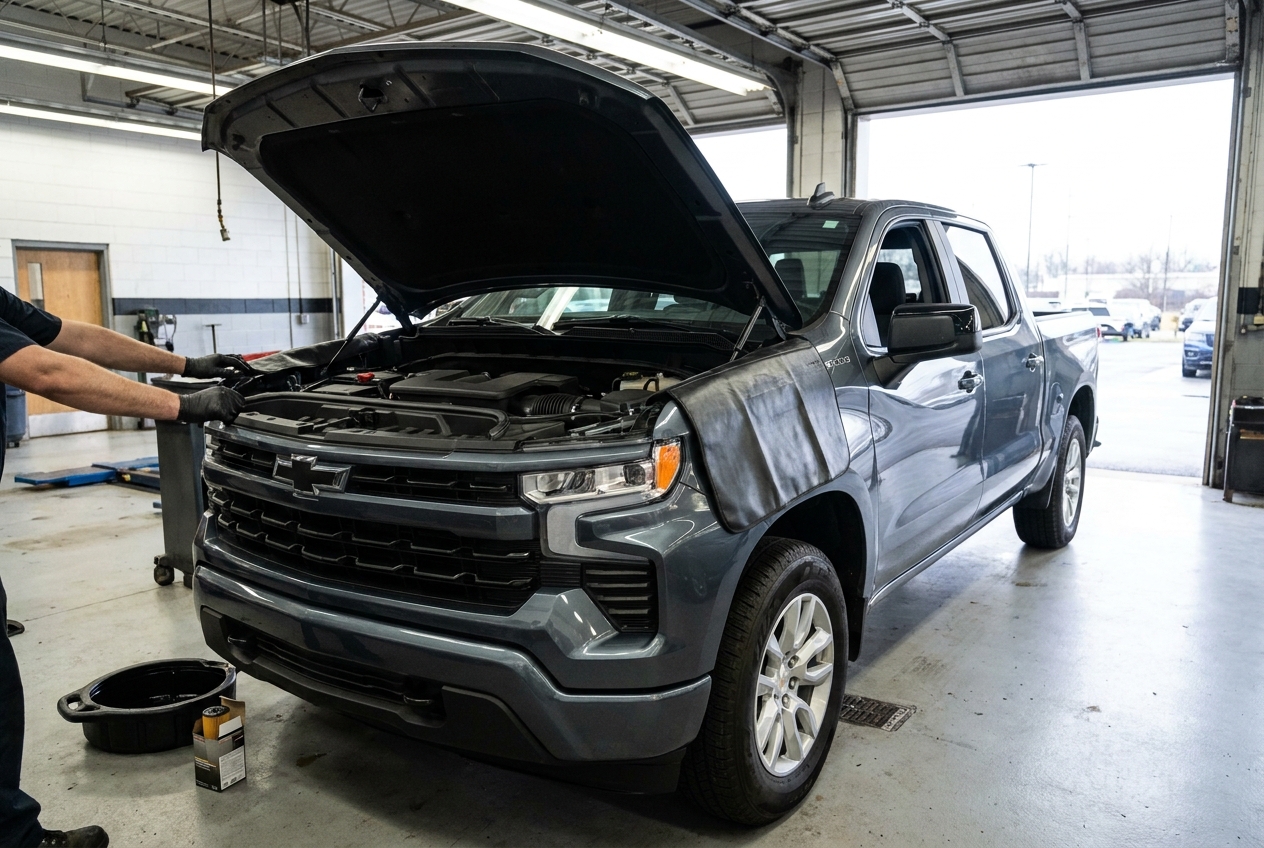
Federal investigators are no longer asking whether the engine is defective. They are asking whether the fix worked.
This week NHTSA's Office of Defects Investigation opened an engineering analysis, EA26005. It covers an estimated 997,743 trucks and SUVs, model years 2021 through 2026. Every one of them carries the 6.2-liter V8 that General Motors builds under the internal name L87.
That is a different kind of news than a recall, and for anyone who owns one it is worse.
What is on the list
Chevrolet Silverado 1500, Tahoe and Suburban. GMC Sierra 1500, Yukon and Yukon XL. Cadillac Escalade and Escalade ESV.
The underlying defect is not new. It traces to the manufacturing of connecting rods and crankshafts, which GM attributed to supplier quality problems, and it shows up as loss of motive power — the engine quits.
The part that should get your attention
In April 2025 GM recalled roughly 600,000 vehicles for this. The remedy had two paths. A dealer inspected the engine and replaced it if it failed inspection. If it passed, the truck got an oil change from 0W-20 to a heavier 0W-40, plus a new filter and a new oil-fill cap.
Investigators have now logged 499 complaints of engine failure in vehicles that had already been through that remedy. Of those, 473 failed after the oil change and 26 failed after receiving a replacement engine.
Read the second number again. Twenty-six engines that were swapped out under the recall failed anyway.
And a second question underneath
The analysis is also looking at engines built after the production window the original recall used. NHTSA has 191 reports of failures in L87 engines produced after May 2024 — units that were never on the recall list in the first place.
So the agency is chasing two things at once: whether the remedy fixes the trucks it was applied to, and whether the recall drew its boundary in the right place.
What this changes for an owner
If you run one of these as a service truck, a yard truck or the pickup that gets you to the job, the practical takeaway is short.
Having the recall performed is not the same as being past this. Four hundred ninety-nine people had the work done and still lost the engine. That is not a reason to panic and it is not a reason to assume you are covered because the paperwork says complete.
Keep the repair order from that visit, with the date and what was actually done — inspection and oil, or replacement. If NHTSA ends up forcing a different remedy, that document is what puts you in line for it.
And if the truck starts using oil, ticking under load or running rough at highway speed, do not wait it out on the theory that it was already handled. Get it looked at while it is still a noise.
Four things to have in hand
None of this requires a lawyer or a phone call to Detroit. It requires a folder.
- The VIN, written down where you can find it. Recall status is looked up by VIN, not by year and model, and the government tool that does it is free.
- The repair order from the recall visit, showing the date and which of the two remedies you got. Inspection plus oil is a different position than a replaced engine.
- What weight of oil is in it right now, and what the shop put in at the last service. If the recall moved you to the heavier grade, a later oil change that quietly went back to the light one is worth knowing about.
- A dated note of any symptom, with the mileage. A ticking noise you can put a date on is evidence. A ticking noise you remember from around spring is a story.
That folder costs you twenty minutes today and it is the difference between being part of a file and being an anecdote.
What this is not
An engineering analysis is an open investigation, not a verdict. NHTSA has not concluded the remedy is inadequate, and no expanded recall has been announced. What exists today is a file, a vehicle count and a set of complaints large enough that the agency decided to look harder.
The reason it matters now rather than later is that the window to document your own vehicle is open now. The Truck Savers™ inspects without an appointment and at no cost, and an early look at a running problem is worth more than a strong opinion about who is at fault.
Prevention before repair — the irons never lie.
Original source
Investigation number, vehicle count and complaint totals as reported from NHTSA's filing: Motor1, NHTSA expands its L87 V8 investigation.