FMCSA Proposes to Codify English Out-of-Service Rule
The proposal would make an English proficiency violation an out-of-service violation in the regulations themselves — unless the driver's current trip stays inside the border commercial zones. Out-of-service orders went from 33 to 19,045 in nine months.
FMCSA sent a proposal to the Federal Register on August 7 that would write into the regulations something that has been happening at the roadside for over a year. Most of it is not new. The sentence worth reading twice is the one about your current trip.
What the proposal actually does
The notice of proposed rulemaking carries docket number FMCSA-2026-0826 and RIN 2126-AC99. It was filed for public inspection on August 7 and published on August 10, 2026 at 91 FR 51422, pages 51422 through 51431. That start date is what matters now: comments are due on or before October 9, 2026.
It would amend 49 CFR 390.5, 390.5T and 391.11(b)(2) so that failing the English language proficiency qualification is an out-of-service violation — with one carve-out, covered below. FMCSA says the change aligns the regulations with the enforcement tolerances already in the Commercial Vehicle Safety Alliance's North American Standard Out-of-Service Criteria, and that it responds to a petition from CVSA. The agency estimates the change costs motor carriers about $14.4 million a year — and that figure is built on a headcount worth knowing: FMCSA assumes roughly 9,000 drivers a year would be placed out of service inside the border commercial zones, at $800 a day for an average of two days to get a replacement driver to the truck and the freight moving again.
Nothing changes tomorrow, because it already changed
The English requirement itself is not recent. The Interstate Commerce Commission established it on December 23, 1936, effective July 1, 1937.
What moved was enforcement. A 2016 policy memorandum told FMCSA personnel to cite a driver for a 391.11(b)(2) violation and then let the trip continue — no out-of-service order attached. Executive Order 14286, signed on April 28, 2025, directed the agency to rescind that guidance. On May 1, 2025, the CVSA board voted to add 391.11(b)(2) violations to the out-of-service criteria, effective June 25, 2025, and FMCSA issued a matching policy memo that May.
So the practical change landed in June 2025. This proposal moves it from enforcement policy into the regulation itself.
What the numbers did
The filing publishes its own before-and-after, drawn from FMCSA's inspection data.
- January 2025 to June 24, 2025: 7,812 ELP violations issued nationwide, of which 33 produced out-of-service orders.
- June 25, 2025 to March 19, 2026: 60,399 violations issued, of which 19,045 produced out-of-service orders.
Thirty-three to nineteen thousand in nine months. That is what a change in enforcement tolerances looks like on paper.
The border commercial zones, and the 44,354
Here is the number that explains why this rulemaking exists at all. Of the violations in that second window, all 19,045 out-of-service orders happened outside the U.S.-Mexico border commercial zones. The remaining 44,354 ELP violations happened inside those zones — and none of them produced an out-of-service order.
A CVSA revision dated April 19, 2026 narrowed that exception, and the proposal would put the narrowed version into the regulation.
The two-step test, and the papers that decide it
Under the April 2026 policy memo, an inspector working inside a border commercial zone has to establish the scope of the driver's current trip before deciding whether to write an out-of-service order. The filing names exactly what that determination rests on: bills of lading, dispatch records, equipment interchange receipts, driver statements and other related shipping documents.
- If the current trip would take the driver outside the border commercial zones, the driver is placed out of service.
- If the current trip stays inside them, the driver is not — even if the cargo itself is ultimately destined outside the zone with a different driver.
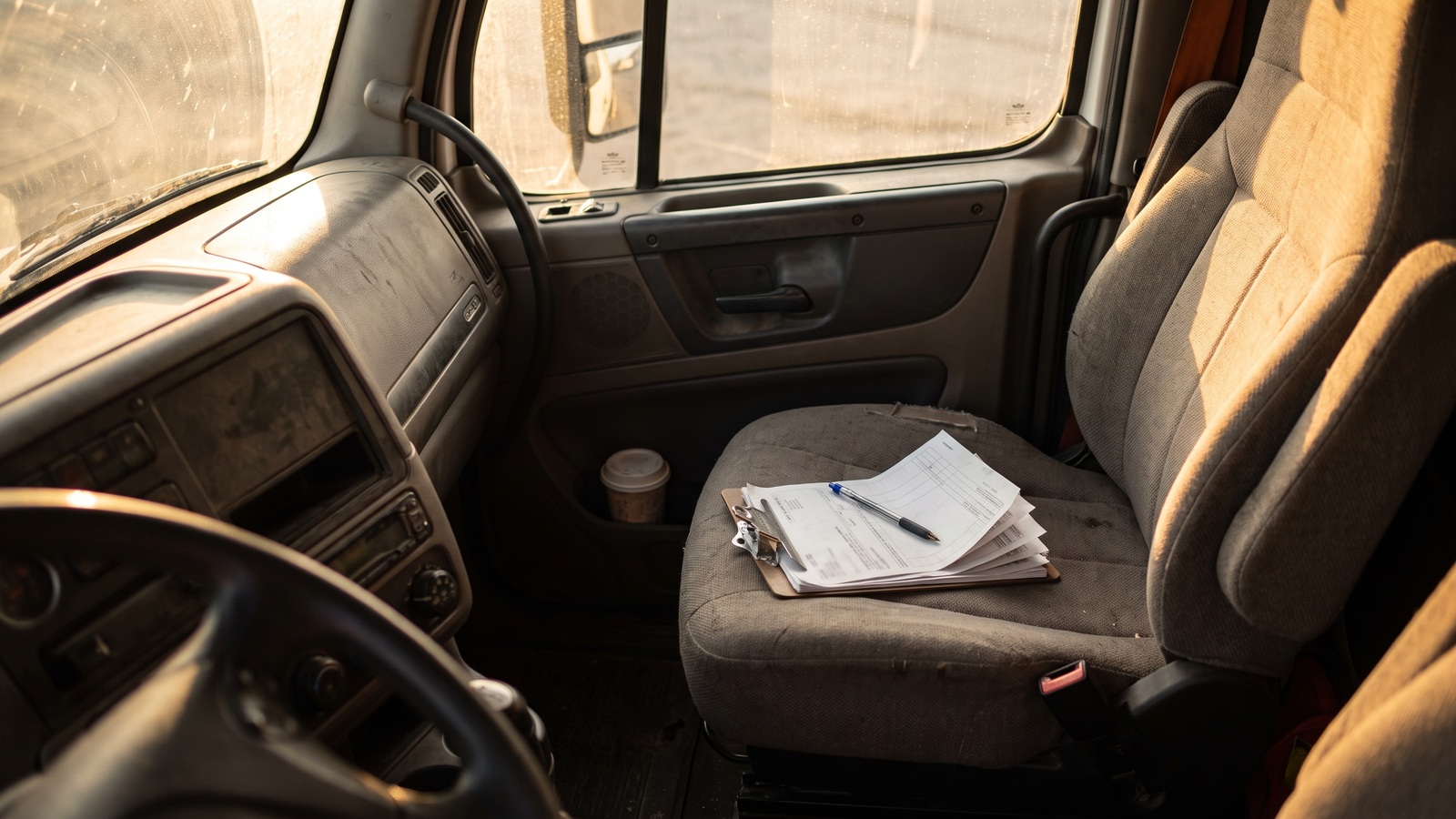
Read that second bullet slowly if you run drayage. The test is about where this driver is going on this trip, not where the freight eventually ends up. Which means the answer lives in the paperwork on the seat, and a trip record that cannot show its own scope leaves the question open at exactly the wrong moment.
One exception that stays put
Regulatory guidance from 2014, at 79 FR 59139, still stands: a driver who holds an FMCSA exemption from the hearing standard at 391.41(b)(11) is not treated as unqualified under the English requirement, provided the driver can read and write English.
What to do with this before October
Two things are worth doing while the comment window is open.
Tighten the trip record. If your work touches a border commercial zone, the document that answers the two-step test is the same one you already carry. Making sure the bill of lading, the dispatch record and the interchange receipt each state the scope of the current trip is not new paperwork — it is making the existing paperwork answer the question an inspector is now required to ask.
Comment if it affects you. Anyone can file on docket FMCSA-2026-0826 — directly on the federal rulemaking portal, by mail, or by fax at (202) 493-2251 — until October 9, 2026. FMCSA asks commenters to include the docket number and to say which section of the document the comment addresses and why. And it asks two questions a border operator can answer better than the agency can: how long a replacement driver actually takes to reach the vehicle, and how long the driver in violation stays out of service. Those are the numbers behind the $14.4 million.
And keep the status straight: this is a proposal, not a final rule, and what it contains can change after comments. What is in force today is the enforcement policy, and that has been in force since June 25, 2025. Compliance dates like this one land weekly in the free Truck Savers News newsletter, and our regulation and maintenance coverage for operators is collected at thetrucksavers.com.
Original source
All figures and dates taken directly from the filing: FMCSA notice of proposed rulemaking, English Language Proficiency; Out of Service Criteria, document 2026-16288, Docket FMCSA-2026-0826, RIN 2126-AC99, filed for public inspection August 7, 2026 and published August 10, 2026 at 91 FR 51422.