Five MPH Buys 46 Minutes Over 600 Miles
Five mph buys less than an hour over 600 miles. Compare those minutes with your own fuel records before paying for speed.
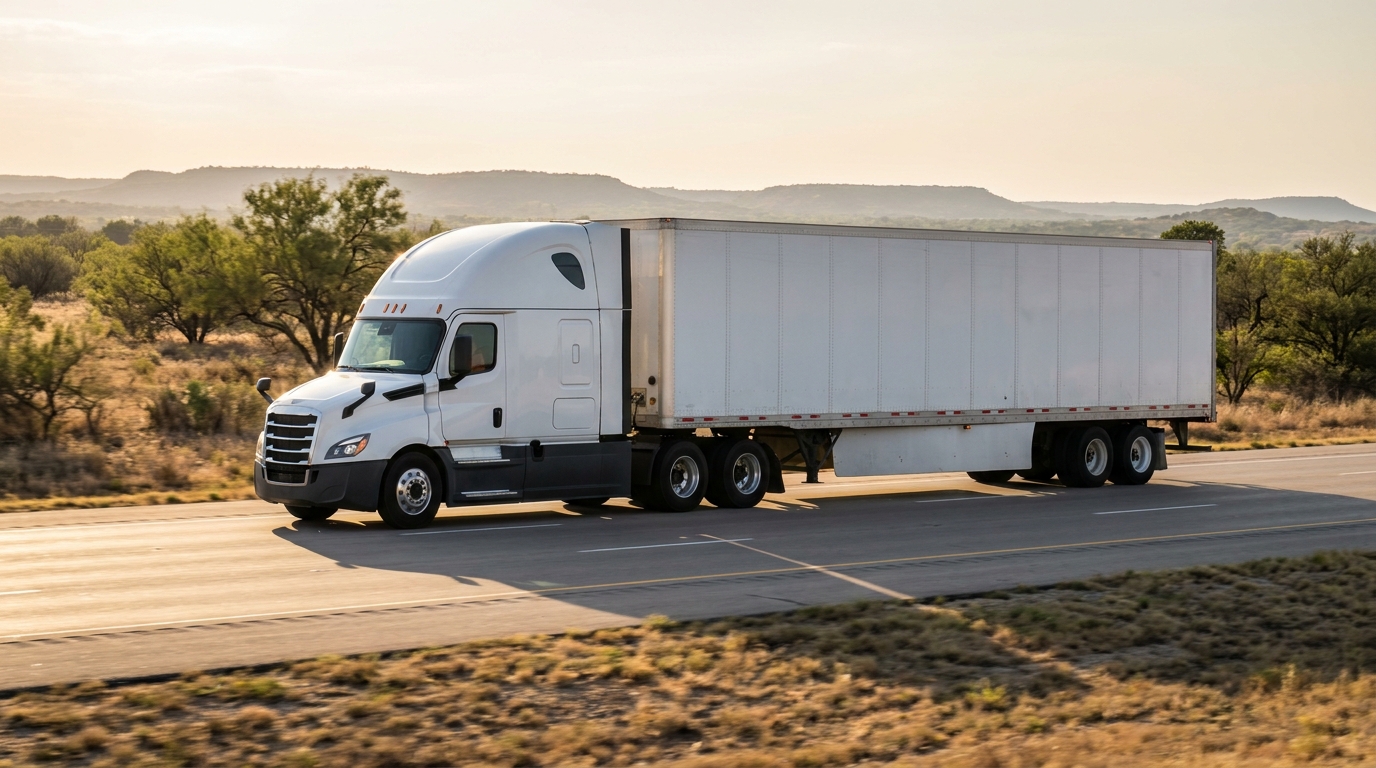
On a hypothetical 600-mile highway run, holding 65 mph instead of 60 mph buys about 46 minutes. It does not buy an extra hour, and it certainly does not erase a two-hour wait at a loading dock. That is arithmetic, not a promise about any particular route. Before treating a faster cruise setting as a business advantage, an owner-operator needs to price those minutes against the truck's own fuel records.
Start with the clock, not an advertised saving
Divide distance by speed. Six hundred miles at a constant 60 mph takes ten hours. The same distance at a constant 65 mph takes approximately nine hours and fourteen minutes. The difference is about 46 minutes. These figures exclude stops, traffic, loading, weather and changes in speed. They are comparison scenarios, not delivery estimates or a recommendation to drive continuously.
The smaller the highway portion, the smaller the theoretical time difference. For a 300-mile portion, the calculation gives five hours at 60 mph and approximately four hours and 37 minutes at 65 mph. That is roughly 23 minutes. Use the highway distance that actually permits the comparison, rather than applying a cruise speed to every mile on the dispatch sheet.
The fuel percentage belongs to your truck
EPA's August 2019 SmartWay bulletin treats highway speed as a fuel-management variable and notes that results depend on equipment and operating conditions. Its historical savings examples are not a current fuel quote or a guarantee for an individual truck. This article uses no fixed percentage of fuel savings.
Instead, build a two-column worksheet from comparable trips. Record miles, gallons, loaded weight, trailer type and time spent stopped with the engine running. Mark trips affected by unusual wind, congestion or a different route. One unusually good tank cannot tell you whether a speed change helped. It may simply describe a lighter load or an easier road.
For each group, divide total gallons by total miles. Multiply that result by 100 to express consumption as gallons per hundred miles. Keeping the unit identical makes the comparison easier to audit. Do not average the dashboard's trip averages if those trips cover different distances; use the underlying totals wherever your records make that possible.
A break-even calculation, clearly labeled
Here is an invented example to show the method, not a forecast: suppose comparable records show a five-gallon difference over the 600-mile run. At an assumed purchase price of six dollars per gallon, that difference costs thirty dollars. Neither the five gallons nor the six-dollar price is a measured result or today's national average.
Divide thirty dollars by the approximately 0.769 hour theoretically saved. The result is about thirty-nine dollars per hour. That is the illustrative fuel cost of the time difference. It is not a driver's wage, a freight rate or total operating cost. Substitute your measured gallons and actual fuel price before using the calculation to make a decision.
The next question is whether those minutes have economic value on that load. Can they preserve an appointment that would otherwise be missed under a lawful, realistic plan? Or would arriving earlier simply move the same waiting time to the receiver's yard? A faster arrival has no automatic revenue attached to it. Ask dispatch what changes before assigning a dollar value.
Make the comparison usable for the next load
- Choose a lawful operating plan appropriate to the road, conditions and equipment. The two speeds here are arithmetic inputs, not instructions for every roadway.
- Compare similar loaded routes and separate road time from customer waiting time.
- Use purchased gallons and consistent mileage records; write down gaps or uncertain measurements.
- Calculate both the time difference and the fuel difference before deciding that one setting is cheaper.
- Keep maintenance observations separate from fuel estimates. Do not assign a repair saving that your records do not show.
A small fleet can keep this worksheet beside its load sheet rather than buying a new reporting system. Name the route, record the comparison period and explain which trips were excluded. That gives another dispatcher or driver enough context to challenge the conclusion. A result that cannot survive that check is too weak to become a fleet policy.
When consumption changes unexpectedly, check the operating record and the truck before blaming the driver's cruise setting. If you need a mechanical review, contact The Truck Savers™. The useful decision is the one based on your equipment and your work: forty-six theoretical minutes are a starting point for a calculation, not money already earned.
Original source: EPA SmartWay, Reducing Highway Speed, August 2019.