Every Tank on the Truck Answers to the Same Section
Section 393.65 covers auxiliary equipment, not just the engine. It also sets a two-inch limit nobody quotes.
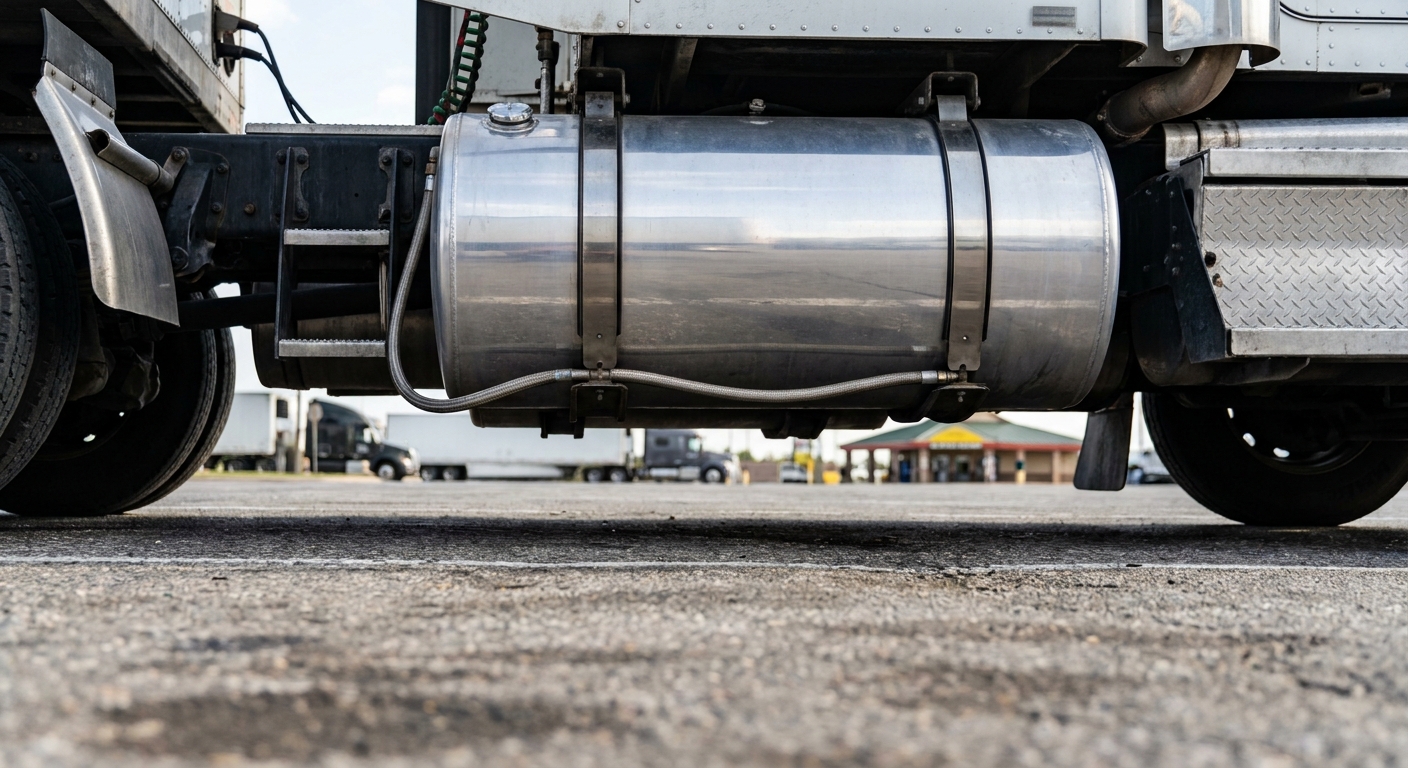
The first paragraph of the federal fuel system rule does something most people never notice: it covers auxiliary equipment too.
Section 393.65 opens by saying it applies to systems for containing and supplying fuel for the operation of the vehicle or for the operation of auxiliary equipment installed on, or used in connection with, the vehicle. Anything bolted to the truck that burns fuel is inside the same section as the engine.
Where a tank may and may not live
- No part of the system may extend beyond the widest part of the vehicle.
- No part of a tank may sit forward of the front axle of a power unit.
- Anything spilled straight down while filling must not reach the exhaust or the electrical system. The one exception written into the rule is the fuel level indicator assembly.
- Fill openings go outside the cab and outside the cargo area.
- A line may not run between a towed unit and the unit towing it while the combination is moving.
That third one is worth rereading, because it is written around the filling process, not around the running truck. It is describing what happens when somebody tops off in a hurry and the overflow goes where gravity takes it.
The two inches almost nobody knows
Paragraph (f) is the most specific measurement in the whole section. A line that is not completely enclosed in a protective housing must not extend more than two inches below the tank or its sump.
And it goes further for diesel specifically: crossover, return and withdrawal lines that hang below the bottom of the tank have to be protected against impact damage. The crossover is the line nobody thinks about — it lives between the two tanks, low, in the exact path of everything the road throws up.
Every line also has to be long enough and flexible enough to take the normal movement of whatever it is attached to, and secured against chafing and kinking. A line that is technically the right length but zip-tied against a sharp bracket edge fails that requirement while looking fine.
"Workmanlike manner" is doing a lot of work
Paragraph (c) says the tank must be securely attached in a workmanlike manner. That is the vaguest standard in the section and the one most often argued about, because it has no measurement attached.
What it does in practice is close the loophole that a numeric standard would leave open. There is no torque figure to hit and then declare yourself finished. A strap that holds today but was installed with a mismatched bolt, a missing isolator or a bracket bent to fit is not workmanlike, and the rule does not need to list those cases individually to reach them.
The gravity feed rule, and its single exception
A system may not feed by gravity or siphon directly to the carburetor or injector. The exception is narrow and worth knowing precisely: an auxiliary pump with a nominal tank capacity of no more than five gallons, mounted on the trailer chassis frame or trailer bed, for purposes other than operating the vehicle, and operated only when the vehicle is not in motion.
Four conditions, all of which have to be true at once. Miss any one and the exception does not apply.
The valve you have to be able to reach
If the system has a selection control valve for drawing from more than one tank, it has to be installed so the driver can either operate it while watching the road and without leaving the driving position, or has to stop the vehicle and leave the seat to work it. What the rule refuses to allow is the middle case: a valve you can almost reach while moving.
Why this section is worth a read this year
Because it is current. The citation at the end of the section carries an amendment dated February 19, 2026, which makes it one of the more recently touched pieces of Part 393. Anybody working from a printout that has been in the truck for a few years is working from a version that has been edited since.
- Inspect what hangs below the tanks, not just the tanks. Two inches is the number.
- Include the auxiliary unit's plumbing in the walk-around. Paragraph (a) already did.
- Look at how lines are secured, not only whether they leak. Chafing is named in the rule.
If you want the underside looked at by somebody who does this all day, the multi-point inspection covers tanks, lines and mounting hardware: The Truck Savers, free and no appointment.