Elongated Bolt Holes Are Proof You Ran It Loose
The federal wheel rule has no torque number. An elongated hole is evidence, not wear.
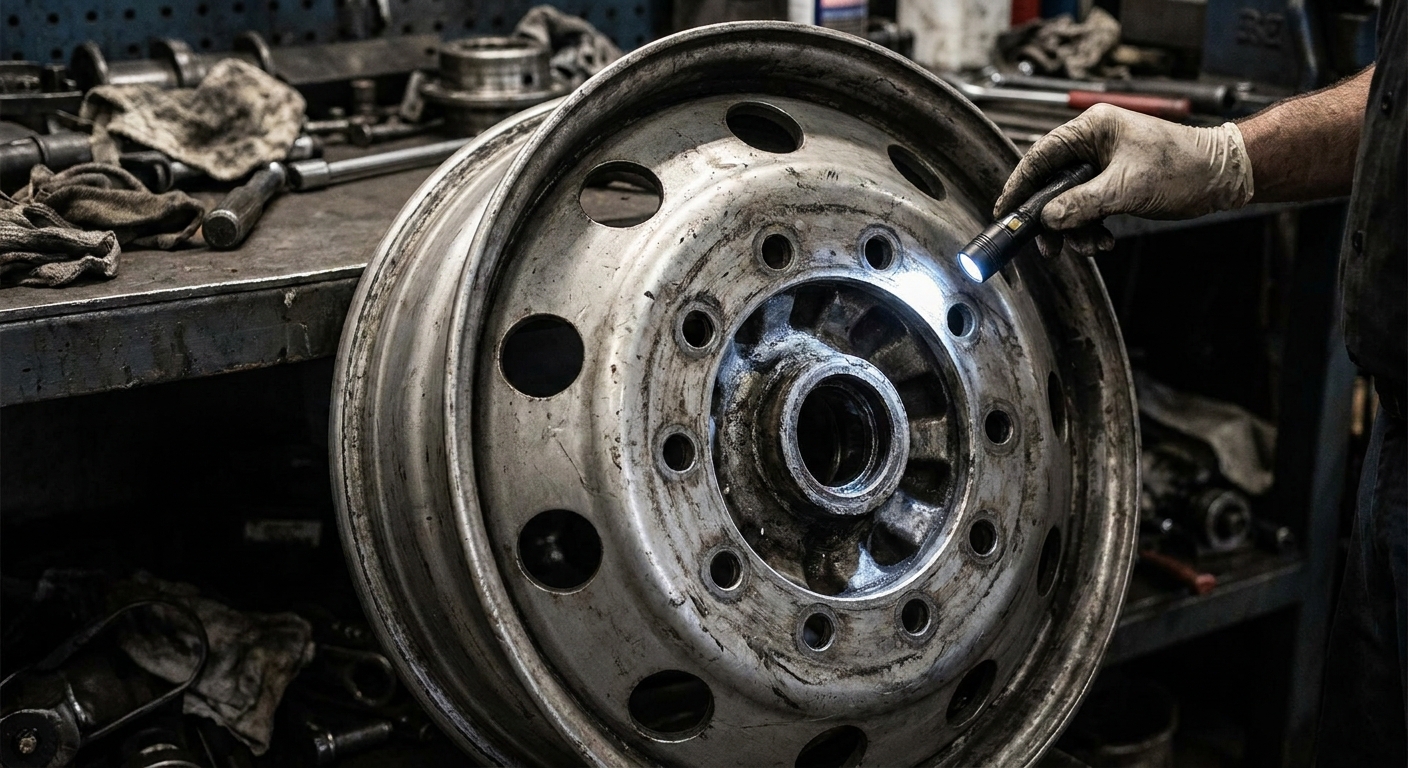
The federal rule on wheels is three sentences long, and not one of them contains a number. No torque value. No re-torque interval. No minimum measurement of anything.
That surprises people, because wheel-end work is the one job everybody talks about in numbers. The regulation does not. It lists three conditions, and every one of them is a yes or a no.
The whole section
Section 393.205 says wheels and rims must not be cracked or broken; that stud or bolt holes must not be elongated, meaning out of round; and that nuts or bolts must not be missing or loose.
Three conditions. An inspector does not need a torque wrench to check any of them, which is exactly why the rule is written that way.
Why the elongated hole is the important one
Cracked and loose are obvious. The one worth understanding is the middle condition, because an elongated bolt hole is not a defect that happens to a wheel. It is the record of something that already happened.
A bolt hole goes out of round when the wheel moves against the fastener under load. That movement only exists if the clamping force was not there — if the joint was loose. The rubbing wears the hole from a circle into an oval, and the oval does not go back.
So when an inspector finds an elongated hole, they are not finding a worn part. They are finding physical evidence that the wheel ran loose long enough to reshape steel or aluminum. That is why it is written into the same three lines as "cracked" and "missing": the rule treats it as a condition, not as wear.
What that means when you buy a used wheel
This is the practical consequence nobody thinks about at the time. A used wheel with slightly oval holes looks completely normal leaning against a wall. It mounts. It holds air. It will pass a walk-around from ten feet.
And it is out of compliance the moment it goes on, because the condition is in the metal, not in the installation. Buying a second-hand wheel means inspecting the holes with the wheel off and in your hands, not after it is torqued to a hub.
"Loose" has no threshold, and that cuts both ways
Because the rule does not name a torque figure, there is no argument available about being close enough. A fastener is loose or it is not. There is no "within tolerance" to negotiate at the side of the road.
The flip side is that the rule does not tell you how to get it right either. The correct torque for your wheel comes from the wheel and hub manufacturer, and it is different for different wheels — that is the manufacturer's number and it belongs to them, not to the regulation. Anybody quoting you one universal figure for every truck is guessing.
The failure mode nobody sees coming
Aluminum wheels on hub-piloted assemblies bring a second problem that the regulation does not describe and the shop deals with constantly: corrosion at the pilot pads, where the wheel centers on the hub.
When those pads corrode, the wheel no longer seats concentric to the hub. Everything is torqued correctly, every fastener is present, and the assembly is still running slightly off center — which shows up as a vibration that gets blamed on balance, on tires, on the driveline, on anything except the mounting face.
The section above does not cover that, because a corroded pilot pad is not cracked, elongated or loose. It is a case where compliance and correctness are not the same thing, and knowing the difference is what separates a checklist from a diagnosis.
What to actually do
- Look at the holes, not just the nuts. A round hole with a loose nut is a torque problem. An oval hole is a history problem, and the wheel is done.
- Inspect used wheels off the truck. Once it is mounted you cannot see the condition that matters.
- Use the manufacturer's torque, not a number you heard. The rule does not supply one, and neither should a stranger.
- Treat a vibration that survives balancing as a mounting question. Pilot pads, mating faces and hub condition come before another round of weights.
If a vibration is still there after the tires have been balanced twice, the road simulator finds it under load instead of guessing at it: The Truck Savers, free and no appointment.