DVIR: Check the Repair Certification Before Driving
A DVIR defect needs a documented resolution. Check repair certification and driver review before the next trip.
A driver vehicle inspection report can describe a problem without showing how the carrier resolved it. For operations required to prepare a DVIR under the applicable federal rule, the process does not end when the driver signs the defect list. Repair decisions, the carrier’s certification and the next driver’s review have distinct roles. A useful handoff makes those records easy to connect before the vehicle goes back into service. This guide focuses on that closure process, rather than assuming every carrier owes the same daily form.
First establish whether this report is required
Section 396.11 includes exceptions for a private motor carrier of passengers operating on a nonbusiness basis, a driveaway-towaway operation and a motor carrier operating only one commercial motor vehicle. The current text also says drivers are not required to prepare the report when no defect or deficiency is discovered or reported. A company can maintain additional internal forms, but its policy should not be described as a universal federal requirement. Intermodal equipment has a separate reporting framework, which is outside this guide. Other inspection and maintenance duties must still be checked for the actual operation.
Describe the defect on the correct vehicle
When a report is required, it must identify the vehicle and list the defects or deficiencies discovered or reported that would affect safe operation or result in mechanical breakdown. The driver signs the report. Practical descriptions should make it possible to connect the concern with the unit and the relevant component, rather than leaving maintenance to interpret an unexplained checkmark. This does not turn the driver into the repair technician. A driver can report what was observed without naming an unverified mechanical cause or prescribing a repair. Keep that distinction in the handoff.
Repair and certification are separate steps
Before allowing the vehicle to operate, the carrier or its agent must repair a listed defect likely to affect safe operation. The regulation also requires the carrier or its agent to certify on the original report that the listed defect or deficiency has been repaired or that repair is unnecessary, before the vehicle is operated again. That second option is part of the rule; it is not permission for a dispatcher to dismiss an unresolved safety concern without the required determination and record. An invoice can support the maintenance history, but it does not automatically demonstrate that the certification on the report exists.
What the next driver checks
Under section 396.13, before driving the vehicle the driver must be satisfied that it is in safe operating condition and review the last DVIR when required by section 396.11(a)(2)(i). The driver signs the report to acknowledge reviewing it and the presence of certification that required repairs were performed. The signature requirement does not apply to listed defects on a towed unit no longer part of the vehicle combination. Review is therefore a real handoff step, not a substitute for assessing the current vehicle. A completed record from yesterday does not establish that a new concern today can be ignored.
Keep the three records together
Section 396.11 requires retention of the original DVIR, the repair certification and the driver’s review certification for three months from the date the written report was prepared. File the records so the relationship between them remains clear. For example, an internal vehicle number and report date can connect a defect entry with its resolution and the subsequent review. That is a suggested organizational method, not a prescribed federal filename. Do not apply the separate 14-month annual inspection report retention period to this DVIR requirement; the forms serve different purposes and their retention rules should remain separate.
Electronic does not mean complete
The reporting and review provisions permit electronic records in accordance with section 390.32. A digital workflow can therefore carry these records, but the fact that a screen says complete does not establish that the required information and acknowledgments are present. Before relying on a system, check whether the report identifies the correct vehicle, preserves the defect description and shows the relevant certifications. Confirm that the records can be retrieved for the required period. This article does not endorse a particular app or claim that any automated checkbox satisfies the regulation.
A practical dispatch handoff
Use three questions when a reported defect is being closed: which vehicle and concern does this report identify; where is the carrier or agent’s required resolution certification; and has the next driver performed the required review for this vehicle? If a link is missing, locate the original record and resolve the gap with the people responsible for maintenance and the review. Keep technical judgments with qualified personnel. The checklist helps identify incomplete documentation; it cannot diagnose brakes, steering or another component and cannot authorize operation of a vehicle with an unresolved safety problem.
Prevention starts with a traceable concern
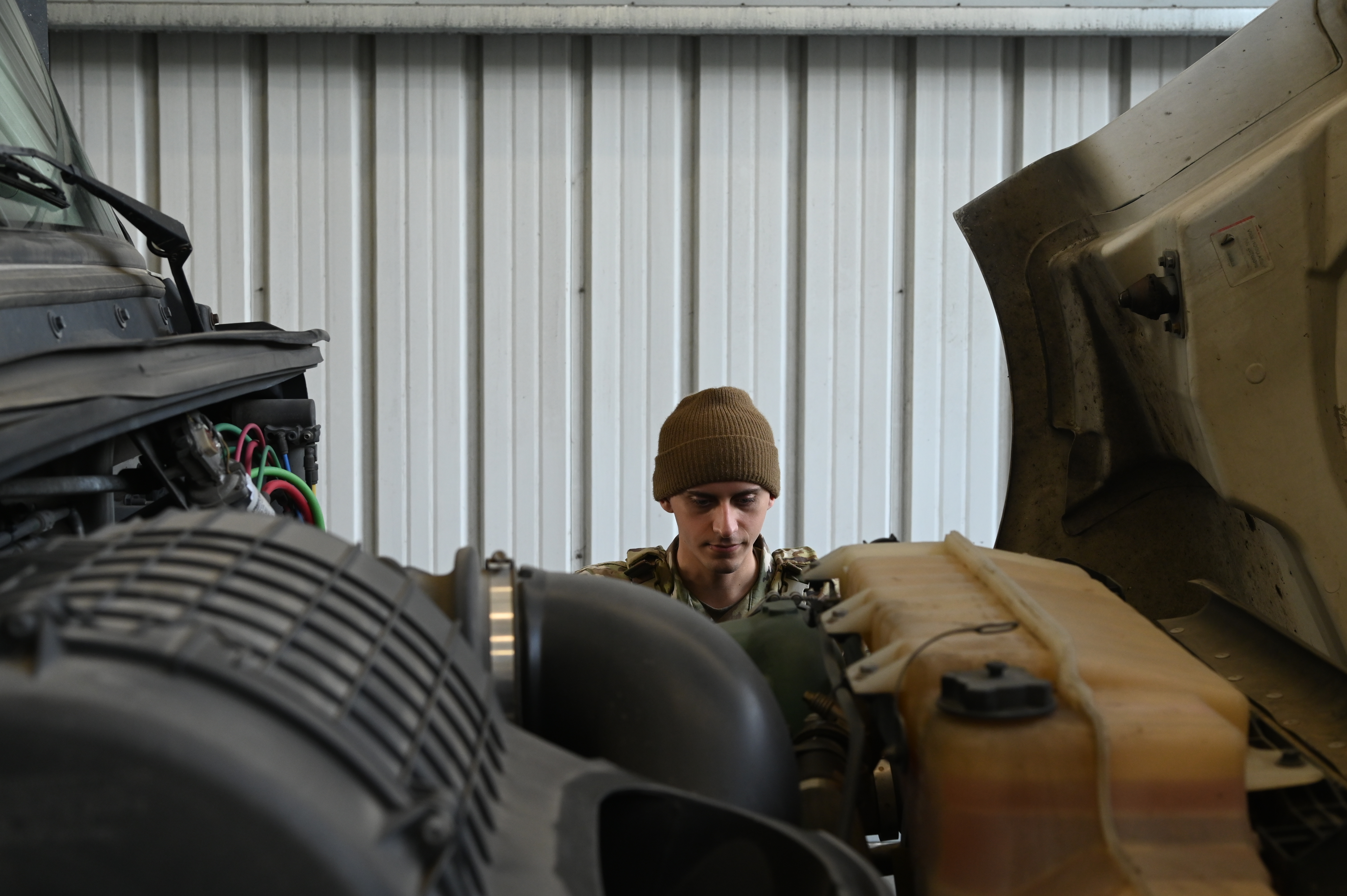
This is a guide to existing federal rules for operations within their scope, not a new law or a vehicle-specific clearance. The illustrative photograph shows a commercial-vehicle security inspection at Vandenberg in 2021, not a DVIR repair or certification. A dependable process gives the driver’s concern an identifiable record, a documented disposition and a review before the next trip. Continue reading Truck Savers News regulatory coverage below and review the applicable requirements against your own operation.
Illustrative archive: U.S. Space Force / Airman 1st Class Rocio Romo, December 7, 2021, public domain. Unmodified security-inspection photograph at Vandenberg; not evidence of DVIR repair. Image record and reuse terms.
.jpeg)