DTNA Driveline Recall: Verify VIN and Service Channel
DTNA lists certain 2027 trucks in a driveline campaign. Verify VIN eligibility, the service channel and completion evidence.
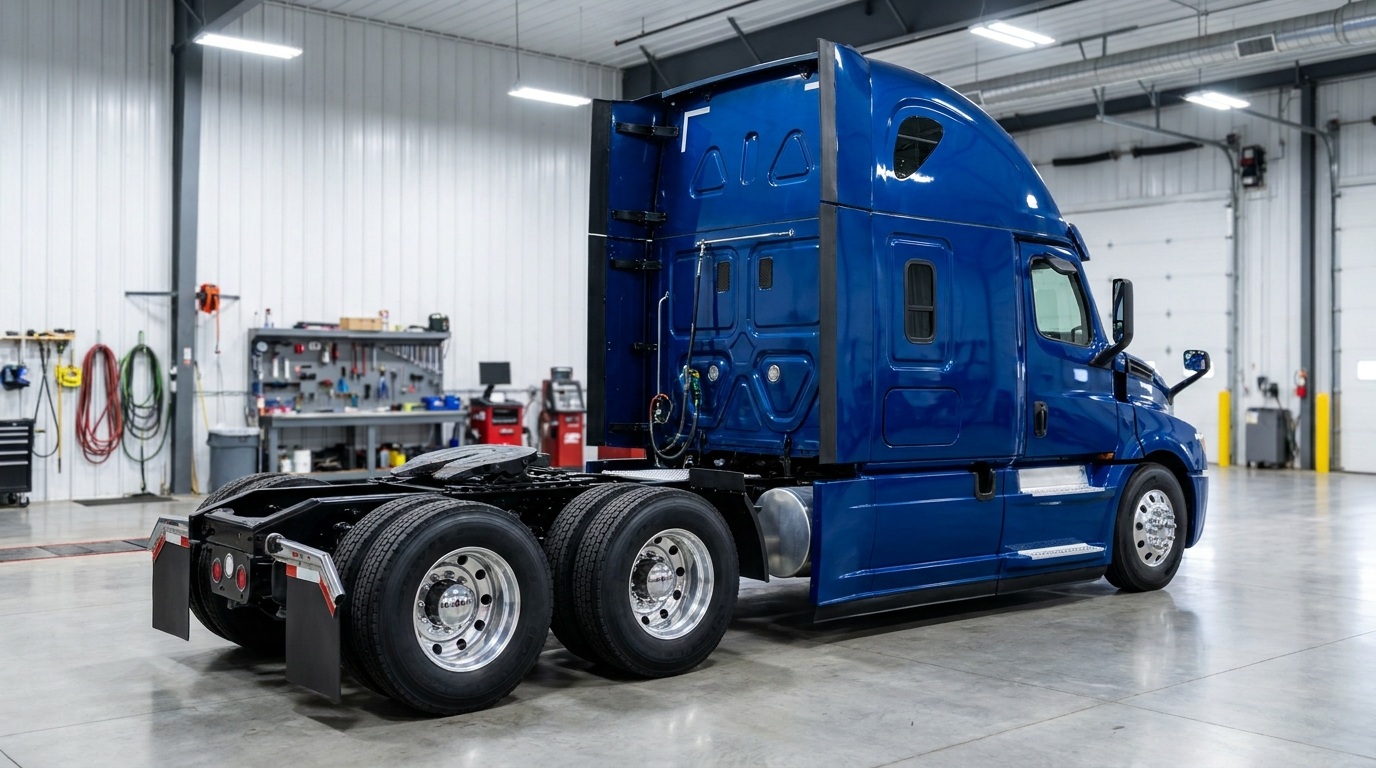
AI-generated editorial illustration; not a documentary photograph.
DTNA has filed recall 26V737 for 3,894 potentially affected model-year 2027 trucks. Its November 6 report identifies certain Cummins-supplied drivelines; owning one of the listed models does not establish that an individual truck is included. For an owner-operator, the useful next step is to connect the vehicle identification number with the campaign and the service channel, rather than order a part from a headline.
The document lists Freightliner Cascadia, Cascadia Fifth Gen, Business Class M2, 108SD and 114SD, plus Western Star 47X and 49X. These are the U.S. campaign's reported model names. A similar-looking truck, another model year or a vehicle operating in Mexico cannot be assumed to share the same campaign coverage or remedy arrangements.
What the report actually describes
The filing concerns a snap ring that may be missing inside a slip-yoke assembly. The reported remedy is an inspection, with driveline replacement if the ring is absent, through a Cummins-authorized service facility. That is different from telling a driver to buy and install a retaining ring. A parts photograph or exterior inspection does not establish whether the assembly in a particular truck meets the campaign criteria.
The document is a manufacturer filing, not an individual vehicle's completed repair record. It supports reporting the campaign and its stated repair approach. It does not prove that a particular truck has been inspected, that a replacement is available locally today, or that an appointment has been accepted. Those are separate questions for the responsible service channel.
Build a service request around the VIN
Before arranging service, collect the VIN, unit number and existing maintenance paperwork. Ask the service contact to confirm campaign 26V737, also identified by DTNA as F1046, against that vehicle. Request the facility's instructions for handling the truck while eligibility and repair arrangements are checked. This article does not issue a drive-or-do-not-drive determination for an individual unit.
An owner who has recently bought a used truck should also establish which business or person will receive the repair documentation. A seller's verbal assurance, an open appointment and a completed campaign are three different states. Keep them separate in the maintenance record so the next dispatcher or technician can see what has actually been established.
Ask about logistics before committing a load
The operating consequence is uncertainty about service timing, rather than a universal downtime estimate. Before committing the truck to a route that makes the chosen facility difficult to reach, ask who will confirm the appointment, what information is needed and whether any inspection or parts arrangements remain unresolved. Do not turn a proposed service date into a guaranteed return-to-work time.
For a small fleet, one person should own that follow-up. A simple worksheet can connect VIN, campaign, service contact, appointment state and completion evidence. This is an editorial planning suggestion, not an additional requirement announced by DTNA. Its purpose is to prevent a scheduling assumption from becoming the only record of the campaign.
Keep these checks distinct
- Eligibility: the VIN and applicable campaign have been confirmed by the responsible service channel.
- Appointment: a facility has accepted the request and explained any remaining arrangements.
- Completion: the work performed is documented for that specific truck.
- Dispatch planning: the operator follows the facility's instructions and uses confirmed information when assigning the vehicle.
If any answer is pending, write pending. Do not mark the campaign complete because a truck model appears in the filing, because an appointment exists, or because somebody inspected an unrelated component. Likewise, a routine maintenance visit is not automatically proof that this campaign was addressed. Ask for the campaign reference in the final service record.
A filing date is not a parts promise
Campaign documents can contain planned notification dates, but a future letter date does not establish present repair availability. This article therefore does not use the notification schedule as a booking promise. The same care applies to an online lookup that cannot be reached: a failed lookup is missing information, not confirmation that the truck is outside the campaign.
The practical takeaway is specific: verify the truck, confirm the service channel and retain completion evidence before treating the matter as closed. For general preventive-maintenance support, contact The Truck Savers™. That general contact is separate from this recall's authorized repair channel and does not imply campaign authorization, available parts or a guaranteed repair slot.
Original source: DTNA Part 573 report 26V737, filed with NHTSA.