DTL’s 75-Truck Kodiak Deal: Agreement, Then Rollout
DTL signed a binding deal for 75 Kodiak-equipped trucks. The agreement is distinct from an operating fleet or a service available on every lane.
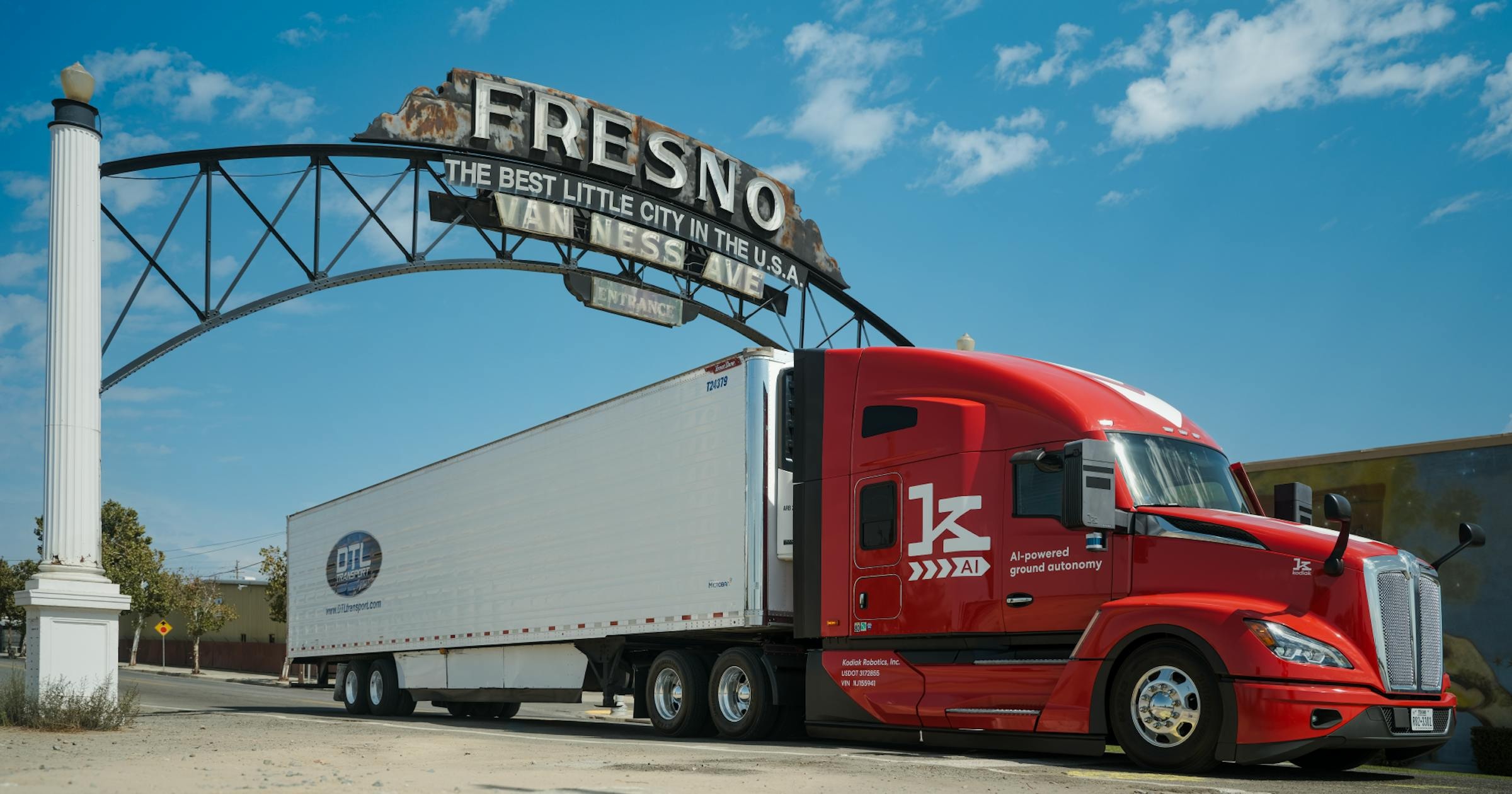
Photo: Kodiak AI newsroom. A Kodiak truck pulling a DTL trailer in Fresno, California, according to the company caption. The image does not establish driverless operation or the number of trucks deployed.
DTL Transport has signed a binding agreement to use the Kodiak Driver in 75 trucks that DTL will own and operate. Kodiak's October 28 announcement says DTL will pay a per-mile fee. It is a commercial commitment; the announced count is not evidence that all 75 trucks are already providing driverless service.
The launch remains a separate milestone
In an October 30 update, Kodiak still described its long-haul driverless launch as a year-end 2026 plan. It reported 99% on its own Autonomy Readiness Measure, which tracks completion of claims and evidence in its safety case. That percentage is not a truck count, a delivery success rate or independent certification.
Compare an agreement with an actual service
For a small fleet or shipper, the useful distinction is between a signed plan and a bookable operating service. The former describes a commitment to deploy technology. The latter needs an identified route, start date, operating scope and contact responsible for the shipment.
A per-mile technology fee is also only one line in a potential operating comparison. The public announcement is not your freight quote. Build any comparison around written terms for the service you are actually considering, rather than assuming the announced fleet size translates into a price advantage.
Questions before putting a lane in the plan
- Is this an announced rollout, a test operation or a service currently accepting loads?
- What exact origin, destination and operating conditions apply?
- Who owns and operates the equipment, and who handles shipment exceptions?
- Which charges are included in the quote, and what remains separate?
- What current evidence confirms the stated operating status?
Keep milestones separate
Record the source date beside each claim: agreement, readiness update and confirmed service start. Update the last item only when evidence supports it. This gives a dispatcher a usable status record without turning a development milestone into a capacity promise.
The agreement is meaningful evidence of a commercial customer commitment. It does not establish universal route availability, a measured saving for another carrier or a change to that carrier's operating obligations.
Plan the next stop
For a business along your route, search Truck Savers Finder and confirm the location, service and appointment directly.
Original sources
Kodiak–DTL agreement, October 28, 2026; Kodiak readiness update, October 30, 2026. Reviewed November 2, 2026.