DPF Delete: $4,454 Per Engine, and Who Pays It
EPA sets the DPF tampering penalty per engine, not per shop: up to $4,454 for anyone who is not a manufacturer or dealer. And the shop that installs it is in the same rule.
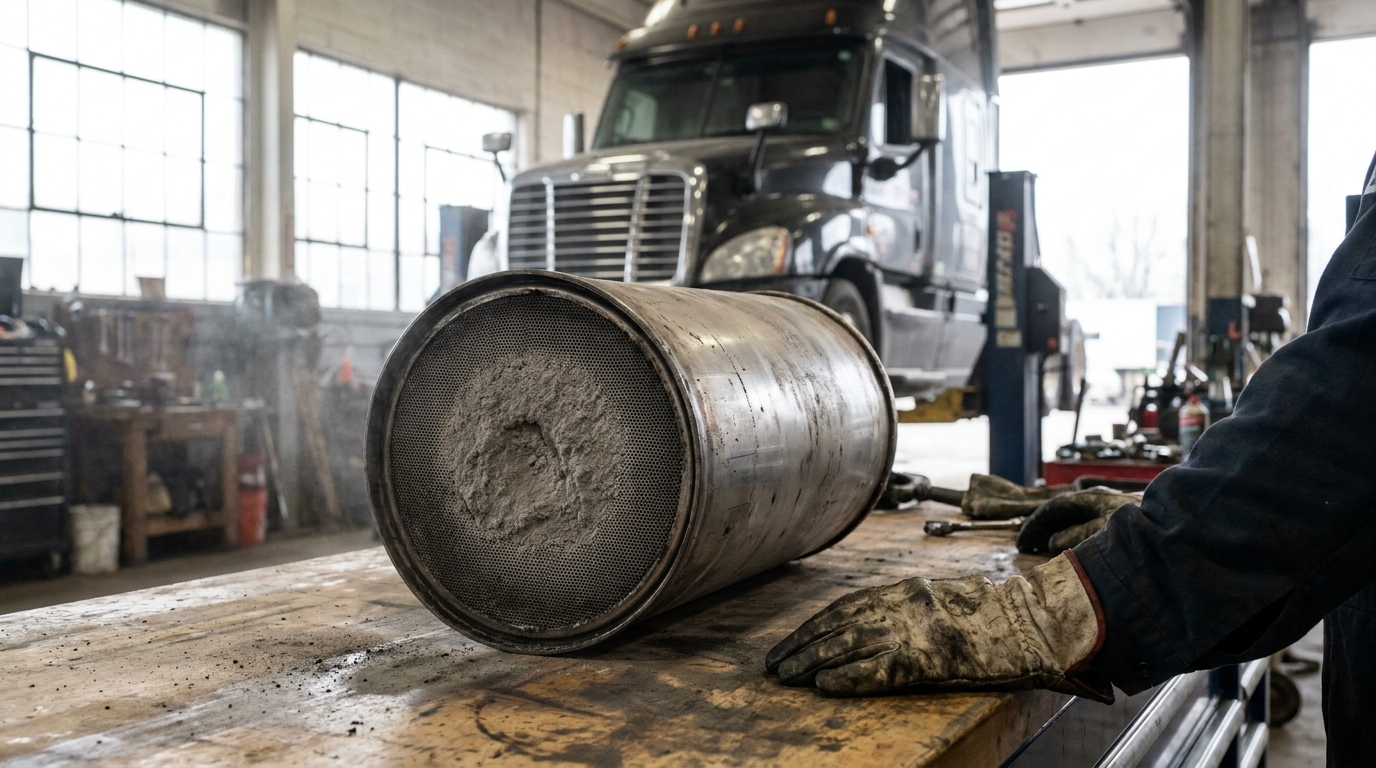
The number attached to pulling your diesel particulate filter is $4,454, and it is charged per engine. Not per shop, not per fleet. Per engine.
That figure sits in 40 CFR 1068.101, the EPA rule that spells out what nobody may do to an emissions control system. It is worth reading once, because most of what gets repeated in a truck stop about "deletes" is somebody's opinion and this is the text.
Check which of the two penalty amounts applies to you before you price a delete.
What the rule actually says you cannot do
Paragraph (b)(1) is the tampering prohibition, and it is short: you may not remove or render inoperative any device or element of design installed on the engine to comply with the regulations, before it was sold to the ultimate purchaser — and you may not knowingly do it after the sale either.
The phrase that matters for a working truck is render inoperative. You do not have to unbolt anything. The rule gives its own examples: running an engine without a supply of appropriate quality urea when the system relies on urea to cut NOx, and using the wrong fuel or the wrong engine oil so that the emissions system stops working.
Two penalty numbers, and yours is the smaller one
The same paragraph sets two amounts. For a manufacturer or a dealer, EPA may assess up to $44,539 per engine or piece of equipment. For anyone else — that is you — up to $4,454 per engine or piece of equipment.
Read that as a fleet number and it stops being abstract. Ten trucks is not one exposure, it is ten.
There are situations where the prohibition does not apply, and the first one is the one shops mention: you may take the system apart if you need to repair the engine and you restore it to proper functioning when the repair is complete. There is a second for a temporary emergency, again with the obligation to restore it as soon as possible.
Neither of those is a permanent delete. The exception is defined by the restoring, not by the taking apart.
And the shop is exposed too
Paragraph (b)(2) covers defeat devices: nobody may knowingly manufacture, sell, offer to sell, or install a component that bypasses, impairs or defeats an emissions control. So a shop that offers to do it is not doing you a favor with its own risk — it is standing in the same rule you are.
Why the filter fills up in the first place
A regeneration burns soot out of the filter. That is what a passive, active or parked regen is doing when the exhaust temperature climbs.
Ash is different. It comes mostly from additives in engine oil and from normal wear, and it does not burn off. It stays in the filter and accumulates, which is why a filter that regens perfectly still fills eventually and needs to come off and be cleaned. Cleaning intervals are set by your engine manufacturer, not by the federal rule, so use their number and not one you read online.
Before it turns into a derate
Watch the dash light the first time it comes on, not the third.
- Do not ignore the first dash light. A plugged filter usually announces itself with a warning and a power derate before it strands anybody.
- Let a parked regen finish. Interrupting it over and over is one of the common ways a filter ends up plugged.
- Use the engine oil the manufacturer specifies. The rule itself names incorrect oil as an example of rendering the system inoperative, and the wrong oil also loads the filter with ash faster.
- Keep the cleaning receipt. It is your proof of maintenance and it is the paper that shows the filter is still there and still working.
- Ask what "cleaning" means at that shop. A filter that gets baked and blown is a different job from one that gets swapped for a used unit.
The preventive read
The economics of a delete look good on a napkin and stop looking good the moment the number is per engine and the shop that sold it is in the same paragraph of the rule. The cheaper path is boring: let the regens finish, run the right oil, and clean the filter on the manufacturer's schedule instead of waiting for the derate.
Looking for a shop that does emissions or exhaust work on your route? Our Truck Saver Finder lists verified shops by service and state. And The Truck Savers™ handles inspections and suspension work in Houston and Dallas.
This is general information, not legal advice, and penalty amounts are maximums set by regulation, not a quote of what any particular case would cost.
Original source: eCFR, 40 CFR 1068.101, "What general provisions apply to this part?"