Dirt Is Named in the Rule: 393.9 and Your Reflectors
The rule names dirt by that word. Required lamps and reflective material must not be obscured, and on many trailers the tape replaces the reflectors.
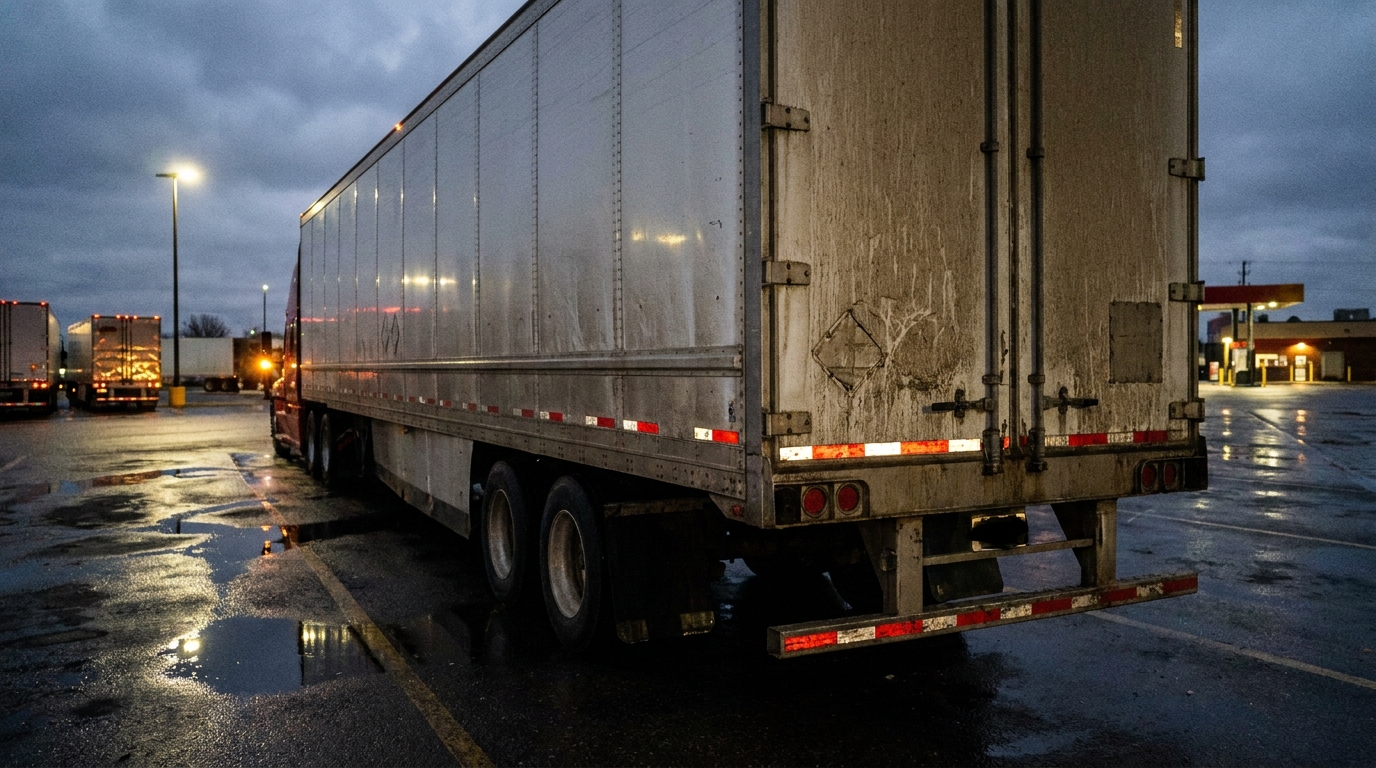
The federal rule about your lamps and reflective tape names dirt. Not "damage," not "wear" — dirt, with that word.
Section 393.9 is two short paragraphs and almost nobody reads the second one. Paragraph (a) says all required lamps must be capable of being operated at all times. Paragraph (b) is the one that turns a wash into something other than vanity.
Check the lower rails of your trailer before your next run. That is where this rule usually gets you.
What 393.9(b) actually says
Lamps and reflective devices or material required by the subpart must not be obscured by the tailboard, or by any part of the load, or its covering, by dirt, or other added vehicle or work equipment, or otherwise.
Read the list again. Dirt sits in the same sentence as the tailboard and the load. The rule does not grade it, does not give you a percentage, and does not care why it is there. What it asks is whether the required equipment is obscured.
There is exactly one exception in the paragraph, and it is narrow: the conspicuity treatments on front end protection devices may be obscured by part of the load being transported. Nothing else on the trailer gets that pass.
Why the tape counts as required equipment
Some drivers treat the red-and-white tape as decoration that came with the trailer. It is not.
Under 393.11(b), every trailer 80 inches or more in overall width with a GVWR over 10,000 pounds, manufactured on or after December 1, 1993, must be equipped with retroreflective sheeting meeting FMVSS No. 108, or reflex reflectors meeting it, or a combination of the two. Pole trailers and trailers built exclusively for living or office use are the exceptions.
And there is a trade in the rule that makes the tape even more load-bearing: under 393.11(a)(2), a trailer whose conspicuity material meets 393.11(b) is not required to carry the reflex reflectors listed in Table 1 — as long as the material sits where Table 1 would have put those reflectors and meets the visibility requirements.
In plain terms: on many trailers, the tape is not an extra on top of the reflectors. It is what stands in for them. Bury it in grime and you have not dulled an accessory; you have obscured the equipment that is doing the job.
Where the dirt actually lands
The tape that fails is almost never the tape at eye level. It is the run along the bottom rail, which is exactly the strip that spray from your own drives paints all winter, and the panel behind the mud flaps.
That is also the strip a driver never inspects, because a walk-around is done standing up and this one is at knee height, on the side of the trailer facing away from the fuel island.
What to ask before you pay for a wash
- Do they wash the lower third, or just the box? A cheap trailer wash often means the panels you can see from the road. The compliance problem lives below that line.
- Brush or touchless? Ask what they use on the tape. Aggressive brushing lifts edges over time, and lifted sheeting stops meeting the visibility requirement it was certified to.
- Do they hit the rear, including behind the mud flaps? The rear is where the tape matters most at night, and it is the first place a pressure wand skips.
- Can you inspect it wet, before you leave? Wet tape shows you what is still buried. Once it dries you are guessing.
What to check yourself, no cost
- Walk the bottom rail with a flashlight at night. Retroreflective sheeting either throws the light back at you or it does not. There is no interpreting it.
- Look at the rear from thirty feet. That is the distance that matters to whoever is closing on you.
- Check the tape edges. Lifting or peeling is a replacement, not a cleaning.
- Do not forget the lamps themselves. Paragraph (a) is about operation; paragraph (b) is about being seen. A clean lens on a dead lamp fails the first one.
The preventive read
A wash reads like an expense with no return, which is why it is the first thing that gets skipped in a tight month. But this is one of the few maintenance items where the federal text tells you plainly what it expects, and it expects the equipment to be visible — not to have been clean at some point.
Running through Houston or Dallas? The Truck Savers™ checks lamps and wiring on every inspection, and the same walk-around catches tape you cannot see from the seat.
This is general information, not legal advice. Enforcement decisions at roadside are made by the inspector.
Original source: 49 CFR 393.9, Lamps operable, prohibition of obstructions of lamps and reflectors