DEF Transfer: Check Every Component
DEF purity depends on the transfer path. Check compatibility and handling records before the next delivery.
A correct DEF purchase can still be compromised between its container and the truck. For an owner-operator or small fleet, the useful question is not only which fluid was ordered, but what touched it before it reached the tank. Cummins distinguishes particle contamination, chemical contamination and concentration problems in its guidance on DEF purity. That makes the transfer equipment part of the purchasing decision, rather than an accessory to consider after the delivery arrives.
Check the transfer path, not just the label
Start with a simple inventory: the storage container, pump, hose, coupling and dispensing outlet that will actually be used. Ask the supplier or equipment manufacturer to confirm that each component is intended for DEF. A container that looks clean, or a pump that has worked with another liquid, does not establish compatibility. Keep the confirmation with the purchase record so the next person ordering a replacement can identify the same equipment.
This is a procurement and handling check, not a repair procedure. The truck's applicable service information still controls maintenance. Do not turn a purchasing checklist into instructions to open the aftertreatment system, modify a dispenser or clear a warning. When equipment history is unknown, ask a qualified supplier to resolve it before assigning that equipment to the job.
A filter does not answer every contamination question
Cummins explains that filtration can address hard particles, while chemical contamination is more difficult to identify and cannot simply be removed from the fluid. Its guidance also identifies compatible materials for DEF contact. The practical distinction is that a filter specification and a materials specification answer different questions. Neither one replaces the other.
For a buying conversation, ask separately what the filtration is designed to do and what the wetted components are made of. Request the equipment documentation rather than accepting an assurance based only on appearance. If a supplier proposes an alternative hose or fitting, have that substitution checked against the same requirements. An apparently minor replacement can change what the fluid contacts even when the pump itself stays the same.
Record a handoff that another driver can understand
A one-truck business may have one person purchasing, receiving and using the fluid. A small fleet may split those jobs across several people. In either case, a short handoff record can preserve the information that otherwise disappears when the invoice is filed: product identification, delivery date, equipment identification, supplier contact and any unresolved question about storage or handling.
Consider a proposed bulk delivery. Before comparing the quoted fluid cost with packaged supplies, identify who supplies the pump and hose, who confirms their suitability and who handles a questionable delivery. This does not prove that bulk purchasing is better or worse. It makes the comparison specific to the transfer arrangement being purchased, rather than to a price detached from the equipment.
Do not confuse a warning with a complete diagnosis
A DEF quality alert is information for the service process. It does not, by itself, identify the point at which a problem started or establish which component needs replacement. Preserve the product and equipment records and give the service provider the actual warning information. Avoid guessing that a different jug, a different filter or a software change will resolve every concern.
The same restraint applies to cost estimates. This guide does not assign a repair bill, promise a fuel saving or calculate a maintenance interval. Those depend on the specific equipment and the verified finding. The preventive action available before any diagnosis is more modest: make the transfer arrangement traceable and resolve compatibility questions before use.
A receiving checklist for the next DEF order
- Identify the exact fluid and retain its purchase and delivery information.
- List the container, pump, hose and fittings that will contact it.
- Obtain the applicable DEF compatibility and filtration documentation.
- Confirm who is responsible for equipment substitutions and handling questions.
- Keep unresolved issues visible at the handoff instead of silently approving them.
- Follow the vehicle and equipment manufacturers' instructions for actual service.
Before the next order, review one transfer setup from container to dispensing point. A documented answer is more useful than an assumption that follows the truck into the next shift. For other planning and maintenance guides, browse Truck Savers News™.
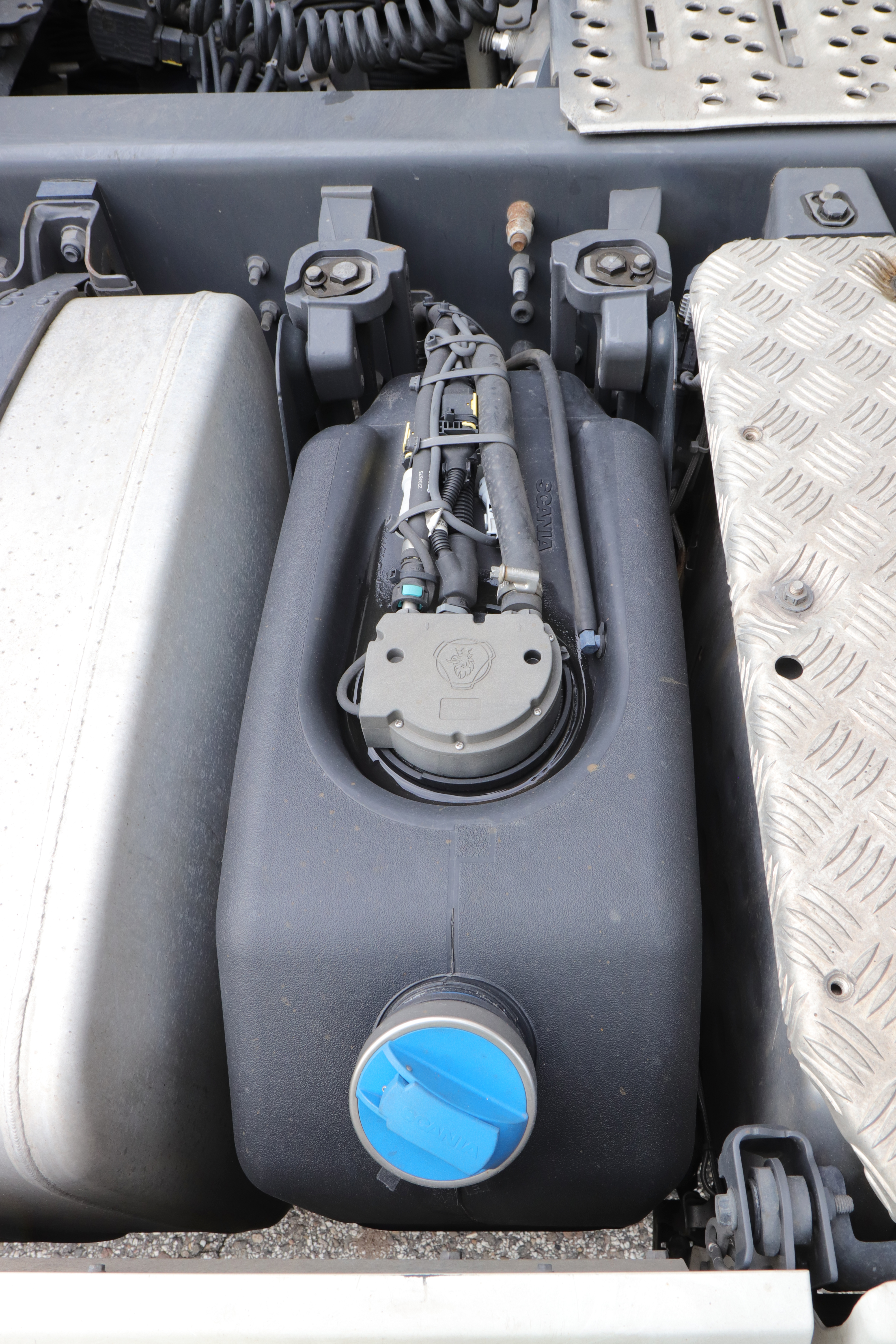
Illustrative archive photograph: truck AdBlue tank, KaiBorgeest, September 2021. Image source; CC BY-SA 4.0. Original image unchanged; it does not document the transfer equipment described here.

Original source: Cummins: DEF Purity and Cleanliness.