Dallas I-30 Closure: Check October 24–26 Trips
Dallas schedules an I-30 closure for October 24–26. Check the actual route, receiving access and appointment before dispatch.
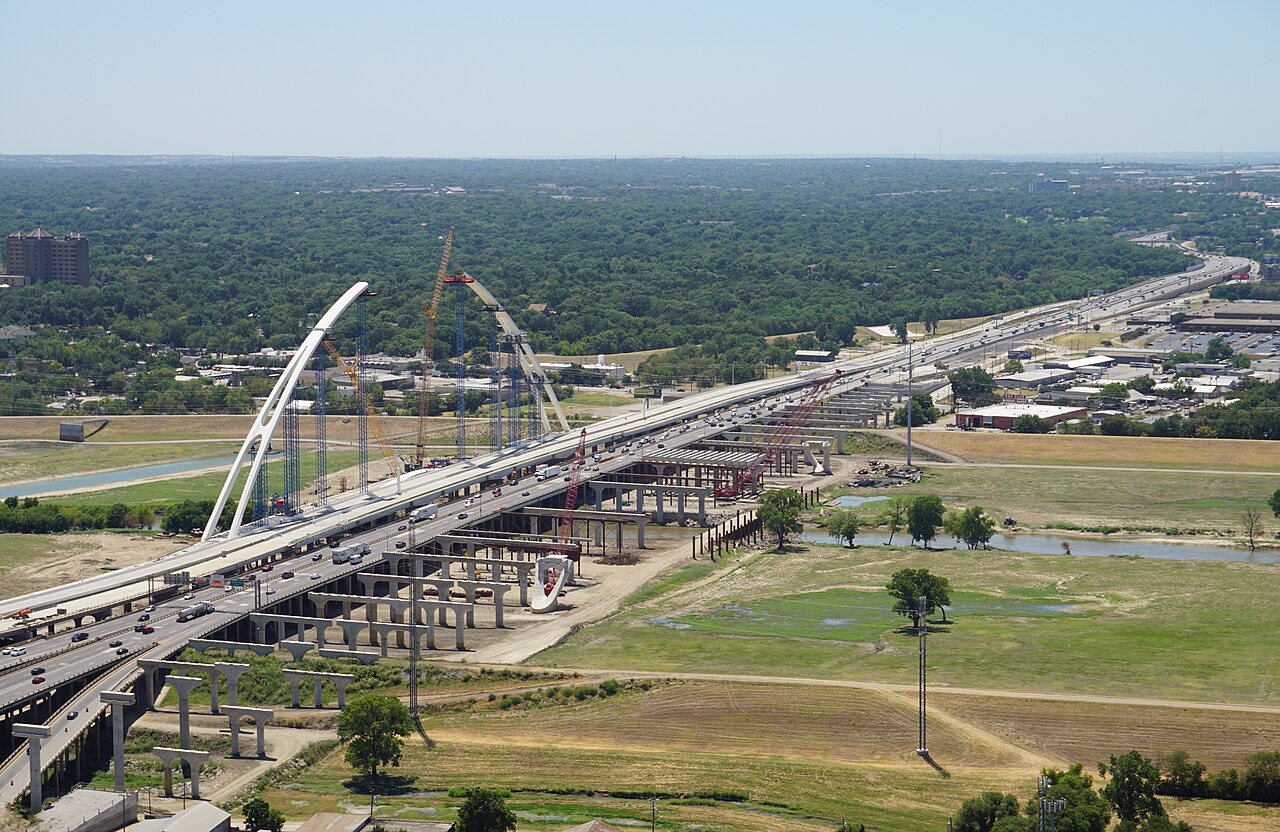
Archive photograph: I-30 viewed from Reunion Tower, August 8, 2015, Michael Barera. Illustrative corridor image, not current road work or traffic. Commons resized rendition; no content alteration. Photo remains CC BY-SA 4.0. Michael Barera · CC BY-SA 4.0.

A weekend road notice is most useful before it becomes a missed appointment. Dallas schedules a full I-30 closure between I-35E and I-45/US 75 from 10 p.m. Saturday, October 24, through 5 a.m. Monday, October 26, weather permitting. Both directions are included. The times are local Dallas time. Treat this as a scheduled restriction, not confirmation that the road has already closed or will reopen at the stated minute.
Attach the notice to the actual trip
For dispatch, the first task is to identify which assignments use the affected section during that window. A delivery somewhere in the Dallas area does not automatically cross the closure. Check the actual approach, the destination entrance and the planned departure route. Keep the trip-specific review with the assignment so the next person handling it knows what was checked.
Separate trips that merely pass through the area from those serving a customer nearby. The first may require a different through route; the second also needs a confirmed final approach to the property. Do not assume a map pin describes the correct truck entrance. Ask the receiving contact to identify the entrance and any access instructions that apply to the scheduled delivery.
Use the official detour as a starting point
The project notice identifies SH 366/Woodall Rodgers Freeway as the signed east-west detour and warns of significant delays. That is general road information, not confirmation that every truck, load or access arrangement fits every movement. Check applicable restrictions for the actual combination and follow current signs and directions. This article does not recommend a local-street shortcut or certify a route for a particular load.
Keep the distinction visible when sharing the notice. A message that says use the official detour leaves room for the required trip review. A message that promises an easy bypass adds a result the notice does not establish. Neither the official announcement nor this article supplies a guaranteed additional travel time for your assignment.
Reconfirm appointments before changing the trip
Contact the customer or receiving party if the reviewed route affects the planned arrival. Ask whether the appointment remains as agreed, who can accept a revised arrival and how that change should be recorded. Do not treat an unanswered message as acceptance. The purpose is to get a shared plan before dispatch and the receiver begin working from different versions.
For illustration, a hypothetical Sunday delivery may have a confirmed appointment but an unreviewed approach. The next useful action is to verify access and discuss any timing consequence with the receiver. It is not to announce a specific delay based on a regional notice. Keep the confirmed appointment, the route question and the customer's response as separate entries until the plan is settled.
Make the handoff easy to read
A brief trip note should identify the affected assignment, the person who reviewed it and the time of that review. Include what changed, what stayed confirmed and what still needs an answer. This is especially useful when one person plans a weekend movement and another handles the actual dispatch. A forwarded screenshot alone can lose its date or the explanation of why it matters.
Preserve the full calendar dates rather than writing tonight or Monday morning. Those phrases become ambiguous when the note is read later. Keep the local time zone attached as well. If a customer uses a different zone, state the agreed appointment clearly instead of silently converting one part of the exchange and leaving the other unchanged.
Recheck close to departure
Road-work plans can change. Before the movement, consult current official information rather than treating this article as a live traffic feed. Check the notice again if the departure changes or the assignment is handed to another dispatcher. After the scheduled end, confirm current conditions instead of assuming that the original reopening target proves the lanes are available.
The archive photograph is from 2015 and shows I-30 in Dallas. It illustrates the corridor; it does not document this weekend's work or current traffic. The same date discipline applies to any image sent with the trip instructions. Keep a historical illustration separate from a current operational observation.
A short dispatch checklist
- Identify assignments that actually cross the affected section.
- Confirm the receiving entrance and appointment.
- Review the route for the actual vehicle and load.
- Record accepted changes and unresolved questions.
- Recheck official conditions before departure.
A useful closure notice ends with a verified trip plan, not a promise that congestion can be avoided. Keep the source date, route review and customer confirmation together so dispatch can act on the information that applies to the movement.
Check current official Texas road conditions on DriveTexas.
Original source: City of Dallas, project detour notice reviewed October 24, 2026.