Cummins Engine Number: Your Manual Lookup Key
A Cummins manual search starts with the engine number. Confirm the document matches your equipment before planning service.
A search for a Cummins engine manual can return a useful-looking document without establishing that it belongs to the engine in your truck. Before choosing a maintenance instruction or requesting a parts quotation, connect the document to the actual engine. The starting point is an engine serial number, commonly abbreviated ESN, rather than a familiar engine-family name alone.
Use the manufacturer's document route
Cummins provides an Engine Manual Lookup tool that uses the ESN to locate owner's manuals and wiring diagrams. Its technical-document page also directs users to QuickServe Online for engine-specific information, including manuals, a parts catalog tied to the serial number and dataplate information. Those are official routes for finding a document; they do not establish that a particular repair or replacement part is appropriate.
For an owner-operator, the practical objective is a clear request: identify the engine, locate the relevant document and ask the service provider to confirm its application. The workflow below is TSN's documentation suggestion. It is not a repair procedure, an assurance of unrestricted access or a substitute for qualified technical support.
Keep vehicle and engine identifiers separate
Create separate entries for the fleet unit number, the vehicle identification number and the engine identifier. Label each entry so someone receiving a copied message knows which number it contains. If a document or photograph supplied by the shop identifies the ESN, retain that source alongside the typed entry. A transcription without its source is harder to check when a digit is questioned.
When the engine information is missing or unclear, ask the service provider to verify it using the appropriate documentation. Do not fill the gap with a number from a similar truck, an online photograph or a previous quotation. If records disagree after an equipment change, flag the disagreement before ordering parts or treating a downloaded instruction as applicable.
Define the question before searching
A manual search works better when the request describes what information is needed. Examples include locating the operator's maintenance section, obtaining the correct document reference for a service discussion or identifying the catalog the parts counter should consult. Keep symptoms and observations in a separate note. Finding a document does not diagnose the reason a truck is in the shop.
Start from Cummins' official technical-document page and follow its links to the relevant service. Record the ESN used in the search, the document title and any version information that is actually shown. Do not invent a publication date when the file does not provide one. If access is unavailable, keep the request open and contact the appropriate support channel with the verified engine information.
Check the document, not just the filename
Before forwarding a file, inspect its identification and stated scope. A filename such as “Cummins manual” is not enough to tell a technician why you believe it applies. Ask the provider to confirm that the document covers the engine and the question at hand. Keep complete references rather than sending a detached screenshot that removes the section heading or qualifications.
For a parts inquiry, include the requested item or service question without assuming that a search result confirms fitment. Ask the supplier to identify the basis for its recommendation and any information still needed. Keep the quoted part, confirmed application and commercial terms together. A catalog reference and a purchase authorization are different records, even when both arrive in the same email.
Make one information packet for the handoff
TSN suggests a compact packet containing the unit identifier, verified ESN, source of that identification, document reference, the specific question and the service contact. Add a field for the answer and a field for what remains unresolved. This is an internal organizational aid, not a Cummins-required form or a new regulatory filing.
For example, a dispatcher may have a manual file while a parts supplier still needs confirmation of the engine number. Mark the quotation as awaiting that confirmation. Do not let “manual located” become “parts approved” as the request moves between people. The packet should show which step was completed and who owns the next decision, without requiring everyone to reconstruct the conversation.
Preserve a usable reference
Keep the original document name and version information with a descriptive local label. If a newer document replaces an older reference, preserve the reason for the change in the unit's service record. At the next maintenance discussion, confirm that the reference remains applicable. Good documentation helps the right person answer the right question; it does not turn an online search into authority to perform unfamiliar work.
Read more practical maintenance guides at Truck Savers News.
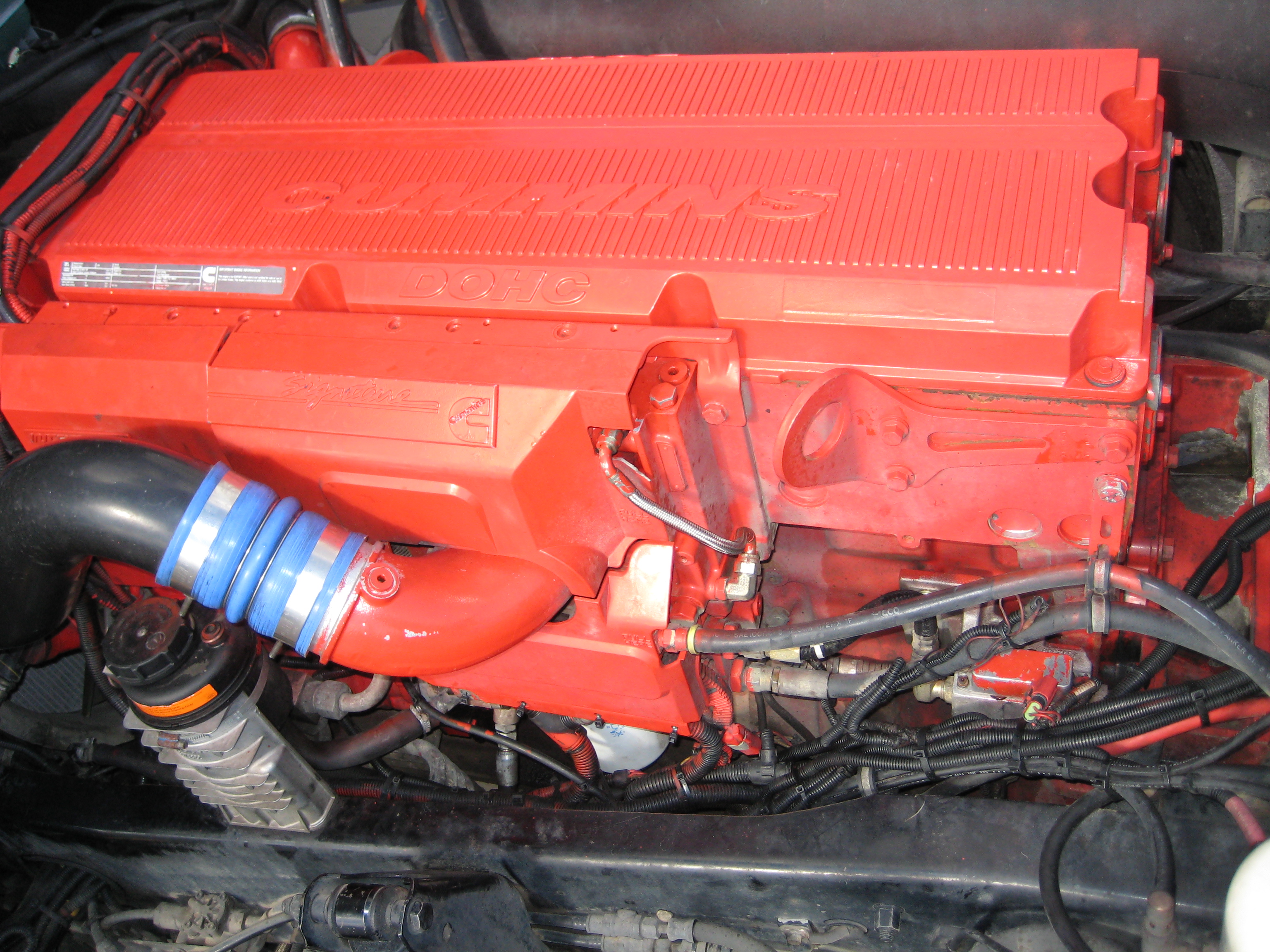
Illustrative archive: Cummins ISX engine in a Volvo FH, Panoha, 2008. Original image, CC BY-SA 3.0; no engine identification is inferred from this photo. Photo source and license.

Original source: Cummins manuals and technical documents.