Coolant Test Strips: Match the Kit to the Chemistry
Coolant test strips have a defined scope. Match the kit and its instructions before treating a reading as useful.
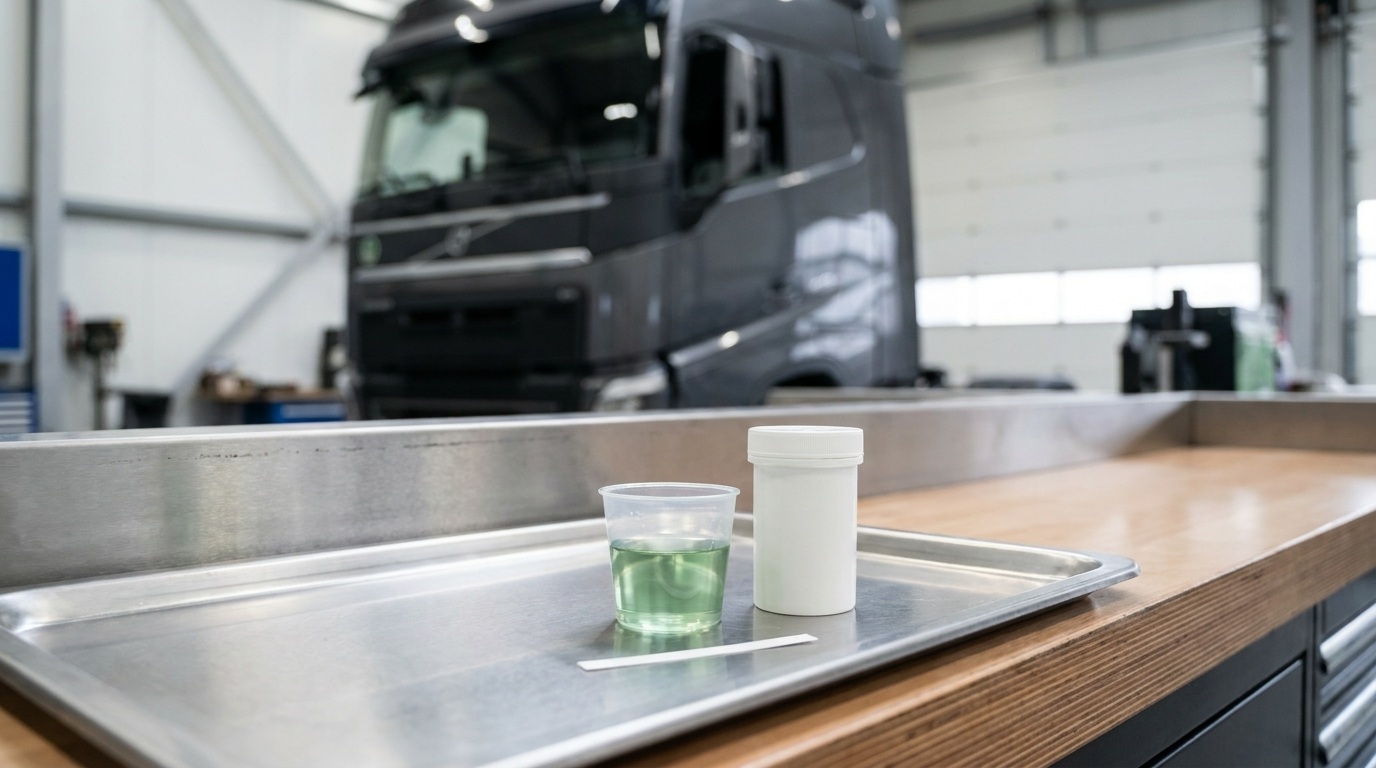
AI-generated editorial illustration; not a documentary photograph.
A coolant test result needs an identified test kit and an identified coolant before it can support a maintenance decision. Fleetguard lists CC2602A as a three-way heavy-duty coolant test for freeze point and molybdate/nitrite, designed for Fleetcool, Fleetcool EX, ES Compleat and ES Compleat NOAT. That named scope should travel with the result instead of being reduced to a note that the coolant passed.
The manufacturer's product page also directs users to follow the included instructions. This is a product-scope check, not a new service interval or a universal procedure for every coolant. This guide offers a recordkeeping method for an owner-operator or small fleet; it does not supply a chemical dosing recommendation.
Start with the product already in the truck
Before ordering a kit, assemble the records for the installed coolant: product name, any service invoice and the vehicle's maintenance documentation. If the paperwork gives only a color, mark the identification as unresolved. The useful question for the technician or supplier is which test is appropriate for the documented product, not which container looks similar on a shelf.
A fleet worksheet can have separate fields for installed fluid, supporting record, selected kit and the person who confirmed compatibility. Keeping those fields separate makes uncertainty visible. An unconfirmed product name should remain unconfirmed until the shop or supplier resolves it; entering a guess would make every later result appear more certain than the evidence allows.
Read the kit before scheduling the test
Ask the person performing the test to consult the instructions supplied with that exact kit. Record its part number and the instruction reference used. Follow the supplied handling, timing and interpretation directions rather than copying steps from an unrelated brand or an older bottle. This article deliberately supplies no substitute timing chart or acceptable additive range.
For purchasing, request a kit intended for the coolant actually documented in the vehicle. Do not turn the listed compatibility of one product into a claim that all strips evaluate every chemistry. If the supplier proposes a different kit, retain that recommendation with the order so the maintenance file explains what changed and why.
A reading and an action are separate records
Create one field for the observation and another for the authorized next action. A technician may need to compare the result with the vehicle's applicable maintenance instructions or request more information. A note saying only good or bad does not explain the measured property, the instructions applied or the basis for an action.
For example, consider an entirely hypothetical truck file containing a coolant invoice and a test report with no kit identification. The immediate paperwork task is to recover the missing kit information. It is not to calculate an additive dose from that incomplete report. If the information cannot be recovered, flag the result for the technician's review rather than rewriting the report to look complete.
Build a compact maintenance record
- Record the truck or unit identifier and the date of the check.
- Identify the coolant using a service document or another confirmed record.
- Record the test-kit part number and the instruction reference.
- Preserve the actual observation without inventing a missing measurement.
- Name the technician or supplier who interpreted the result.
- Separate the observation from any approved service action and its completion.
A photo of the kit label can support the record when readable. It should complement the written product identification, not replace it with an ambiguous picture. Store the material with the relevant service entry so the next person does not have to reconstruct the decision from several unrelated messages.
Close the loop with the shop
When requesting a quote, send the documented fluid identity, the kit information and the existing observation together. Ask what remains to be checked before service is recommended. This produces a clearer conversation than requesting a generic coolant treatment without knowing what is installed or which property the kit evaluated.
Also distinguish the recommendation from completed work. A written plan is not proof that coolant was replaced, corrected or tested again. Close the record only after the responsible person documents the actual action. Any later check should have its own date and supporting result so the file preserves a sequence rather than one overwritten entry.
For a preventive maintenance conversation, review The Truck Savers™. Bring the product and test records. Neither a generic illustration nor the existence of a kit certifies the condition of a particular engine.
Original source: Fleetguard, CC2602A product specification.