CNG Demo: Measure Real Trip Costs
A CNG demo can test your real operating costs. Check fuel access, payload and time before trusting the range claim.
A long range claim becomes useful when a truck completes your work on your route. Hexagon Agility's current demonstration program gives fleets a way to evaluate natural-gas equipment before making a purchase decision. Its sleeper specification lists approximately 1,200 miles of range. Treat that figure as a manufacturer's claim to investigate under operating conditions, rather than a guaranteed distance between fuel stops or a reason to replace a diesel truck without a measured comparison.
Know what the demonstration actually offers
The published sleeper sheet describes a 2026 Freightliner Cascadia 126 SLP with a Cummins X15N natural-gas engine. It lists up to 500 horsepower, up to 1,850 lb-ft of torque and storage comprising a 175 DGE back-of-cab system plus two 45 DGE side systems. Those capacities total 265 diesel gallon equivalents. DGE expresses an energy equivalence; it is not a count of gallons of diesel carried by the truck.
The company offers day-cab and sleeper demonstrations in the United States and Canada. Availability for a particular customer, location and date must be confirmed with the program. This article evaluates the existing offer; it does not establish a new launch date or independently validate its performance claims. The useful question for a small fleet is which repeatable job the demonstration can answer.
Start with a lane, not a national station total
Select a lane you already understand. Record the loaded and empty segments, pickup windows, delivery appointments and normal fuel stops. Then identify a primary and a backup CNG stop that can serve the proposed vehicle. Ask about access hours, payment arrangements, truck clearance and current operating status. A station appearing on a map is a starting point for verification, not proof that it will fit every load or trailer.
The Department of Energy's Alternative Fuels Data Center distinguishes public and private facilities and provides route searches. It also distinguishes fast-fill from time-fill installations. A national total that combines public and private sites cannot answer whether a particular driver can fuel during a particular shift. Use the locator to narrow the search, then confirm the relevant stops directly before arranging the trial.
Compare the entire work cycle
A trial sheet should pair the natural-gas trip with a reasonably comparable diesel trip. Record the load, actual route, distance, weather, travel time, fueling detour and fuel purchased. Note differences rather than hiding them in an average. If one truck runs empty and the other carries a full load, the comparison needs qualification before it becomes a purchasing argument.
- Measure time from leaving the route to returning to it, not only minutes at the dispenser.
- Keep fuel quantities and their billed units alongside the price.
- Record the proposed truck's actual scale weight and the payload required for the job.
- Ask how service support and a replacement vehicle would work on this lane.
- Keep the driver's observations separate from measured fuel and time data.
Turn a fuel discount into cost per trip
Consider an explicitly hypothetical comparison. A diesel trip uses 100 gallons at $4 per gallon, costing $400. A natural-gas trial uses 110 DGE at $3 per DGE, costing $330. Fuel alone is $70 lower. If the trial also creates $90 of additional detour and labor cost, the combined total becomes $420, or $20 more than the diesel fuel cost in this simplified example. These are teaching numbers, not current prices or measured results.
The example deliberately leaves purchase payments, maintenance, insurance and other ownership expenses out of the calculation. Add the costs relevant to your decision with real quotes and records. Its lesson is narrower: a cheaper unit of fuel does not settle the cost of completing a paid trip. Use the same accounting boundaries for both trucks so the comparison remains understandable.
Agree on the decision before the test
Write down what would justify a next step: acceptable cost per completed trip, sufficient payload, workable fueling access and reliable appointment performance. Set those criteria with the people who dispatch, drive and maintain the vehicle. A test can also end with a limited conclusion, such as suitability for one repeating lane while other routes need more evidence. One successful demonstration does not prove every fleet application.
Keep a copy of the specification, the trial log and unanswered questions together. That package supports a purchasing discussion more effectively than repeating a range headline. Before expanding the test, confirm which results were actually measured and which remain supplier claims or estimates.
For more operator-focused truck reporting, follow Truck Savers News™.
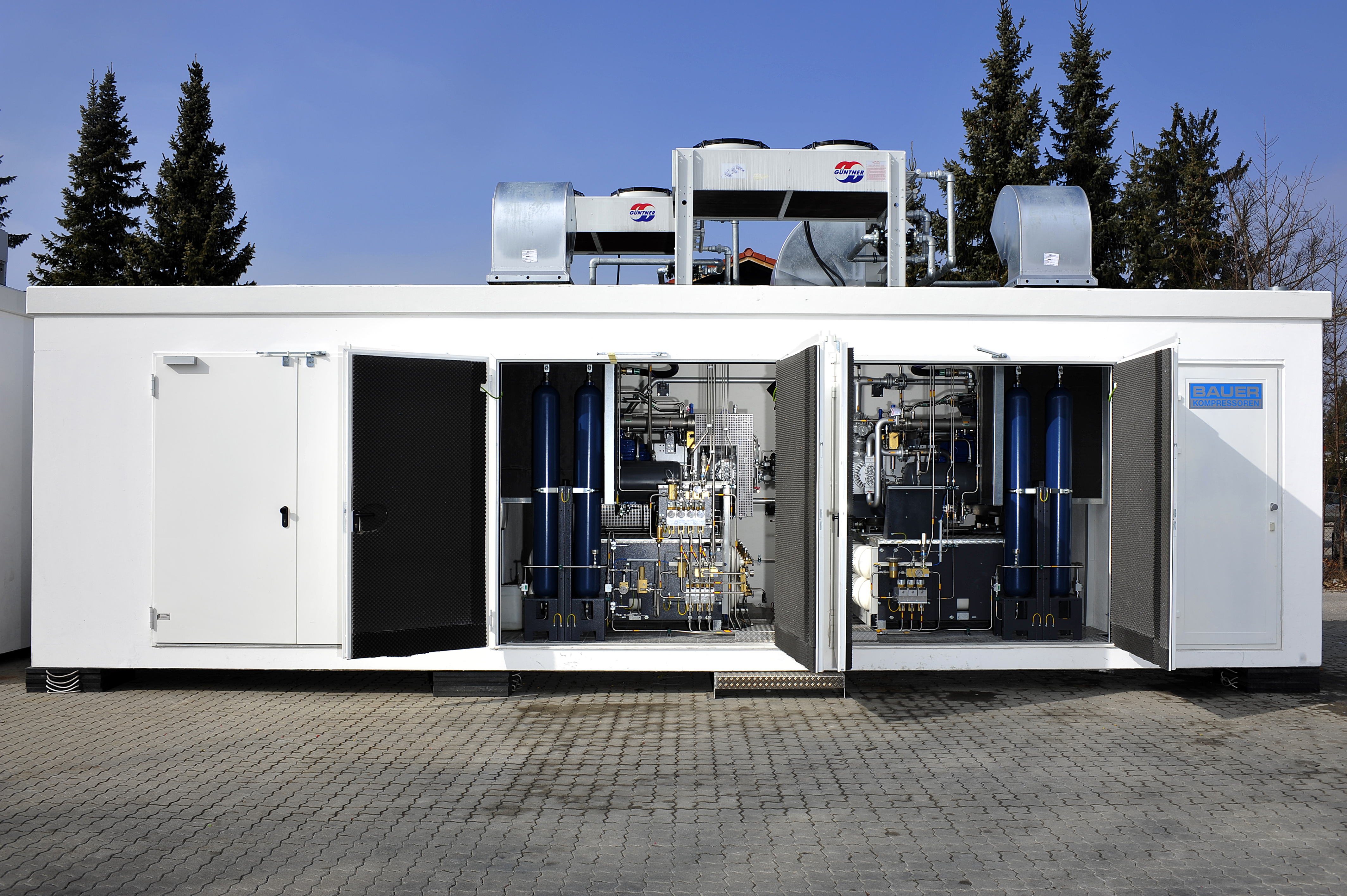
Illustrative archive photograph: Bauer CNG station compressor and storage equipment in Geretsried, Germany, 2011; not the demonstration truck or a US route stop. Photo credit: Marcus Schlaf / Historiker1208, Wikimedia Commons, CC BY-SA 4.0, unmodified.

Technical references: manufacturer sleeper specification; DOE natural-gas station guidance. Original source: Hexagon Agility demonstration program.