Business Changes: Keep IRS Records Current
IRS records need their own review. Separate address changes from a change in the responsible party before filing.
A business move can leave two addresses behind: the place where the trucks now park and the address still attached to the company's tax records. For a small carrier, checking both is a practical part of the move. IRS Form 8822-B covers changes to a business mailing address, business location, or responsible party. Those are separate fields, and the instructions do not treat every change as the same event.
This is a guide to organizing that review, not an announcement of a new tax rule. The current IRS form and instructions were checked on October 7, 2026. They identify a specific reporting period for a responsible-party change: within 60 days. Do not turn that statement into a blanket claim that every address change has the same reporting period.
Start with what actually changed
Imagine a two-truck business moving its yard while its accountant continues receiving business mail at the same address. That is an illustrative situation, not a reported carrier case. Writing only “we moved” in the office checklist would miss the distinction between physical location and mailing address. Before preparing a form, describe the change precisely and compare it with the information already on file.
The form provides separate spaces for the old mailing address, new mailing address and new business location. It also asks for the business name and employer identification number. The practical task is to gather the existing record and the new information together. A driver should not have to reconstruct the company address from an old invoice while the person signing the form is waiting.
Identify the responsible party correctly
The IRS instructions direct readers to Form SS-4 and its instructions for guidance on who qualifies as the responsible party and which identification number belongs in that field. A new dispatcher, mailing contact or bookkeeper is not automatically the answer. If ownership or control changed, have the person handling the business's tax affairs determine the correct entry from the applicable guidance.
Keep the date of that change in the working file. The 60-day requirement concerns a change in the responsible party, rather than the date someone in the office noticed an outdated record. When the facts are unclear, collect the underlying documents and obtain qualified tax help. Guessing a name to finish the paperwork creates another item that later has to be reconciled.
Use the instructions, including the mailing table
On the version currently linked by the IRS, the filing destination depends on the old business address. Do not select an address solely because the business has moved to a different state. Open the current official form, read its filing table and follow the entry that applies. The instructions also distinguish a home-address change, which uses Form 8822, from the business form discussed here.
The form says not to attach it to a tax return. Its signature instructions identify eligible signers; a representative signing for the taxpayer must attach a copy of the power of attorney. These are reasons to review the complete document, including the second page, before sending it. A downloaded first page or a checklist copied from a previous move may omit the condition that matters.
Separate preparation, sending and processing
An internal note saying “address updated” should describe what happened. Was a draft prepared, was the signed form sent, or was the change actually reflected in the relevant record? Those stages are different. The IRS instructions say processing generally takes four to six weeks; that is not a guarantee for a particular submission and does not mean a form was accepted merely because it was mailed.
For office coordination, keep a dated copy of the completed form and whatever delivery evidence the chosen method provides. Assign someone to follow up if the change remains unresolved. This is an editorial recordkeeping suggestion, not an additional IRS filing requirement. Store identification numbers securely and share the working file only with the people who need it for the business task.
A compact handoff for a small fleet
Use one worksheet with six entries: the legal business name, the relevant existing record, the exact information changing, the effective date, the authorized reviewer and the follow-up status. Put the supporting documents next to that worksheet. If the mailing address stays the same while the yard changes, say so explicitly. If two changes occurred on different dates, preserve both dates instead of merging them into a vague relocation note.
Also maintain a separate list of other business records that may need attention. Updating an IRS record is not evidence that an insurer, bank, customer or transportation agency changed its own file. This article does not determine what another organization requires. The useful habit is to name each record, its responsible person and its evidence of completion, so one finished task does not conceal several unfinished ones.
Close the move with an accurate record
The IRS warns that missing notices does not stop interest and penalties on tax deficiencies. Its instructions also explain that use of this particular form is mandatory for a responsible-party change and otherwise voluntary. Keep those statements distinct: reliable delivery of tax correspondence matters, but that does not justify inventing a universal penalty for failing to submit this form.
Review the current instructions with your tax professional when the business facts require interpretation. For the office workflow, finish with a record that another authorized person can understand without guessing. Continue with our guide to searchable business records to organize the supporting documents.
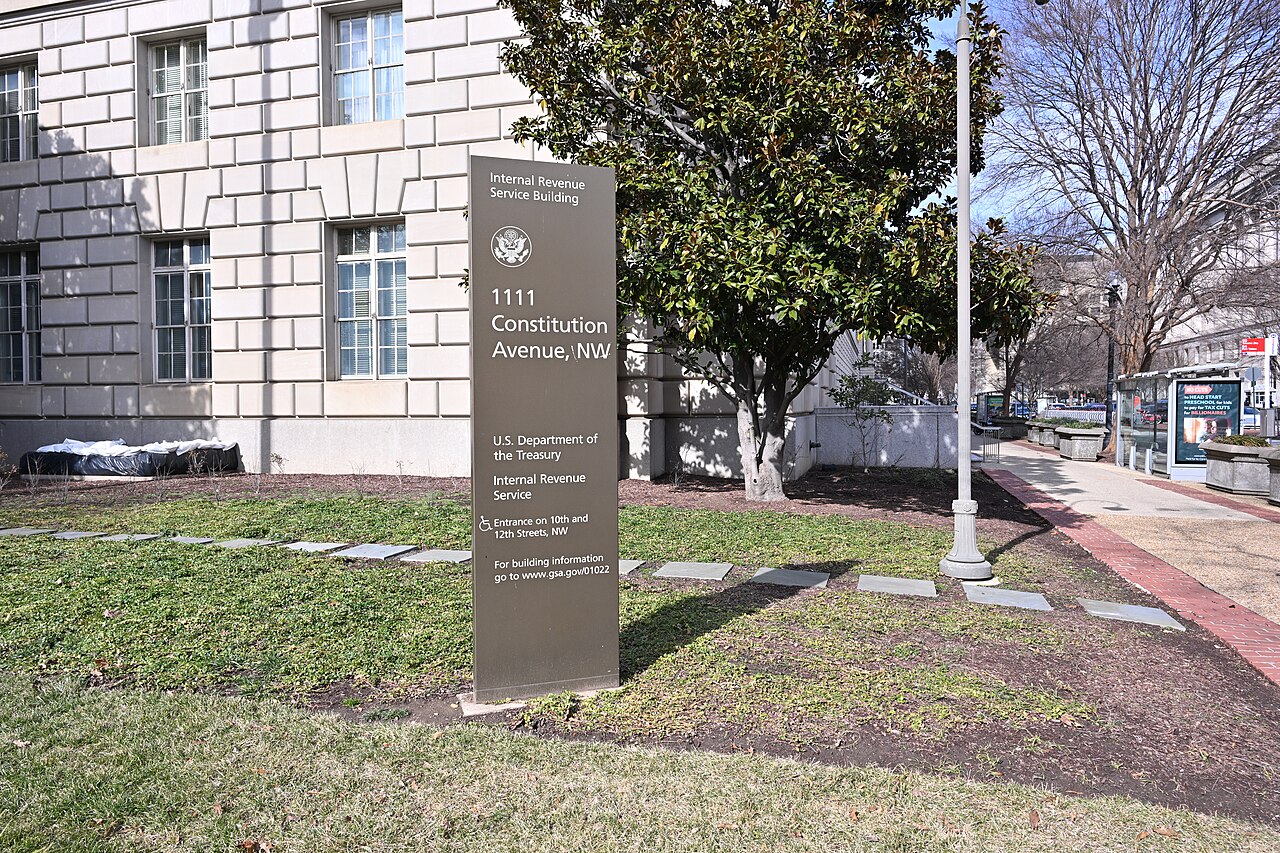
Photo / Foto: G. Edward Johnson, 2025-02-07. Wikimedia Commons, CC BY 4.0. Archive IRS sign; illustrative, unchanged.

Original source: IRS, Form 8822-B and instructions. Current form and instructions.