Brief Squalls: Read the Local Alert Before Departure
Read the local snow squall warning before departure. Match its area and time to the next segment of your trip.
A small snowfall total does not answer the most useful dispatch question: could a short, intense snow squall affect the segment your truck is about to enter? Before departure, read the actual local warning and its time window rather than relying only on a daily weather summary. For a small fleet, the practical task is to connect the alert to the route and communicate any hold clearly.
Why a short warning deserves a separate check
The National Weather Service describes snow squalls as brief, intense events that can occur without a large winter storm. Rapidly reduced visibility and falling temperatures can affect travel even when accumulation is small. Its snow squall warnings focus on particular areas over short periods. When a warning is issued for your area, NWS recommends avoiding or delaying motor travel until the squall passes.
This is an evergreen planning guide, not an announcement of a warning today. It does not identify a currently affected highway or declare any route clear. The following workflow is our editorial way to organize a pre-trip conversation around the official information. It is not a substitute for the warning itself, local instructions or the driver's assessment of actual conditions.
Put the route beside the alert
Start with the planned route, the next relevant segment and the expected travel window. Then open the official alert for that area and read its location and validity information. A city mentioned somewhere in a weather headline is not enough to establish whether the planned segment is affected. If the route or alert area is unclear, keep that question open instead of treating a rough match as a complete check.
Use a short dispatch note with fields for the route segment, planned entry time, alert reviewed, review time and person responsible for the next update. Keep the wording faithful to what was actually checked. “Reviewed the local warning at this time” is more informative than “weather checked,” which leaves the next person guessing about the source, area and age of the information.
Separate a hold from a delivery promise
If a warning applies to the planned travel, communicate the NWS recommendation to avoid or delay that travel until the squall passes. Do not convert the typical brevity of a squall into a guaranteed departure time. A warning window helps organize the review; it is not a promise that conditions will meet the needs of a particular truck at a particular minute.
Explain a delay to the receiving contact without inventing a revised arrival. For example: “We are reviewing a local snow squall warning affecting our planned segment. Travel is on hold while the responsible team reassesses the official information and conditions.” This hypothetical message states the operational status. It does not claim that the truck has passed the area or that the road will reopen on schedule.
Make the handoff specific
A dispatch shift change can lose the reason behind a hold. Pass along the same segment reference, source review time and unresolved question to the next responsible person. Ask for acknowledgment through the fleet's established process. Avoid sending an unexplained screenshot that forces the recipient to reconstruct which trip it concerns and whether the image is still relevant.
For an owner-operator handling both driving and coordination, set aside the review for a safe stopped moment. This article provides a preparation checklist, not a request to read a phone while driving. If the operator is already in transit, use current official guidance and the company's established safety process; do not ask this editorial checklist to resolve a situation it cannot observe.
Recheck the question, not just the saved image
When reviewing the hold again, return to the official information and the actual trip details. Confirm which segment is still planned and who has the current update. Keep an older screenshot as a record of what was reviewed, not as evidence of present conditions. Note any change in route or planned travel time so the next review addresses the same operational decision.
There is no universal speed, waiting period or detour in this guide. Those would require information about the actual conditions and vehicle that a general article cannot supply. Do not infer that absence of a warning guarantees safe travel. The value of the workflow is a clear, current conversation, with uncertainty visible and responsibility for the next check assigned.
A pre-trip note you can actually use
- Identify the next route segment and planned travel time.
- Read the current official alert for the relevant area.
- Record when the information was checked.
- Communicate any travel hold without promising an unverified arrival.
- Name the person responsible for the next review.
- Preserve unresolved location or timing questions in the handoff.
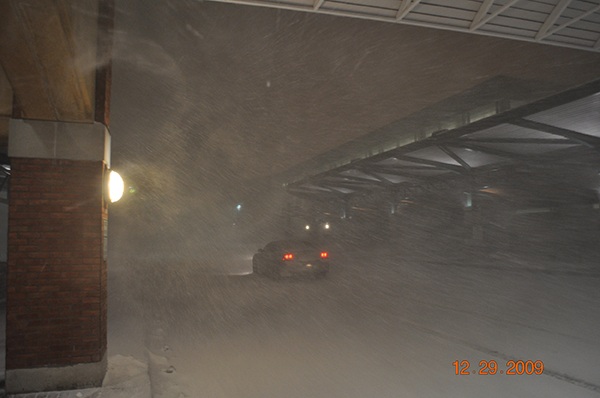
The photograph is an archive example of snow squall conditions at an airport, not a live highway report. For the next trip, make the local warning and its travel recommendation part of the departure conversation before a general snowfall total becomes the only fact everyone remembers.
Archive photograph: Burlington International Airport, December 29, 2009. Peter Banacos / National Weather Service; public domain. Illustrative, not current route conditions.
Continue with our practical route and fleet coverage.