ATRI Survey: Review Your Cost per Mile
Fuel tops ATRI's 2026 list of trucking concerns. Turn the ranking into a review of your actual lane costs.
Fuel prices lead the American Transportation Research Institute's 2026 list of trucking concerns, released October 18. Nearly 3,100 stakeholders participated in the survey. The economy, first for the previous three years, moved to sixth. For a small fleet, the useful question is what the ranking changes in the next operating review, rather than whether every business should react the same way.
A ranking is a starting point, not your budget
The public release describes respondents from several parts of the industry. It also distinguishes drivers' concerns from carriers' concerns. That makes the survey useful for setting an agenda, but it does not establish the fuel bill, operating margin or best purchase for an individual truck. This article uses the public release; it does not reproduce the full report's scoring or infer a representative cost for every fleet.
Imagine an owner looking at a stack of fuel receipts after a difficult week. The immediate temptation is to compare the largest receipt with last month's smallest one. That comparison might overlook the distance covered, the amount purchased or a different lane. Start by matching the records to the work. The pump total is a payment; a usable operating comparison needs a defined period and distance.
Separate purchased gallons from consumed gallons
For an internal review, keep dates, unit numbers, odometer readings, gallons, net fuel charges and any separately stated fees together. A purchase period that starts with an almost empty tank and ends with a full one can make purchased gallons look like consumption. Consistent tank levels at the boundaries, or another documented consumption method, help avoid that mismatch. Do not call the difference a mechanical problem without checking the records.
The person entering receipts and the driver may see different pieces of the same trip. A missing transaction or an incorrect unit assignment can survive a spreadsheet formula. Review an unusual result with the people who produced the records before using it to judge driving performance. The purpose is a repeatable calculation with an explanation, rather than a competition over whose number looks better.
Show both total miles and loaded miles
Consider a hypothetical week with 3,000 total miles, including 2,500 loaded miles, and 500 gallons consumed at an assumed $6 per gallon. Fuel expense is $3,000. Dividing by all miles produces $1 per mile; dividing by loaded miles produces $1.20. Both calculations describe the same assumed fuel expense, but answer different questions. These are illustrative inputs, not current pump prices, an efficiency benchmark or a suggested freight rate.
Now assume only the price changes to $6.25. The same 500 gallons cost $3,125, an additional $125. That increase cannot, by itself, demonstrate worse fuel economy. Conversely, an unchanged pump price does not prove unchanged trip economics if empty miles or waiting time increase. Keep the price, consumption and work performed in separate columns so that the discussion identifies what actually changed.
Connect the fuel review to the job
A load comparison should include the movement required to start and finish the work, using your documented assumptions. Record the relevant empty travel, expected loaded distance and the fuel treatment in the agreed terms. A quoted fuel surcharge is different from a surcharge invoiced and ultimately collected. Check those records before assuming that higher fuel expense has been recovered from a customer. This is an operating review, not a replacement for the contract.
A dispatcher might find that two loads with similar loaded mileage require very different repositioning. The useful next step is to identify that difference before quoting the next job. Avoid a universal rule that the cheapest advertised fuel stop or the highest advertised load rate always wins. Your records need to include the additional travel and time required to obtain either one.
Choose a review you can finish this week
- Select one truck and one clearly defined period before comparing the whole fleet.
- Reconcile receipts, unit assignments, distance and the treatment of beginning and ending fuel.
- Calculate fuel expense per total mile and per loaded mile, labeling both denominators.
- Explain significant differences using the documented lane, purchase price and operating conditions.
- Assign one person to confirm the next action and preserve the records used to make it.
Use maintenance records as part of that conversation when a truck has a documented concern. A calculation does not identify the cause of a vibration, establish tire compatibility or prove that a repair will deliver a particular saving. Inspection and the applicable service information remain separate work. Do not turn the survey ranking into an unsupported diagnosis or a reason to defer a needed repair.
Turn the concern into a documented decision
ATRI's finding gives fleets a timely reason to reopen the fuel discussion. Close that discussion with a baseline, a specific question and a date to compare the next period. Preserve unsuccessful assumptions as well as improvements. A visible explanation of what changed is more useful than a promised percentage with no record behind it.
Review The Truck Savers™ service options when a documented maintenance concern needs inspection. No fuel-saving result is guaranteed by this article.
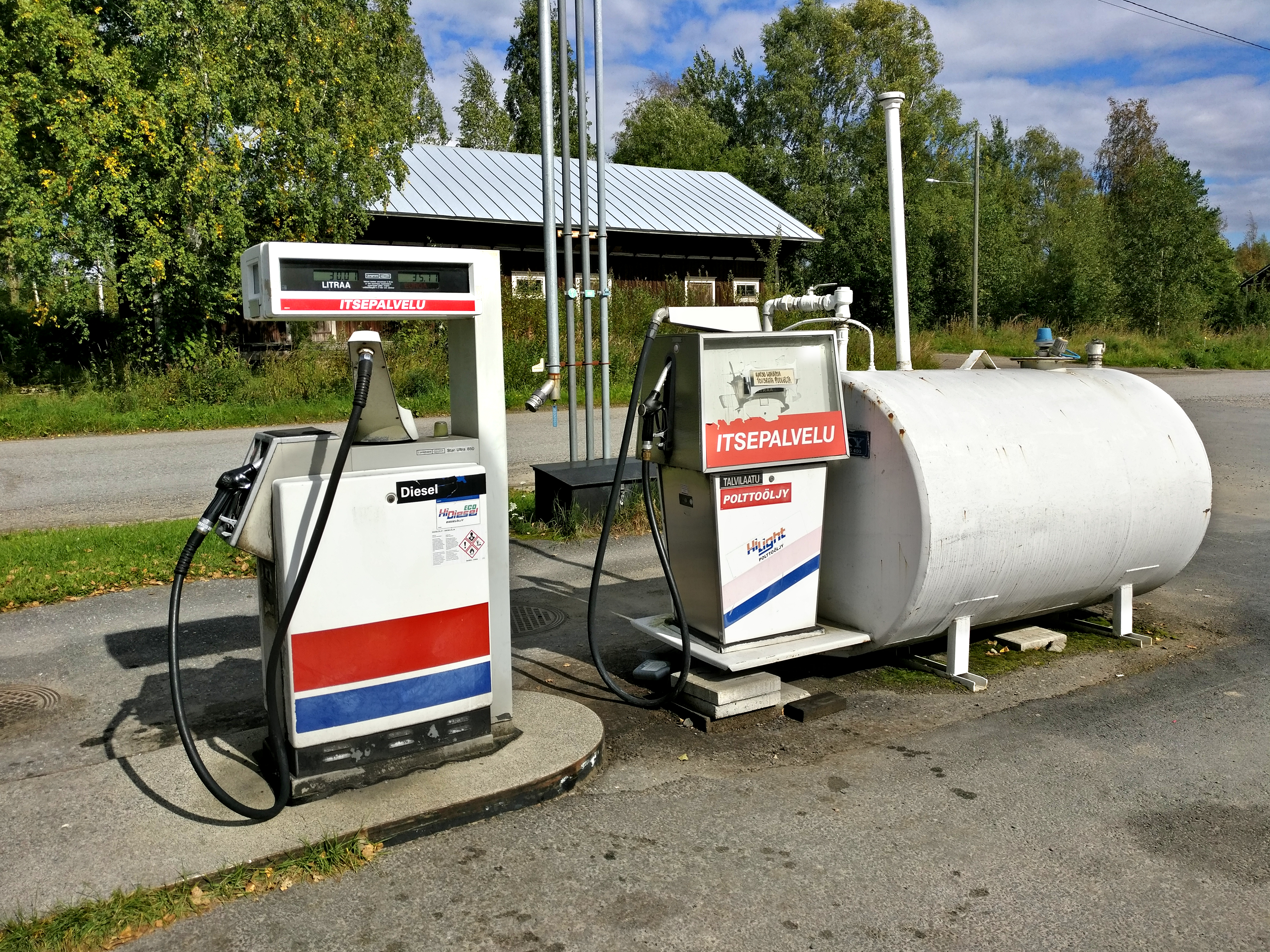
Illustrative archive: a diesel pump in Finland, August 19, 2016; not a surveyed fleet, a U.S. station or a current price. Photo: Santeri Viinamäki, Wikimedia Commons, CC BY-SA 4.0, unmodified.

Original source: ATRI, 2026 industry concerns release.