Arizona Stops Hotshot Load Over Missing CDL
A hotshot pickup and trailer hauling industrial hoses was stopped in Mesa after troopers found the driver lacked the required CDL. The case shows why license class, equipment condition and driver assignment must be verified before dispatch.
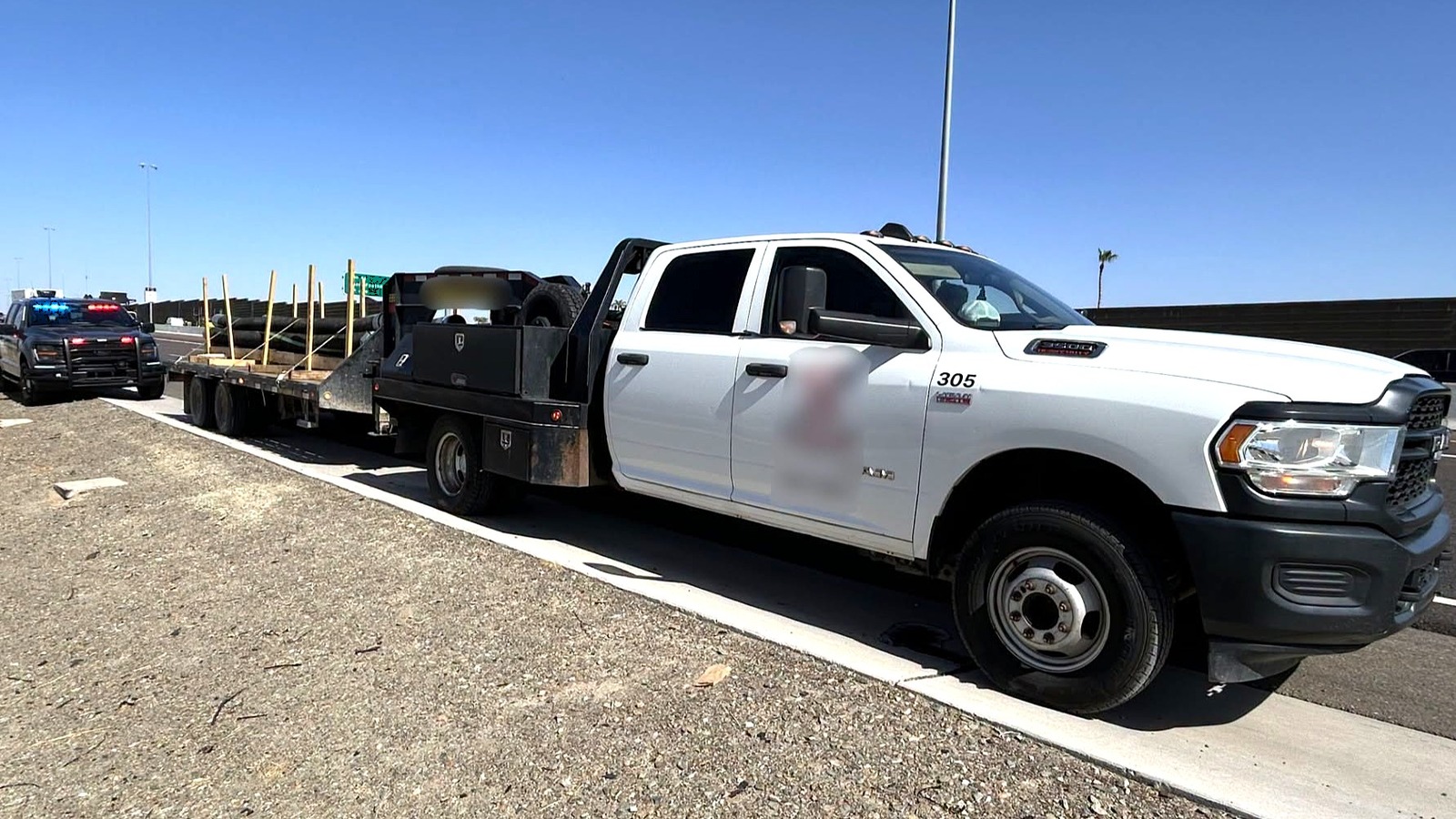
A hotshot pickup pulling a flatbed loaded with industrial water hoses was taken out of service on Loop 202 near Brown Road in Mesa, Arizona, after highway troopers determined that the person behind the wheel did not hold the commercial driver’s license required for the combination. The stop matters to owner-operators and small fleets because a pickup-based rig can still fall under full commercial-driver rules.
The load looked ordinary, but the assignment was not legal
Troopers assigned to commercial-vehicle enforcement stopped the truck and trailer on Saturday after observing equipment issues and seeing that the driver was not wearing a seat belt. During the inspection, they checked the operator’s credentials and found no CDL. The rig was hauling long coils of industrial hose on a flatbed trailer, a common type of hotshot load that can look less imposing than a tractor-trailer while still meeting the weight thresholds for a commercial license.
The unusual detail was that a passenger riding in the rear of the pickup reportedly had a valid CDL. That did not cure the violation. The licensed person was not operating the vehicle, and the person actually driving was the one required to possess the proper credential. Citations included operating without a CDL and failing to use a seat belt.
Why pickup-and-trailer combinations create compliance traps
CDL applicability is determined by the vehicle or combination classification, not by whether the power unit is called a pickup, whether the trip is short or whether the load appears light. Under federal definitions, a Group A combination generally enters CDL territory when its gross combination weight rating or gross combination weight is 26,001 pounds or more and the towed unit exceeds 10,000 pounds. Other CDL triggers apply to heavy single vehicles, certain passenger vehicles and placarded hazardous-material loads.
For hotshot operators, the key number may be the manufacturer’s rating on the truck and trailer rather than a driver’s estimate of what the cargo weighs that morning. Dispatchers should review the truck’s certification label, the trailer data plate, registered weights and the actual operating configuration. A driver with a standard license should never be assigned simply because the rig resembles a personal pickup.
The roadside cost reaches beyond one citation
An out-of-service decision can interrupt delivery, force a carrier to locate a qualified replacement driver and expose the load to detention or rescheduling. The truck may remain parked until the violation is corrected. A missed appointment can also damage a small carrier’s relationship with a broker or customer, especially when the shipment supports a jobsite or industrial operation.
Driver qualification is only one part of the roadside review. The reason for the initial stop reportedly included equipment observations, which is a reminder that visible defects can lead to a deeper inspection. Once the rig is stopped, officers can review the driver’s license class, medical status when applicable, registration, insurance, hours-of-service records, load securement and the condition of the truck and trailer.
What the road hero should review before dispatch
- Match the assigned driver’s CDL class and endorsements to the truck, trailer and cargo.
- Read the truck and trailer rating labels; do not rely only on an empty-scale ticket or the day’s cargo estimate.
- Confirm the driver’s license, medical qualification and any required operating documents are current.
- Inspect the hitch, safety chains, breakaway system, trailer brakes, lights, tires, wheel bearings and suspension.
- Secure hose, pipe and other long or round cargo against forward, rearward and lateral movement.
- Make seat-belt use nonnegotiable for the driver and every passenger.
A five-minute credential check before the keys change hands is cheaper than sending a second driver to a roadside inspection site. Fleets that need help keeping pickups, work trucks and trailers ready for service can find maintenance and repair resources at The Truck Savers.
A broader Arizona enforcement pattern
The Mesa stop came shortly after a four-hour commercial-vehicle detail on State Route 85 in Buckeye. In that earlier operation, inspectors completed 20 inspections, documented 66 violations, placed five drivers and two vehicles out of service, weighed 348 commercial vehicles and identified five overweight trucks. Those figures show that roadside teams are looking at both driver qualifications and equipment compliance.
For a small fleet, the practical decision is simple: assign the license to the rig, not the person’s usual job title. A helper, mechanic, loader or passenger who happens to be available cannot legally take the wheel when the combination requires credentials that person does not hold. The fact that another qualified driver is inside the cab does not transfer that qualification.
Hotshot work rewards speed and flexibility, but neither one replaces a legal dispatch. Verify the driver, ratings, documents and equipment before the truck rolls. The road does not forgive a missing compliance step.
Original source(s)
FreightWaves report; Arizona Department of Public Safety post; 49 CFR 383.5 commercial-vehicle definitions.