Air Dryer Service: Match the Schedule to the Truck
Air dryer service needs more than a calendar reminder. Match equipment, work and service history before booking the next visit.
An air dryer service appointment starts with a question worth answering before the truck reaches the bay: what equipment and workload is the maintenance schedule supposed to cover? A reminder copied from another unit is convenient, but it does not tell a shop which dryer is installed, what work the truck performs, or what happened at the previous visit. This evergreen planning guide separates a manufacturer's maintenance principle from an editorial worksheet an owner-operator can prepare without attempting a repair.
The verified maintenance principle
In its June 2024 technical guidance, Bendix distinguishes vehicles with high or sensitive air demand from standard-demand applications. It says the truck manufacturer's published maintenance requirements take precedence when they require more frequent attention. Vehicle age, compressor condition and operating environment can also affect the interval. That is the source-based takeaway here; this article does not assign your truck a replacement date or identify a failed part.
Build one equipment record
Our recommended starting point is a single record tied to the fleet unit number. Put the vehicle identification number, model year, current mileage and the shop's confirmed dryer identification together. If the identification is unknown, mark it unknown and ask the technician to establish it. Do not guess a part number from an online photograph or place an order because a cartridge looks similar to the one on another truck.
Attach the most recent relevant invoice rather than rewriting it from memory. A line that names a cartridge is different from a line that documents inspection of the entire system. If the invoice simply says maintenance, ask what work that covered. Keep the original wording and the shop's clarification together so the next person can tell what was performed, what was inspected and what remains undocumented.
Describe the work before requesting an interval
For planning, prepare a short description of the truck's actual assignment. Record whether its work changed since the previous service and list the equipment you know it operates. Ask the shop to decide which information affects the applicable schedule. The purpose is to supply context, not to classify the vehicle yourself or convert a general article into a manufacturer-approved service interval.
A small fleet can use a simple comparison sheet: unit, installed equipment, typical assignment, last documented service and next review owner. The value is visibility. Two trucks bought together may have different records or assignments, and a shared purchase date does not fill the missing fields. Leave blanks visible until someone verifies them instead of importing the most convenient answer from the neighboring row.
Separate an observation from a diagnosis
If a driver reports a change, preserve what was actually observed: the time, unit, conditions and any displayed message. Keep a photograph of a readable warning where it can be taken safely. Avoid replacing the observation with a confident parts diagnosis in the work order. A note saying that a behavior changed gives the technician a starting point; a note naming an untested component can prematurely narrow the conversation.
This worksheet is not a pressure test or a release-to-service procedure. It gives no permission to ignore warnings, continue operating with an unresolved air-system concern, open pressurized components or substitute a social-media demonstration for the correct service instructions. Technical assessment and any repair belong with qualified personnel using the documentation for the equipment actually installed.
Use the estimate to close the information gaps
Before authorizing work, ask for the proposed scope in writing. Which item is routine maintenance, which finding requires diagnosis, and which recommendation depends on information not yet confirmed? Ask the shop to identify the applicable maintenance reference and explain the next due point in terms your fleet can track. Do not turn the widest interval found online into a target that overrides the vehicle's own requirements.
- Confirm the truck and installed dryer identification.
- Bring the previous invoice and its service date.
- Describe the current assignment and changes in use.
- Separate driver observations from unverified conclusions.
- Record the shop's work scope and applicable maintenance reference.
- Assign a person to enter and review the next due point.
Finish with a usable handoff
After the visit, store the final invoice beside the estimate and note any difference between the proposed and completed work. Give the person scheduling the truck a clear status from the shop, not merely a receipt showing payment. A calendar entry is useful only when it points back to a documented decision. The preventive action is to make that decision traceable before the next service reminder arrives.
Read more TSN maintenance and operating coverage.
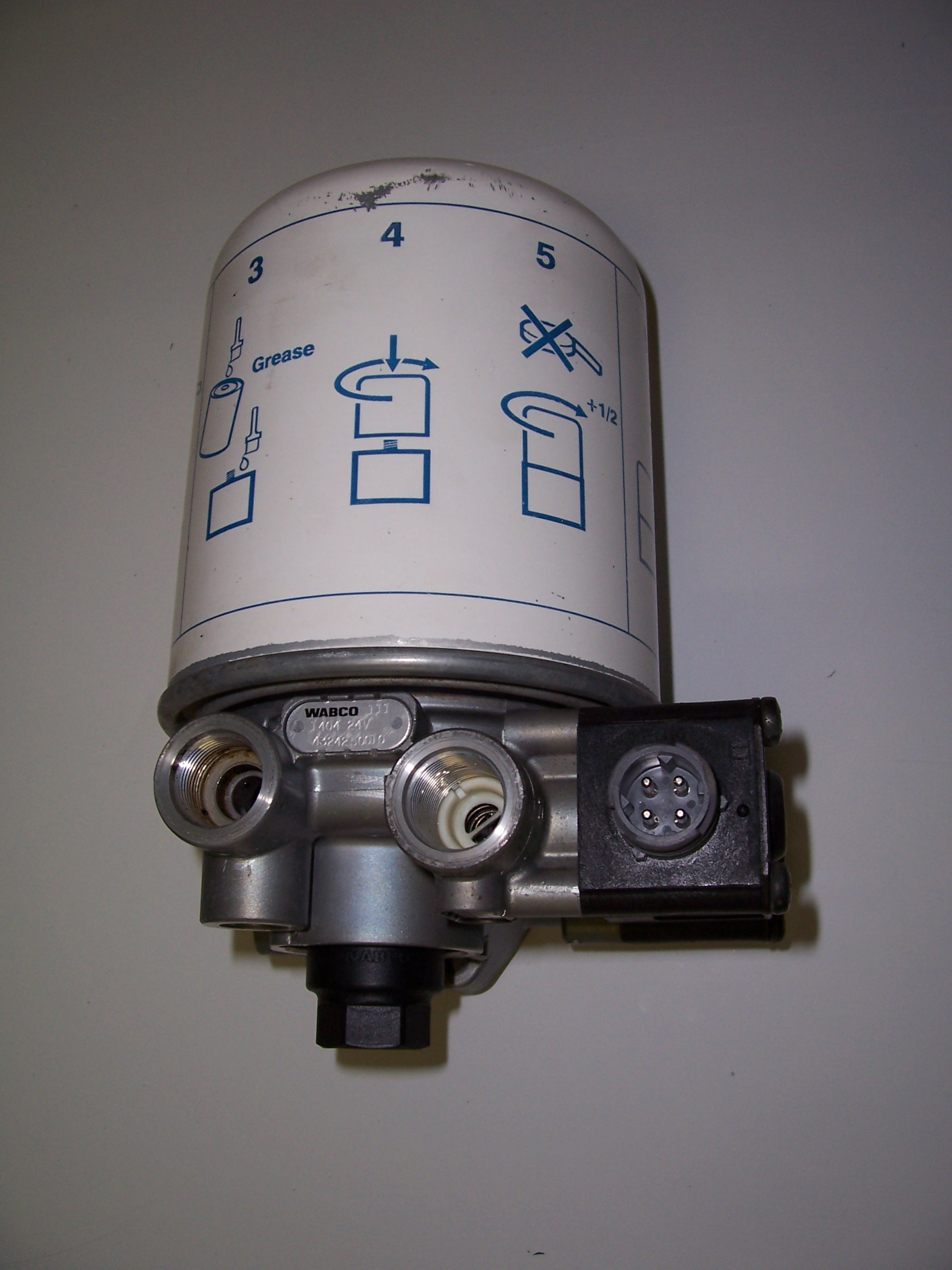
Illustrative archive: WABCO air dryer; not a Bendix product or installation guide. Photo: Panoha, CC BY-SA 3.0. Unmodified.
