Air Disc Brake Inspection Needs More Than Pad Wear
Air disc brake inspection covers several components. Ask for findings and applicable limits before closing the work order.
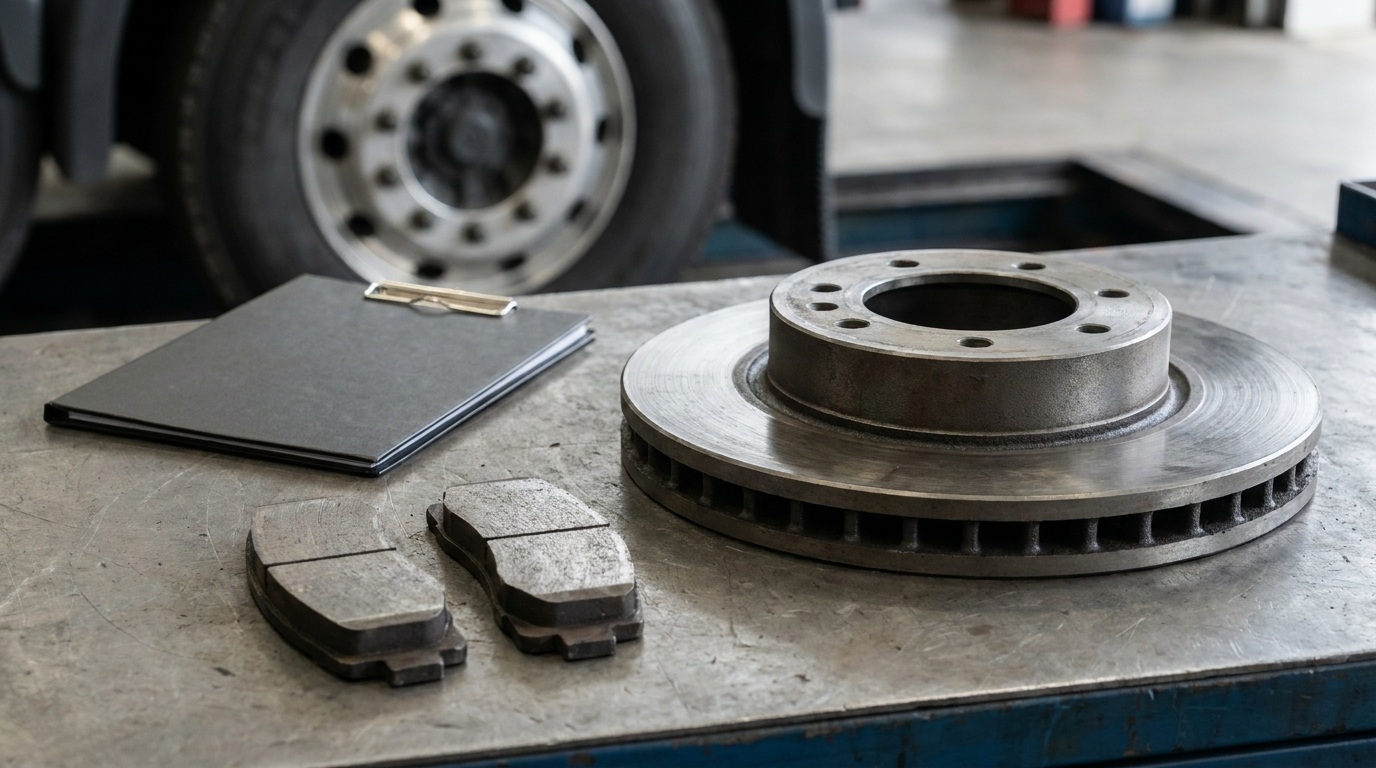
AI-generated editorial illustration; not a documentary photograph.
A note that brake pads still have material does not describe the whole air disc brake inspection. Bendix's maintenance guidance identifies additional checks: rotor condition and thickness, caliper movement, running clearances, mounting hardware, and visible damage to protective components. For an owner-operator, that supports a better question at the service desk: what was checked, what was found and which applicable specification was used?
The referenced guidance was published August 15, 2022. This is a practical guide to documenting a maintenance conversation, not an announcement of a new inspection campaign or a finding about a particular truck. The vehicle and brake manufacturer's applicable service instructions remain necessary for the actual inspection and any repair decision.
Ask for findings by wheel position
When opening the work order, identify the unit and the reason for the visit. If a driver has reported a concern, preserve the driver's own description and when it was observed. Do not replace that description with an assumed diagnosis. A report of a symptom and a technician's confirmed finding belong in separate fields.
Ask how the shop will identify each position in the report. A consistent layout, such as the shop's axle and side labels, allows the owner to connect a finding to the correct assembly. A statement that a truck's brakes were checked is less useful than a report showing which positions were assessed and which observations require follow-up.
Keep different inspection subjects visible
Use separate sections in the job record for friction material, rotor, hardware and the remaining assembly checks identified by the technician. This is a way to organize the shop's report, not a do-it-yourself procedure. The person performing the work should determine the correct access, tools and safety measures under the applicable instructions.
If a measurement is included, ask the shop to record what was measured and the specification it compared with. A number alone is incomplete. Pad material, a complete pad assembly and another component dimension are different subjects; the report should make its subject explicit rather than leave the owner to infer it from a bare value.
This guide intentionally supplies no universal wear limit. Do not apply a number found in an old news article across every brake model, measurement method or operating jurisdiction. Ask the qualified technician to document the requirement used for the installed equipment and the decision that follows from the actual findings.
Separate an inspection from a parts quotation
An estimate describes proposed work. It does not by itself demonstrate the observed condition. Request a short explanation connecting each proposed part to a finding or to the relevant service requirement. Where practical, keep the technician's photographs with labels that identify the unit, position and component being discussed.
Consider a hypothetical estimate that lists pads but says nothing about the associated inspection findings. The useful next step is to ask for the inspection record and the basis of the recommendation. It is not to declare the estimate unnecessary, or to assume the remaining assembly passed because no other part appeared on the quote.
A checklist for the maintenance file
- Identify the truck, date and driver concern without converting it into a diagnosis.
- Keep the shop's wheel-position labels consistent through the report.
- Record the inspected component and the actual finding separately.
- Pair reported measurements with the applicable specification and method.
- Connect proposed work to documented findings or service requirements.
- Retain approval, completed work and any required follow-up as distinct steps.
For a fleet office, assign one person to verify that the returned paperwork belongs to the correct unit. If an image has no identifying label, ask for clarification before attaching it to a different truck's file. Clear records help the next technician understand the previous visit without treating a photograph as a complete inspection.
Close the job with a complete handoff
At collection, reconcile the authorized estimate with the completed work order. Ask the shop to identify anything still pending and who is responsible for the next step. Keep the inspection findings even when no part was replaced: a service visit can produce useful records without producing a parts sale.
A maintenance summary should say what the shop verified and what remains unresolved. It should not turn a pending check into a completed one merely because a truck is ready for collection. Questions about whether the vehicle can operate must be resolved through the responsible qualified personnel and the applicable requirements, not through this article or an illustrative image.
To prepare a preventive maintenance discussion, review The Truck Savers™. Bring the unit information and existing findings so the conversation starts with the actual truck.
Original source: Bendix, maintenance guidance published August 15, 2022.