AeroSlider Savings Need Your Math
An AeroSlider fuel claim needs a fleet-specific budget. Separate test assumptions, equipment cost and measured results.
A fuel-saving claim becomes a purchasing decision only after someone connects it to the trailer's actual work. FlowBelow's current Trailer AeroSlider page advertises 2.5 percent fuel savings, also expressed as three gallons per 1,000 miles, for its aerodynamic package around the trailer wheels. The company attributes its claims to MVT Solutions testing. Those figures belong to the supplier's stated test claim; this article does not independently establish the same result for your fleet.
Keep the units visible
A percentage and a gallons-per-distance figure are two ways of expressing a result, but their relationship depends on the underlying fuel consumption. Three gallons per 1,000 miles equals 0.003 gallon per mile. If those three gallons represent 2.5 percent of a baseline, the implied baseline is 120 gallons per 1,000 miles: three divided by 0.025. That is about 8.33 miles per gallon. This is arithmetic interpreting the displayed figures, not a reconstruction of the test protocol.
Do not silently assign that implied baseline to your truck. Ask which configuration and conditions produced the claim and obtain the relevant test information before treating it as a forecast. In your own spreadsheet, label supplier figures, fleet observations and hypothetical assumptions in separate columns. A number without that label can become a promise merely because it was copied into a purchase request.
Build an explicitly hypothetical example
Suppose, solely for illustration, that a trailer travels 100,000 eligible miles per year and the projected reduction is three gallons per 1,000 miles. The calculation gives 300 gallons annually. At an assumed $4 per gallon, the gross fuel value is $1,200 per year. These are teaching assumptions, not current diesel prices, actual trailer utilization or a verified result from installing this equipment.
Now suppose the complete installed cost in the example is $1,800. Dividing that assumed cost by the assumed $1,200 annual gross benefit gives a simple payback of 1.5 years. The $1,800 is not a quotation or market price. The calculation also leaves out financing, taxes, additional maintenance and other ownership costs. Use a real, itemized offer and relevant operating expenses before evaluating a purchase for your business.
Test the budget's sensitivity
Keep the same hypothetical price and fuel assumption, but reduce eligible annual travel to 50,000 miles. The modeled fuel reduction falls to 150 gallons and its gross value to $600. Simple payback becomes three years before the omitted costs. Changing just one input doubles the period. This illustrates why an advertised result and a high annual mileage estimate should not become a fixed return date in a purchasing discussion.
A second scenario can reduce the assumed improvement rather than mileage. With 100,000 miles and a modeled reduction of 1.5 gallons per 1,000 miles, the arithmetic again produces 150 gallons. That scenario is a sensitivity exercise created for this article; it is not a separate manufacturer test finding. Its purpose is to make the decision's dependence on assumptions visible before money is committed.
Use the trailer's work, not only tractor mileage
Write down which trailer the proposal concerns and how its annual activity will be estimated. A tractor's odometer cannot automatically establish the distance traveled by every trailer it pulls. If the operation exchanges trailers, ask the people responsible for equipment records which source can support the estimate. When reliable activity data are missing, keep a range in the budget rather than disguising a guess as a measured annual total.
Ask the supplier to identify the exact package, installation scope and service requirements in the written offer. The current product page lists rear fairings, flow-through mud flaps and quick-release wheel covers. Confirm what your particular offer contains; the worksheet does not certify compatibility or provide installation directions. Keep technical application questions separate from the office calculation so neither is mistaken for the other.
Decide what evidence would justify expansion
Before evaluating a small deployment, agree on the comparison period, the records to retain and the differences that must be documented. Record actual fuel, distance and relevant operating changes consistently. If the comparison cannot separate equipment effects from changed routes or work, state that limitation. A lower fuel bill by itself does not prove that one device caused the difference.
Keep the quotation, assumptions, test information and eventual observations together. Update the worksheet when real information replaces an estimate, while retaining the earlier version so the decision can be reviewed. The useful output is a transparent budget with identifiable uncertainties, not a universal savings promise. This guide evaluates a currently advertised product claim; it does not independently confirm a new launch date.
Follow Truck Savers News™ for more equipment and operating-cost reporting.
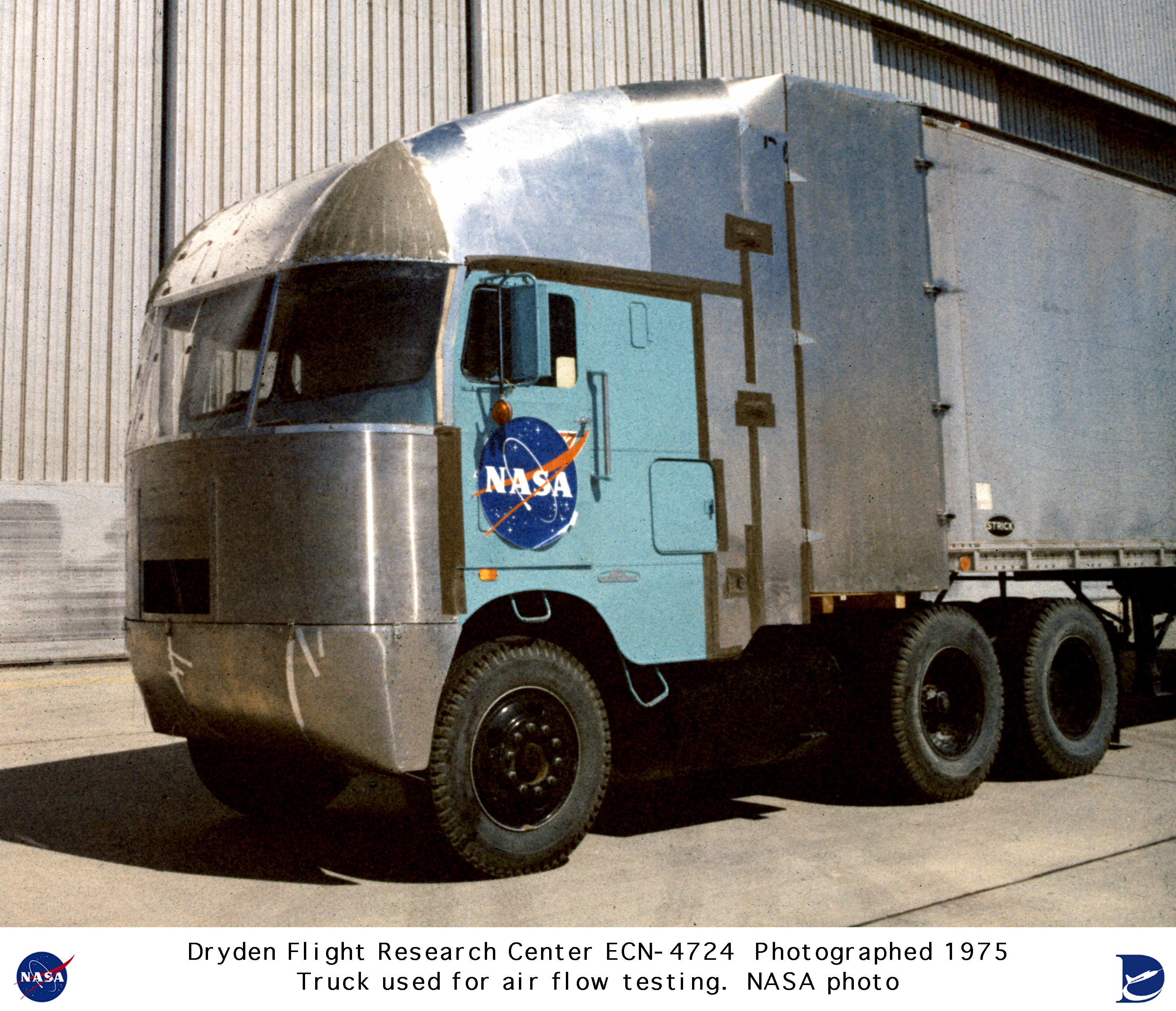
Historical illustration: NASA Dryden truck airflow research, July 31, 1975, image ECN-4724. This is not an AeroSlider installation or evidence of its test results. Credit: NASA Dryden Flight Research Center, Wikimedia Commons, public-domain US government photograph, unmodified. No endorsement implied.

Original source: FlowBelow Trailer AeroSlider product description and testing attribution.