AAPEX Brings 2,500 Parts Suppliers to Las Vegas
AAPEX runs November 3 to 5 in Las Vegas. It fills 550,000 square feet with 2,500 parts suppliers.
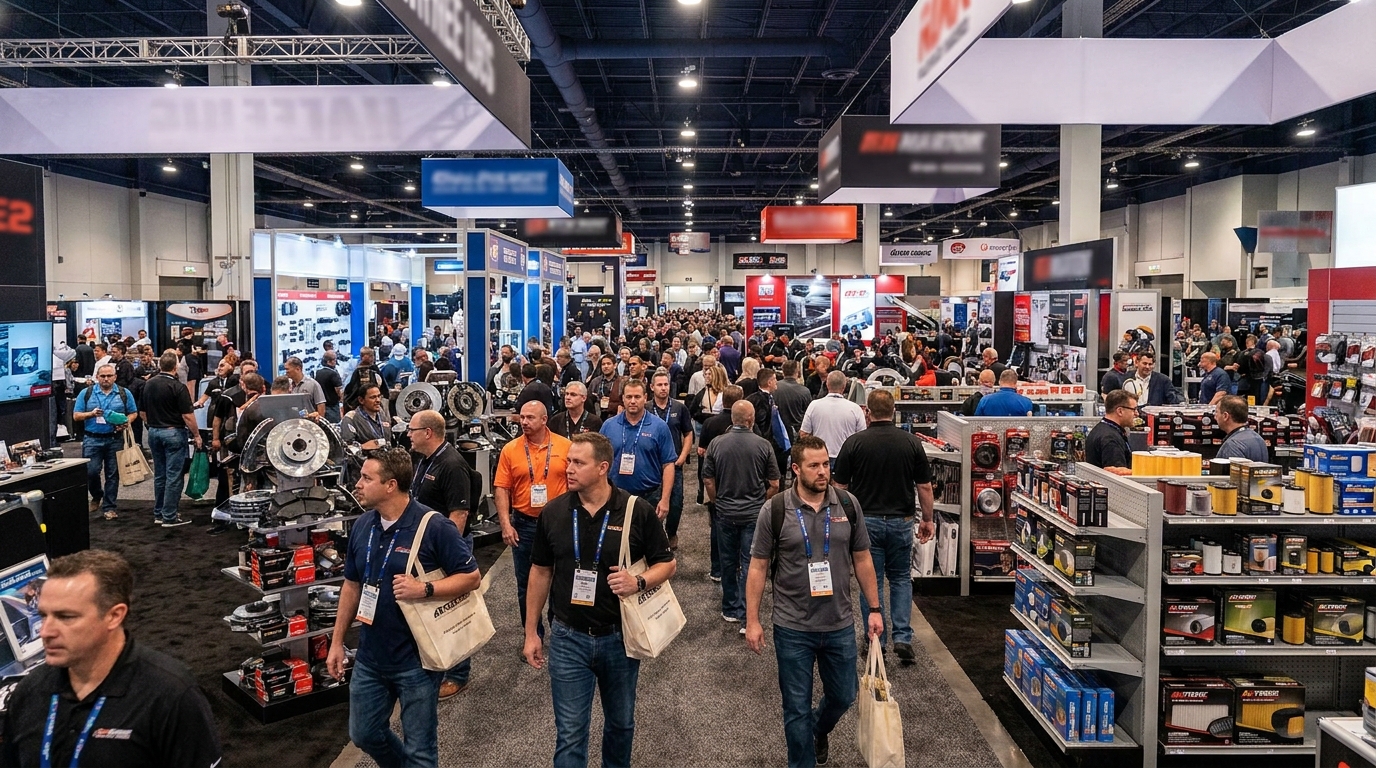
Three days in November put 2,500 parts suppliers under one roof in Las Vegas. AAPEX 2026 runs November 3 to 5 at the Venetian Expo and the AAPEX Forum, and it is the one week of the year when the people who make the parts you buy are all standing in the same building, waiting to be asked questions.
For an owner-operator or a small fleet, that is the part worth understanding. This is not a truck show where you walk around looking at chrome. It is the aftermarket itself, laid out in aisles.
The size of the room
The show fills 550,000 square feet of exhibit space with 2,500 manufacturers and suppliers spread across roughly 5,500 booths. Around 45,000 people attend, and the organizers describe that crowd as running from the C-suite to the shop floor.
Those numbers matter for a practical reason: you cannot walk it randomly. Half a million square feet is not a hall you browse. People who get value out of AAPEX go in with a list of three or four categories and skip the rest without guilt.
Who actually runs it
AAPEX is co-owned by the Auto Care Association and MEMA Aftermarket Suppliers. That ownership tells you what the floor looks like. These are the two bodies that represent much of the industry's supply chain, so the exhibitors lean toward parts, components, tools and shop equipment rather than trucks themselves.
This year the show is running under the theme "Where the Industry Gets Real."
Why a parts show is worth a shop owner's time
The reason to care is not the booths. It is that the aftermarket is where a truck actually gets fixed, and the people at those booths are the ones who decide what a replacement part is made of, how long it is warrantied, and whether the brand you trust three years ago still builds it the same way.
A few things you can only do standing in front of the supplier:
Ask what changed in a part you already buy. Suppliers revise materials and tolerances quietly. If a component that used to last two years now lasts one, the person at the booth either knows why or does not want to answer, and both responses are information.
Compare a remanufactured line against a new one with both in your hands. Catalog photos hide casting quality and machining finish. Weight, surface and fit are things you evaluate in five seconds physically and never from a listing.
Find out what warranty actually means for your operation. Coverage written for a retail customer and coverage written for a fleet that runs 100,000 miles a year are frequently the same document with very different consequences.
Las Vegas in November is also SEMA week
Anyone planning travel should know that AAPEX shares its week with the other large Las Vegas automotive show. Hotel rates, flights and traffic all reflect that. If you are going, the calendar decision is not which days to attend, it is how early to book.
What to do before November
Pick your categories before you register. Brakes, suspension, filtration, lubricants, diagnostics: choose three and treat the rest as scenery. A list made at home beats a list made in an aisle.
Write down the parts that failed you this year, with the brand and the mileage. That single page is the most useful thing you can carry, because it turns vague complaints into specific questions a supplier can answer.
Bring the part numbers you buy most. Cross-referencing at a booth takes a minute and can surface an equivalent that costs less or lasts longer, and that conversation almost never happens over email.
Decide in advance whether you are shopping or sourcing. Shopping is looking for one better part. Sourcing is looking for a supplier relationship. They lead to different booths and different questions, and trying to do both in three days usually means doing neither.
Check whether your current distributors will be there, and ask now. Walking up to the people who already have your money is a better use of an hour than meeting strangers.
The honest summary is that a show like this pays off for people who arrive with a problem, and wastes the time of people who arrive to look around. The problems worth taking are the expensive ones: the repair that came back, the part that failed early, the component nobody could diagnose. Those are the same ones The Truck Savers spends its days on, and they are worth carrying to Las Vegas in writing.