$5.85 Beat a Record That Stood Since 2022
The old record was $5.819, from June 2022. Both numbers are diesel.
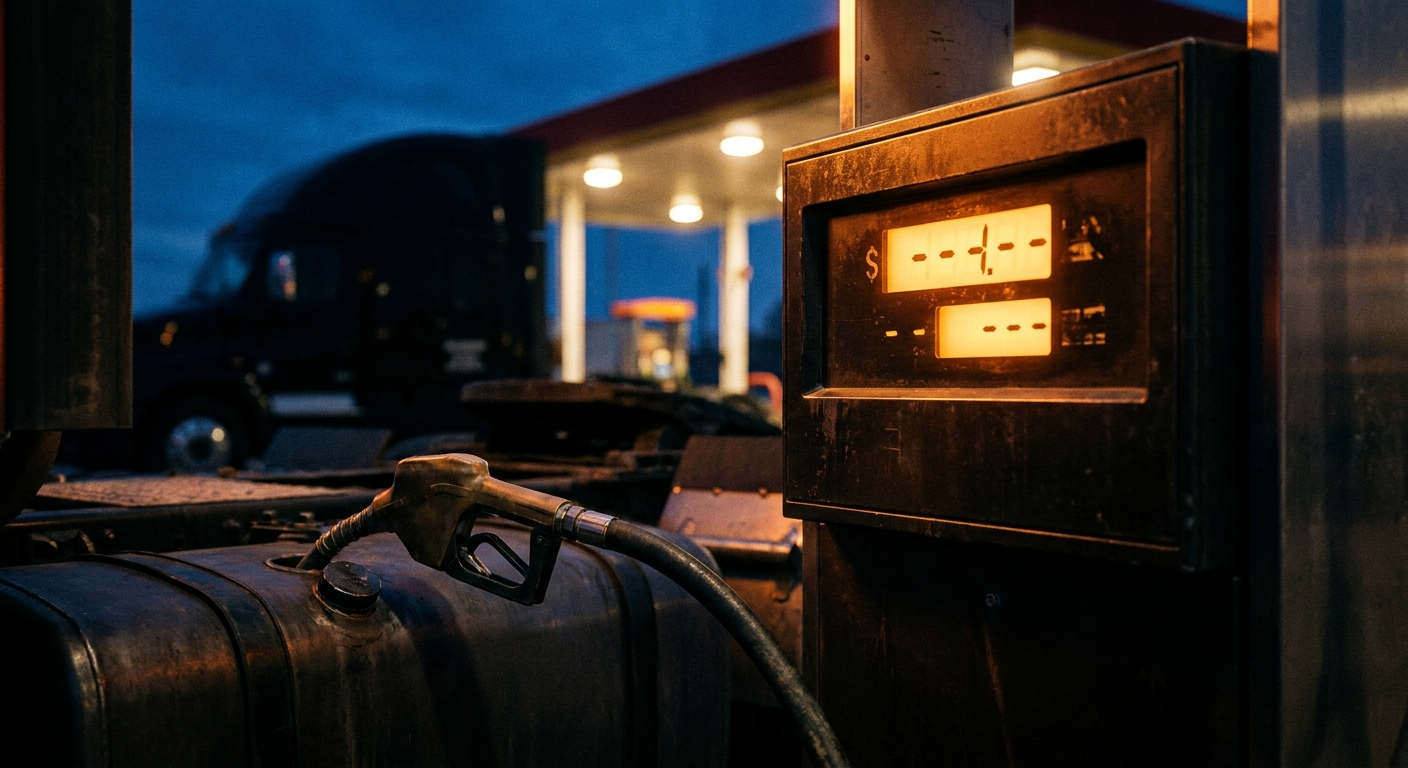
Diesel set an all-time high of $5.85 a gallon on September 4, and the record it broke had stood since June 2022.
The old mark was $5.819, set on June 17, 2022. It survived four years and change. It did not survive this week.
But before you write that number into anything, there is a second number you need, and the two do not agree.
Two prices, both real
The Energy Information Administration's most recent figure for national on-highway diesel is $5.599, for the week ending August 31.
That is twenty-five cents below the record everybody is quoting. Neither number is wrong. They are different instruments:
- The EIA figure is a weekly survey. It comes out on Mondays and it describes a week that has already closed.
- The $5.85 is a daily national average. It describes one day, September 4, and it moves every day.
A weekly survey that closed on August 31 cannot show you what happened on September 4. It is not contradicting the record. It is answering a different question.
This matters more than it sounds, and here is where it costs money.
Which number is in your fuel surcharge
Most fuel surcharge formulas in this industry are pegged to the EIA weekly number, not to a daily average. That is deliberate: a weekly figure is stable, published on a schedule, and neither side can argue with it.
The consequence is a lag you can feel. When prices climb fast, the pump moves on Tuesday and your surcharge does not move until the following Monday. You buy at the daily price and get reimbursed at last week's price.
In a flat market that lag is noise. In a week where crude jumped 8 to 9 percent, that lag is your margin.
What moved underneath
Both crude benchmarks rose sharply on the week:
- Brent: $95.37 a barrel, up 8 to 9 percent on the week. On September 4 itself it slipped 0.2 percent.
- WTI: $88.96 a barrel, up 8 to 9 percent on the week, and down 2.6 percent that day.
Notice the shape of that: a big weekly rise with a small daily drop at the end. That is what a spike looks like from inside — it does not go up in a straight line, and a green day does not mean the move is over.
Transport Topics attributes the surge to six months of conflict with Iran and the closure of the Strait of Hormuz. On the retail side, AAA says gasoline will be more expensive this Labor Day weekend than it has ever been at this time of year, though no figure was given for it.
What to actually do this week
- Check which index your surcharge uses, and its lag. If it is the EIA weekly, you already know you are running about a week behind the pump on the way up. That is worth knowing before you quote a load, not after.
- Quote with the daily number, not last week's. If you are pricing freight yourself, the number in your head should be the one at the pump today.
- Do not chase the cheap station across town. Ten miles out of route to save four cents a gallon on 100 gallons saves four dollars and costs more than that in fuel and time.
- The hours you do not move are the ones you fully control. Idle fuel is bought at the daily price and reimbursed by nobody.
Why we said this differently before
Being straight about it: we passed on the $5.85 headline several times over the last two days, because our verified EIA figure was $5.599 and the two did not match.
They did not match because they were never measuring the same thing. A weekly survey and a daily average will disagree in any week where the price is moving, and the faster it moves the more they disagree. The mistake was treating one as a check on the other.
The rule we keep is that a number gets published when we can source it. What changes today is knowing which source answers which question, so a gap between two figures stops being a reason to reject a number and becomes the story itself.
The part that does not move
You cannot control crude, the Strait of Hormuz, or which index your customer's contract references.
What you control is how many gallons the truck needs to do the same work. Alignment that scrubs tires, a dragging brake, low pressure, extra idle hours: those cost the same percentage whether diesel is $5.599 or $5.85, and the bill gets bigger every time the price does.
We check alignment, brakes, suspension and tire wear in Houston, Dallas and Monterrey: thetrucksavers.com. And if the hours you idle are the problem, that is what Go Green APU is for.
Original source: Transport Topics, oil prices up sharply this week