395.3 Runs Four Clocks: 11, 14, 30, 60/70
Everyone quotes the 11. The one that runs out first is the 14. And the 30-minute break does not require going off duty — on-duty not driving already counts.
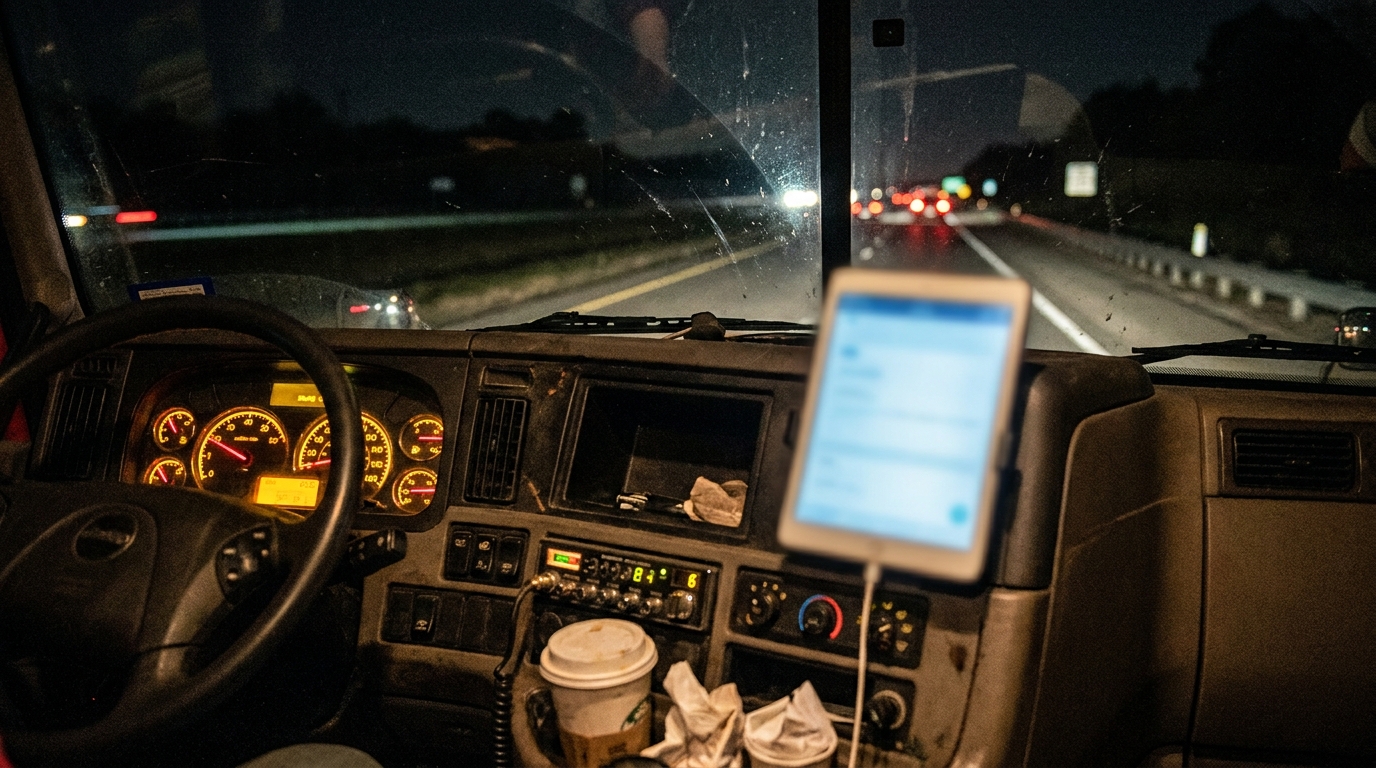
Ask a driver how long he can drive and he says eleven hours. He is right, and it is almost never the number that stops him. The one that runs out first is the fourteen — and unlike the eleven, it does not pause when the truck does.
49 CFR 395.3 sets four clocks that run at the same time, and knowing which one is closest to zero is the whole skill.
The four clocks
- 10 hours off. A driver may not drive without first taking 10 consecutive hours off duty. That is what starts everything.
- 14 consecutive hours. No driving after a period of 14 consecutive hours after coming on duty following those 10 hours off.
- 11 hours of driving — a total of 11 hours of driving inside that 14-hour period.
- 60 or 70. No driving after 60 hours on duty in any 7 consecutive days if the carrier does not run commercial vehicles every day of the week, or 70 hours in any 8 consecutive days if it does.
Why the 14 is the one that hurts
Read paragraph (a)(2) again and notice the word: consecutive. The 14-hour clock is a wall clock. It starts when you come on duty and it keeps running through the dock, through the scale, through lunch, through the two hours you spent waiting on a shipper who was not ready.
The 11 is driving time and it only advances while the wheels turn. That is the difference nobody plans around. You can burn four hours at a receiver without touching the 11, and lose them all off the 14 anyway.
The 30-minute break is not what most people think
Paragraph (a)(3)(ii) says driving is not permitted if more than 8 hours of driving time have passed without at least a consecutive 30-minute interruption in driving status. Two details in that sentence change how you plan a day.
First, the trigger is 8 hours of driving time, not 8 hours since you started. Second — and this is the one worth memorizing — that interruption may be satisfied by off-duty, sleeper berth, or on-duty not driving time, or any combination of them.
On-duty not driving counts. A 40-minute unload where you never move the truck already satisfied it. So did the fuel stop where you washed the windows and did a walk-around. Drivers routinely take a separate 30-minute break they had already earned by working.
The rule also excepts drivers who qualify for either short-haul exception in 395.1(e)(1) or (2). If that is you, the interruption requirement does not apply.
The weekly clock works the same way, and it is the one people discover late. Paragraph (b) does not count driving — it counts on duty. Every hour on the dock, every hour at the shop, every hour you were working and not moving goes against the 60 or the 70. A week that felt light because you barely drove can still leave you with nothing to give on Friday.
The restart, in one line
Paragraph (c) is short and generous: any period of 7 consecutive days, or of 8 consecutive days, may end with the beginning of an off-duty period of 34 or more consecutive hours. That is what resets the 60 or the 70.
How to use this on a real day
- Know which clock is closest to zero before you accept the next load, not after.
- Treat the 14 as the real deadline. Detention does not pause it, and no one at the dock is watching it for you.
- Count the break by driving hours, not by how long you have been awake.
- Look at what you already did. If you spent 30 straight minutes on duty and not driving, the interruption is done.
- Plan the 34 deliberately. Starting it a few hours earlier can hand you a whole extra working day on the other side.
A truck that is legal and a driver who is legal are two different maintenance jobs, and only one of them happens in a shop. Shop guides and operator resources are at thetrucksavers.com, and compliance coverage continues here at Truck Savers News. Want the rules before they meet you at a scale? Get the weekly TSN newsletter.
Original source
Requirements verified directly against the regulation in force: eCFR, 49 CFR 395.3, Maximum driving time for property-carrying vehicles.