300,000 Truck Parking Spaces. 37 States Say It Is Not Enough
The federal count documents more than 300,000 truck parking spaces, and 37 state DOTs say that is not enough.
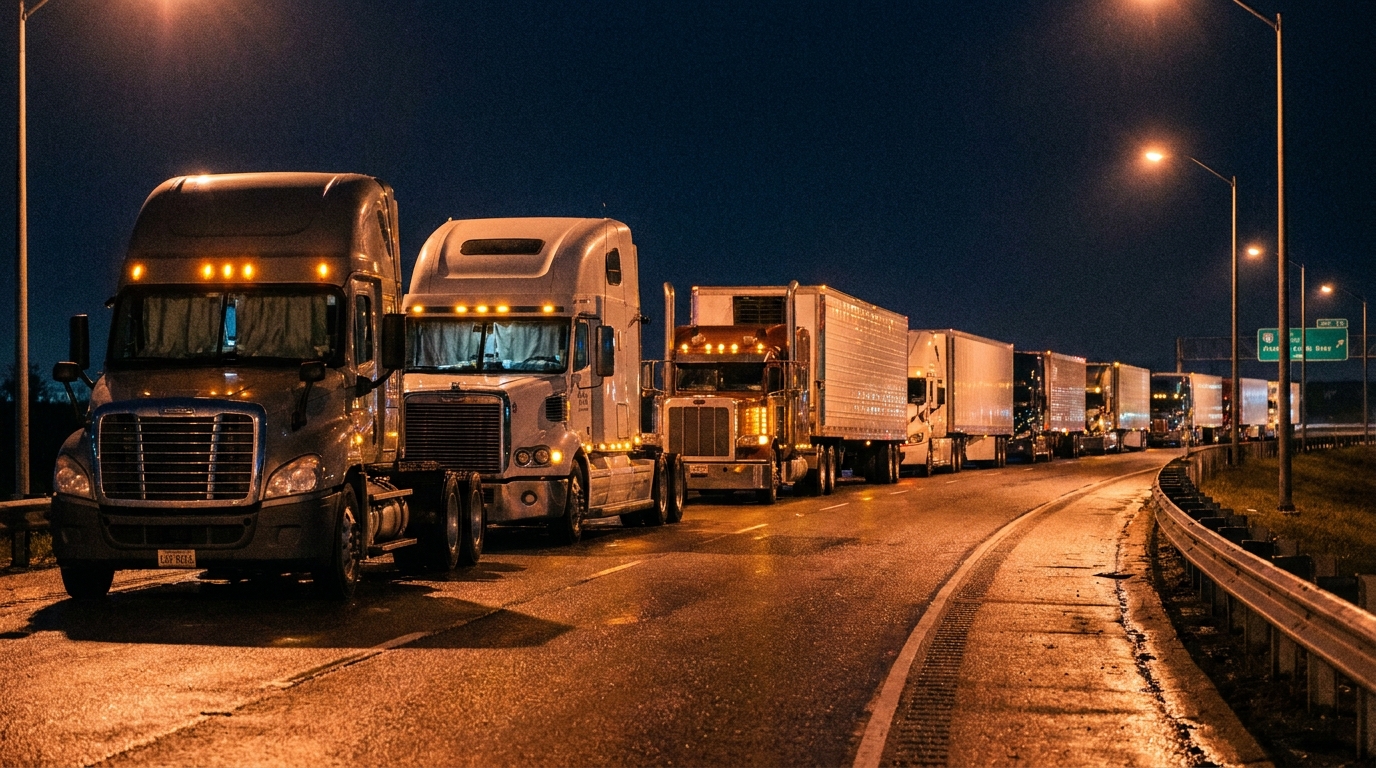
There are more than 300,000 truck parking spaces in the United States, and 37 state transportation departments say that is not enough. If you have ever done the last ninety minutes of a shift hunting for a spot instead of driving toward one, the federal numbers explain why, and they also tell you where the shortage is not.
Where the 300,000 actually are
The federal Jason's Law survey documents the supply, and the split is the part most drivers already feel in their gut:
- Nearly 36,000 spaces at public rest areas
- More than 272,000 spaces at private truck stops
Roughly nine out of ten legal spaces in this country belong to somebody who is selling something. That is not a complaint about truck stops. They built the capacity that the public side left on the table. But it is why "there is no parking" and "there is no free parking within my hours" are two different sentences, and why the second one is usually the true one.
Thirty-seven states, on the record
Asked plainly whether they have a problem with commercial vehicle truck parking in their state, 37 state DOTs — 72.5 percent — answered yes.
Where they say it hurts, counted by how many states reported each:
- Public rest areas — 30 states
- Commercial areas — 18 states
- Private truck stops — 16 states
- Designated pullouts — 16 states
- Highway weigh stations — 14 states
Read that list again. The worst shortage is at the public rest areas — the free ones, the ones you can reach without a detour and without buying anything.
Where trucks end up instead
The same states were asked where they observe trucks parking unofficially. The answers:
- Freeway interchange ramps — 24 states
- Freeway shoulders — 23 states
- Conventional highway roadsides — 18 states
- Local streets — 12 states
Nobody parks on a ramp because they prefer it. They park there because the clock ran out, and a truck on a ramp is a truck the state is now counting as a problem — which is also a truck exposed to a knock on the door, a citation, or worse, depending on the state.
What the count does not tell you
One honest limit before you use these numbers in an argument. The survey counts spaces, not availability. A lot that is full at nine at night still counts as its full capacity all day, so the real shortage you live through is worse than the supply figure suggests.
And the line you hear everywhere — one legal space for every ten or eleven trucks on the road — is not in this survey. It gets repeated as if it were federal. It is an estimate from elsewhere, and we are not going to quote it as if the government said it.
What this changes about how you plan
The useful conclusion is not "there is a shortage." You knew that. It is that the shortage is concentrated in the free public options, and that changes the planning, not the complaining.
- Pick the stop before you pick the mileage. Decide where the truck sleeps, then work the day backwards from it. Planning by miles and hoping for a space is how you end up on a ramp.
- Have a second and a third option, not a first one. Twelve to twenty miles apart is the working spacing most experienced operators use, because the first choice being full is the normal case, not the bad night.
- Treat the last hour as arrival, not driving. The search is part of the shift whether or not anybody pays for it.
- Reserve when the route is fixed and the corridor is tight. A paid reservation is cheaper than an hour of circling, and far cheaper than the alternative.
- Learn the ramp rules of the states you actually run. They are not the same, and "everybody does it" is not a defense anywhere.
- Do not let a hard night become a maintenance problem. Idling all night on a shoulder because there is nowhere to plug in has a cost, and it shows up later in fuel and in the engine.
A truck that spends its nights in bad spots ages faster than the odometer says. Uneven ground, idling for climate, curb strikes getting out of tight lots — none of it is dramatic and all of it lands on the suspension and the steering. If you want the front end looked at, The Truck Savers can put it on the rack, and the inspection costs nothing.
Original source: FHWA Jason's Law Truck Parking Survey.