2.5% in the Shop, 45.5% in Dispatch
The WIT Index counted 210 companies. The thinnest role is the shop.
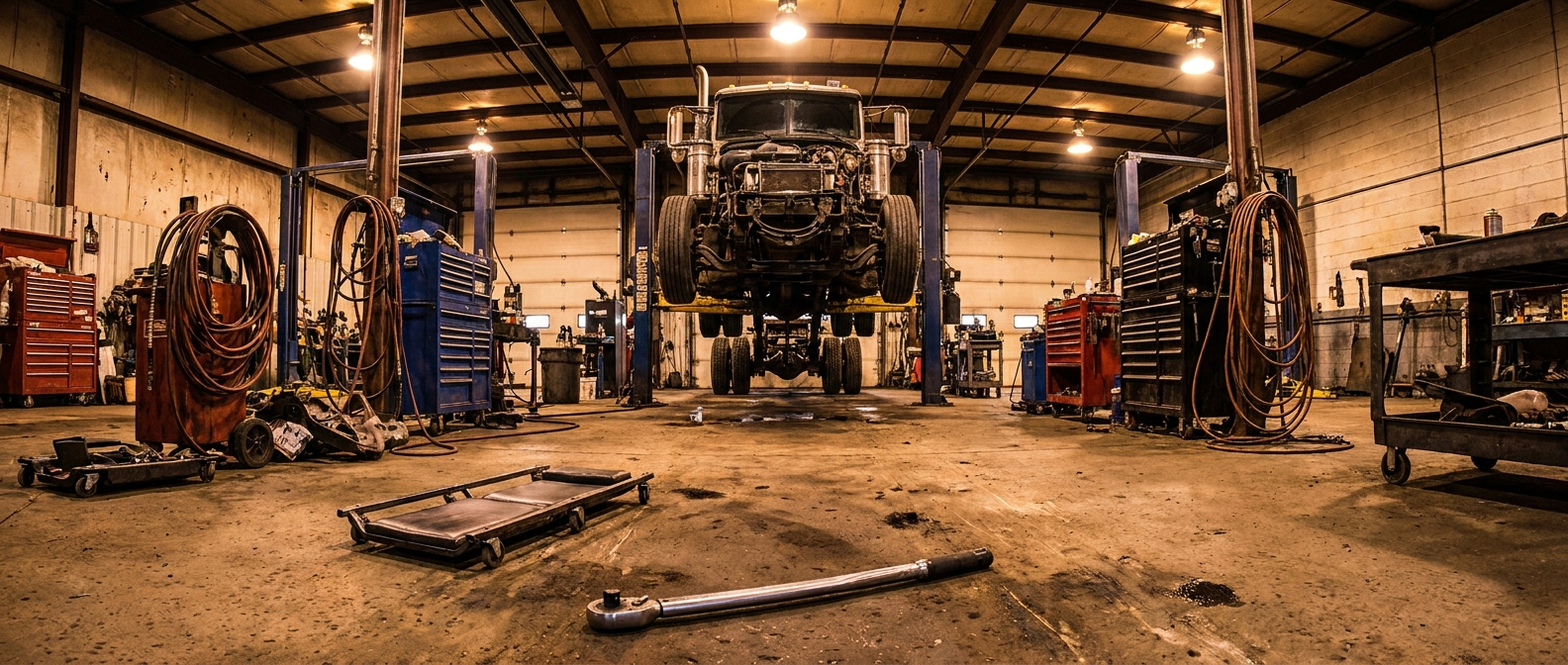
Dispatch is 45.5% women. The shop is 2.5%.
Those two numbers come from the same survey, taken the same year, across the same industry. About 210 companies submitted workforce data to the WIT Index, and the gap between those two roles is the widest in the whole report.
The full picture, role by role
Ranked from the roles where women are most represented to the least:
- Human resources and talent: 76.5%
- Dispatch: 45.5%
- Safety: 44%
- Supervisory positions: 37.5%
- C-suite and executive: 31%
- Board seats: 29%
- Behind the wheel: nearly one in ten
- Diesel technicians and mechanics: 2.5%
Read that list from the bottom up and it tells a different story than the headline usually does. The seat that is hardest to fill in this industry is not the one in the truck. It is the one under it.
Small fleets lead on drivers
On the driving side, the survey found something worth noticing: the smallest carriers have the highest share of women CDL holders.
- Micro and small businesses: 12.5%
- Medium and large enterprises: 10.5%
- Companies with 5,000 or more employees: 7%
The smallest operations are ahead of the biggest by more than five points. Whatever the large carriers are spending on recruiting, the small ones are getting a better result without it.
Brian Everett of Women In Trucking framed the driving side carefully: "We certainly have seen some uptick and some progress with women who are behind the wheel."
Why 2.5% is the number that costs you money
If you have waited three days for a bay, you already know the technician shortage is real. This survey puts a shape on part of it.
A trade drawing from 2.5% of one half of the population is a trade drawing from a smaller pool than it thinks. That is not a moral argument, it is an arithmetic one: every shop competing for the same narrow group of people is why the wait for a bay keeps getting longer and why the labor rate keeps climbing.
The dispatch number is the useful contrast. Same industry, same companies, same hiring managers, and the ratio flips almost completely. Whatever keeps the shop at 2.5% is not happening in the office fifty feet away.
Jenny Fall, of the same organization, pointed at what the driving side gets right: "The empathy, the customer service — those soft skills that really help women succeed."
What it means if you run a truck
- The wait for a bay is a labor number, not a scheduling one. Shops are not slow because they are disorganized. They are slow because the trade is small and getting smaller.
- Preventive work is the only lever you control. When capacity is short, the one who scheduled ahead gets in and the one who broke down waits behind him.
- A good technician is worth keeping happy. If you have a shop that knows your truck, that relationship is more valuable than a lower hourly rate somewhere new.
- If you are hiring, look where nobody else is. The small carriers already proved this on the driving side: 12.5% against 7% at the biggest companies.
What the survey does not say
Two things worth being straight about.
First, it does not report a year-over-year percentage. The workforce is described as having "held largely flat," and no number is attached to that. Anyone quoting you a trend from this report is adding something the report does not contain.
Second, it does not explain why the shop sits at 2.5%. It counts, it does not diagnose. The causes are a separate question and this index does not answer it.
What it does give you is a measured picture of who is doing what in this industry, and one number that anybody who has waited on a repair will recognize immediately.
The number to watch next year
If this index is worth anything to an operator, it is as a baseline. Two and a half percent is now written down, from about 210 companies, with a date on it.
That matters because the technician shortage usually gets discussed with adjectives. Everybody agrees it is bad; almost nobody puts a figure on any part of it. Now one part of it has a figure, which means next year the same question has an answer instead of an opinion.
And if you are the person deciding where to send your truck, the practical read does not change with the survey: shops with a stable crew get your work done faster than shops that are always training somebody new. Ask how long the technicians have been there. It is a fair question and the answer tells you more about your downtime than the hourly rate does.
We work on trucks in Houston, Dallas and Monterrey, and scheduled work always gets in faster than a breakdown: thetrucksavers.com.
Original source: Trucking Dive, small carriers lead on women driver levels, WIT Index finds