2027 Sierra: Compare Payload Before Choosing an Engine
Sierra payload depends on the configuration. Compare published maxima, then verify the actual work truck.
Before choosing an engine for a 2027 GMC Sierra 1500, compare the payload line. A work pickup needs to carry the people and equipment assigned to it. An engine preference is useful information, but it is not a substitute for checking the truck that will actually enter service. GMC's newly released specifications give buyers a reason to do that comparison early, before an order becomes a fixed equipment decision.
The numbers to put beside each other
In its September 22 announcement, GMC lists maximum payload of 2,020 pounds for a Crew Cab four-wheel-drive Sierra with the 2.7-liter engine, and 1,450 pounds for the Crew Cab four-wheel-drive 6.6-liter V8 configuration. Subtracting those published maxima gives a 570-pound difference. These are configuration maxima, not two identically equipped trucks in a controlled comparison. They do not establish that changing only the engine causes that difference, or that every truck with either engine carries those amounts.
For a buyer, the useful next step is to request the exact configuration behind each quote. Put the cab, drive type, bed, trim and selected equipment on the same worksheet. If one offer leaves a field blank, the comparison is unfinished. That is a procurement issue worth resolving before discussing which package feels like the better deal.
Turn a specification into a work assignment
Start with a written description of the job. Will this pickup carry a supervisor and inspection equipment, move a crew between locations, or transport tools that stay aboard all week? Those are different assignments. A vehicle selected around an empty-bed commute may face a different load once the business equips it for daily use.
Make the assignment specific enough that another person could repeat the comparison. List the usual occupants, the items that remain in the cab, and the equipment that stays in the bed. Identify occasional loads separately. A useful worksheet distinguishes the normal working day from the heaviest planned working day instead of averaging them into a number that describes neither.
GMC's payload guidance includes people, cargo and trailer tongue weight in the weight carried by the pickup. Towing capacity concerns the load pulled behind it. Those two concepts should therefore occupy separate fields in your purchase worksheet; one cannot stand in for the other. Consult the individual vehicle's loading information and Owner's Manual before using a published maximum as an operating limit.
A buying checklist that keeps the evidence together
- Identify the unit. Ask for the build specification and, when available, the VIN of the actual vehicle being offered. Keep those details with the quote rather than relying on a model name in an email subject.
- Request the loading information. Obtain readable photographs of the applicable vehicle labels and the relevant manual guidance. If the truck is still on order, record that verification as pending; an expectation is not a label from a delivered vehicle.
- Describe the finished setup. Give the supplier the proposed tool storage, accessories and other work equipment. Ask how the complete configuration will be checked, and keep the answer with the purchase file.
- Separate the decisions. Compare carrying requirements, any trailer assignment and equipment needs individually. Do not let a preferred engine or trim settle every question at once.
- Check again at handover. Confirm that the delivered vehicle matches the order and that the loading information belongs to that unit. Resolve a discrepancy before assigning the truck to its intended work.
What this comparison does not tell you
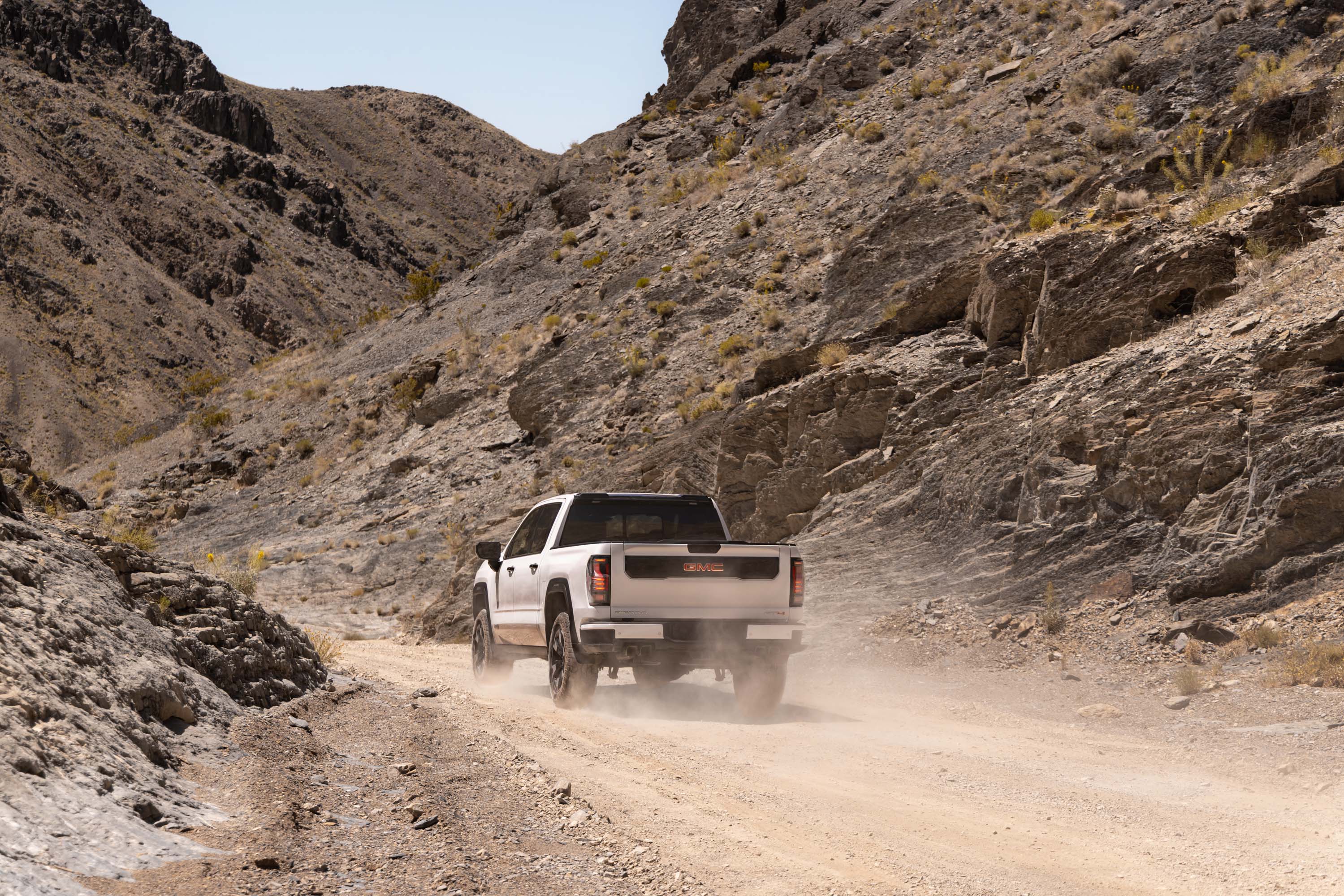
This is not a fuel-cost calculation, a reliability ranking or a recommendation to choose one engine for every business. The payload table does not answer those questions. It also does not establish the capacity of the preproduction truck pictured here. Treat the photograph as identification of the new model, not evidence of a particular working specification.
The practical conclusion is narrower and more useful: bring the payload question forward in the purchase process. A small fleet can keep one consistent worksheet for every candidate, making missing information visible before it commits. That gives the person approving the purchase and the person assigning the daily work the same record to review.
For ongoing preventive-maintenance resources, visit The Truck Savers™. Keep the purchase worksheet and the vehicle's own loading documents together throughout its service life.
Photo: GMC/General Motors press image, 2027 Sierra 1500 AT4 preproduction model. Actual production model may vary. Editorial illustration; pictured equipment does not establish the payload of a vehicle offered for sale.
Original sources
GMC, 2027 Sierra 1500 announcement and specifications, September 22, 2026; GMC, payload and towing definitions.