2027 Colorado MPG: Compare Four EPA Ratings
The 2027 Colorado has four distinct EPA fuel estimates. Compare the matching configuration before setting a work-pickup gasoline budget.
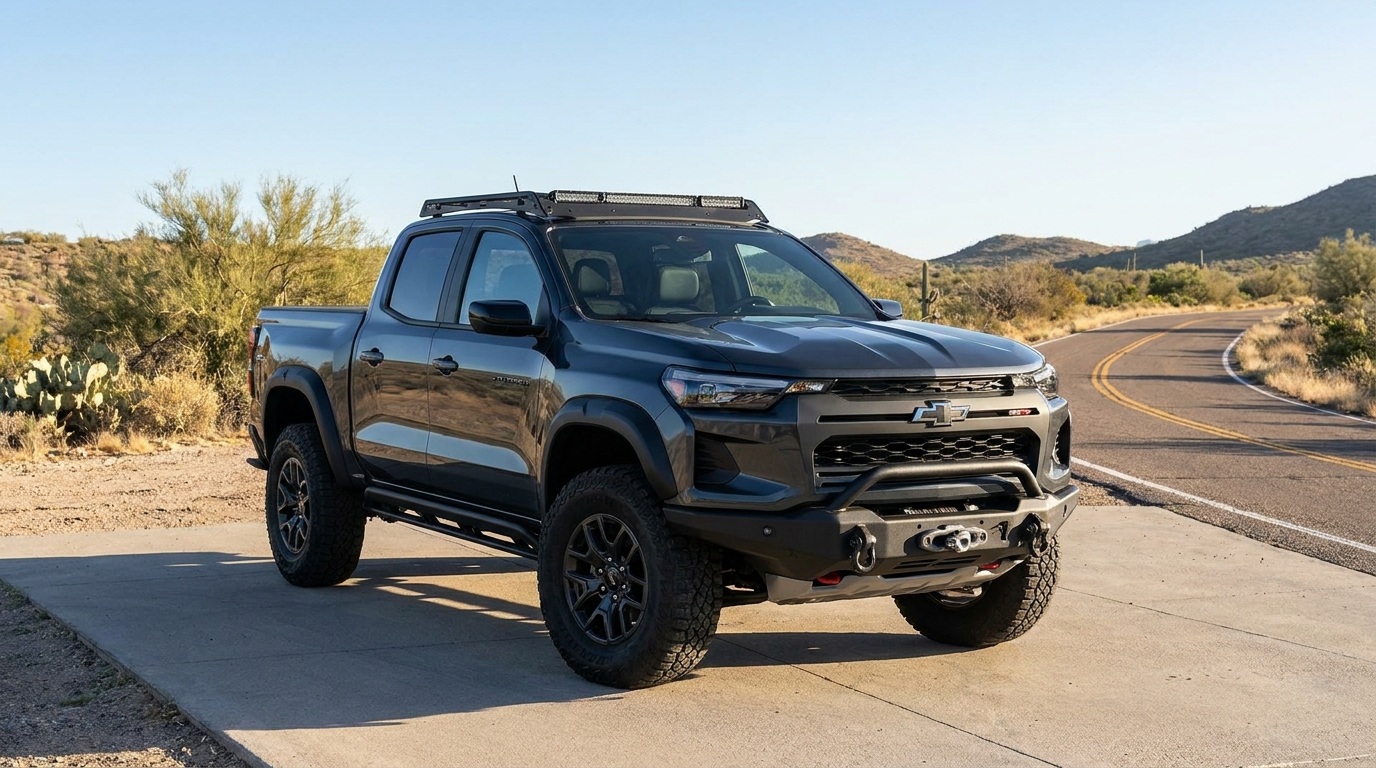
AI-generated editorial illustration of a Chevrolet Colorado ZR2 Bison. Not a photograph of an EPA test or evidence of measured fuel consumption.
One model name, four fuel estimates
The 2027 Chevrolet Colorado has four distinct entries in the U.S. government’s fuel-economy database. Their combined estimates range from 21 miles per gallon for the 2WD to 15 mpg for the ZR2 Bison 4WD. For a business comparing pickups, that difference belongs in the operating budget before a purchase decision, alongside the equipment required for the job.
The table below keeps the EPA configuration names intact. All four entries list a turbocharged 2.7-liter four-cylinder engine, an eight-speed automatic transmission and regular gasoline. These are U.S. EPA estimates in miles per U.S. gallon; they are not Canadian figures, a towing test or a promise about a particular driver’s results.
The numbers to compare
| 2027 EPA configuration | City | Highway | Combined |
|---|---|---|---|
| Colorado 2WD | 20 | 24 | 21 |
| Colorado 4WD | 18 | 20 | 19 |
| Colorado ZR2 4WD | 16 | 17 | 17 |
| Colorado ZR2 Bison 4WD | 16 | 14 | 15 |
Read across one row before comparing it with another. The highway figure for the 2WD is not the combined figure for a 4WD, and the ZR2 Bison has its own entry. This report does not assign an EPA row to a dealer trim merely because its name looks similar. Check the label for the exact vehicle being offered.
A transparent fuel-budget example
Suppose a business is planning 15,000 miles of annual pickup travel. This is an illustrative distance chosen for the calculation, not an EPA assumption or a forecast. Dividing those miles by each combined rating gives approximately 714 gallons at 21 mpg, 789 at 19 mpg, 882 at 17 mpg and 1,000 at 15 mpg.
The difference between the two ends is about 286 gallons over the same assumed distance. At those ratings, the 15-mpg case uses 40% more gallons than the 21-mpg case. That is a comparison of fuel quantities, not a 40% increase in every operating expense. No dollar saving is claimed: multiply the gallons by your own gasoline-price assumption, and show that price separately.
Keep the unrounded calculation in your worksheet. Rounding each row first can create small differences when totals are compared. If annual mileage changes, recalculate all candidates using the same new distance instead of changing just the favorite option.
Choose for the assignment, then compare the fuel line
A purchase review has more than one column. Write down the actual route, cargo and access requirements before comparing the fuel estimates. A truck that lacks required equipment is not made suitable by a higher mpg figure; equipment that the job does not require still deserves a clear business reason.
Separate documented requirements from preferences. For example, a business can list daily paved-road service calls, an occasional site visit and an uncertain future assignment as three different uses. Then ask the seller to identify which offered vehicle meets the documented requirements. The example does not certify a particular Colorado for an unexamined task.
What to save before signing
- The model year, drivetrain and exact vehicle identification.
- A copy of its fuel-economy label and the matching EPA configuration.
- The same annual-mileage assumption for every candidate.
- Your gasoline-price assumption, dated and separate from the mpg estimate.
- A written explanation of any mismatch between the listing, label and vehicle.
Once the pickup enters service, keep mileage and fuel-purchase records for its actual assignments. Those records can refine the next budget without turning one trip or one tank into a general claim about the whole model range.
The next check
Open the official four-vehicle comparison below and match the row to the pickup you are considering. Keep estimated consumption, actual operating records and purchase suitability as separate questions. The useful result is a budget with visible assumptions, rather than a single mpg number copied from a different configuration.
Original source: FuelEconomy.gov: 2027 Chevrolet Colorado comparison.