2026 Tacoma Hybrid: Check the 2,400-Watt Supply
Tacoma hybrid power needs an equipment check. Match the truck, outlet and tool requirements before planning a workday.
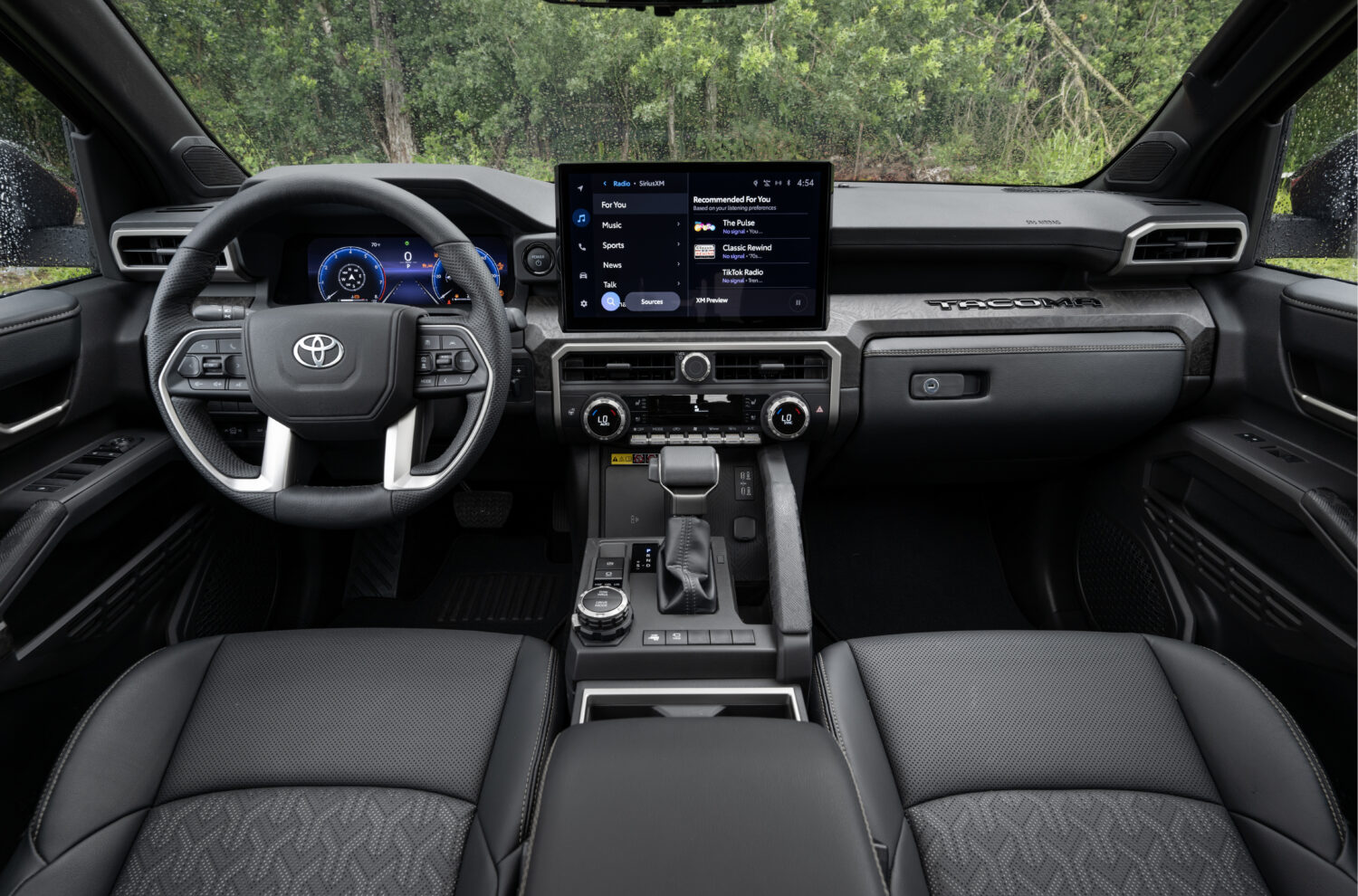
Photo: Toyota USA Newsroom. 2026 Tacoma Limited interior; the photo does not verify this truck’s electrical equipment.
A pickup can carry the right tools and still have the wrong electrical equipment for the job. For a buyer comparing a 2026 Toyota Tacoma, the useful question is which power supply is actually fitted to the truck being offered. Do that check before making a delivery, maintenance visit or worksite plan depend on an outlet shown in an advertisement. This is an equipment-planning guide for the U.S. model, rather than a new vehicle launch announcement or a test of individual tools.
The distinction Toyota documents
Toyota identifies a standard 2,400-watt AC supply on the 2026 Tacoma i-FORCE MAX hybrids, serving the cabin and bed. Its U.S. brochure separately lists 400-watt/120-volt bed equipment on selected nonhybrid configurations. The brochure qualifies the 2,400-watt figure for a single three-prong outlet and directs owners to the manual for limitations. A trim name alone is therefore an incomplete description of the equipment being compared.
Start with the truck on the purchase order
Write down the model year, powertrain and full configuration from the vehicle documentation. Ask the seller to show the equipment on that specific truck, with the corresponding description in the owner's manual. A photograph of a different vehicle, a general model webpage or a salesperson's shorthand should not become the final specification for a business purchase. Keep the written answer with the quote so that the comparison remains clear when several vehicles are under consideration.
This matters especially when a listing uses a trim name that also appears with different powertrains. Separate the name on the tailgate from the equipment entry on the build documentation. If the listing is unclear, leave the electrical capability unresolved until the seller provides the missing information. Do not substitute the highest figure in the model range for the vehicle you can actually buy. The same discipline applies when comparing a used truck whose equipment history is incomplete.
Build a tool list before a power list
For planning, identify each device by its actual model and read its electrical requirements and operating instructions. Write down what must run at the same time and what can be used separately. A charger, a light and a motor-driven tool are different loads; the appearance of their plugs does not establish compatibility. Where starting requirements, operating conditions or permitted connections are unclear, ask the equipment supplier and vehicle dealer to resolve them against the applicable manuals.
An illustrative planning sheet might have four columns: device, documented requirement, intended use and unresolved question. It does not need an invented daily fuel saving or a claimed number of working hours. Its purpose is to reveal missing information before a truck is purchased or dispatched. Keep manufacturer ratings separate from assumptions about your own work pattern. A figure expressed in watts does not, by itself, specify how long a device can operate in the conditions of your job.
Compare the job, rather than just the headline number
Decide whether onboard power is essential to the work or simply convenient. If a task depends on it, identify what happens when the truck is unavailable, when a device is incompatible or when the documented operating conditions cannot be met. That is a scheduling question as much as a vehicle specification. A backup arrangement should be priced and planned independently; this article does not establish that a pickup outlet replaces a dedicated power source for every application.
Ask for a demonstration only within the vehicle and equipment manufacturers' instructions. Do not use an improvised connection to turn a sales visit into an electrical experiment. Nor should an accessory proposal be treated as an approved conversion merely because a similar-looking outlet exists elsewhere in the range. Have the seller identify the exact part, application, installation requirements and warranty terms in writing before treating a proposed accessory as available equipment.
A practical buying checklist
- Confirm U.S. model year, powertrain and the exact vehicle specification.
- Locate the fitted outlet and match its identification to the applicable manual.
- List the devices, their documented requirements and any simultaneous use.
- Resolve starting loads, connection rules and operating limitations with the appropriate suppliers.
- Keep the written equipment answer with the purchase quote and your work plan.
For owner-operators adding a support pickup, the outcome is a better purchasing brief, not a promise of lower costs. A clearly documented limitation can be more useful than an optimistic capability claim. If the evidence does not establish that the selected truck supports the job, change the plan before committing to it. For related pickup equipment coverage, browse the TSN pickup section and keep each model's specifications separate.
Original source: Toyota U.S. 2026 Tacoma brochure, equipment matrix and disclosure14; current equipment review.