2025 Super Duty: Keep 4H Off Dry Pavement
Super Duty 4H is for slippery or loose surfaces. Read the 2025 manual before a jobsite-to-road handoff.
A 2025 Super Duty that moves between a worksite and paved roads needs a deliberate four-wheel-drive check. Ford's model-specific manual says not to use four-wheel-drive high or low on dry, hard roads; those modes are intended for consistently slippery or loose surfaces. Incorrect use can increase tire wear and damage driveline components. For a small business, the useful takeaway is to include the selected drive mode in the vehicle handoff, rather than treat a 4WD badge as an instruction to leave the system engaged everywhere.
Start with the actual vehicle
This guidance concerns the four-wheel-drive limitations section of the 2025 Super Duty manual, for vehicles equipped with that system. It is not a universal operating guide for every Ford pickup or every all-wheel-drive design. Before creating a fleet instruction, identify the vehicle, model year and applicable manual. Keep a reference that the next driver can find while parked, without having to guess which instruction belongs to which truck.
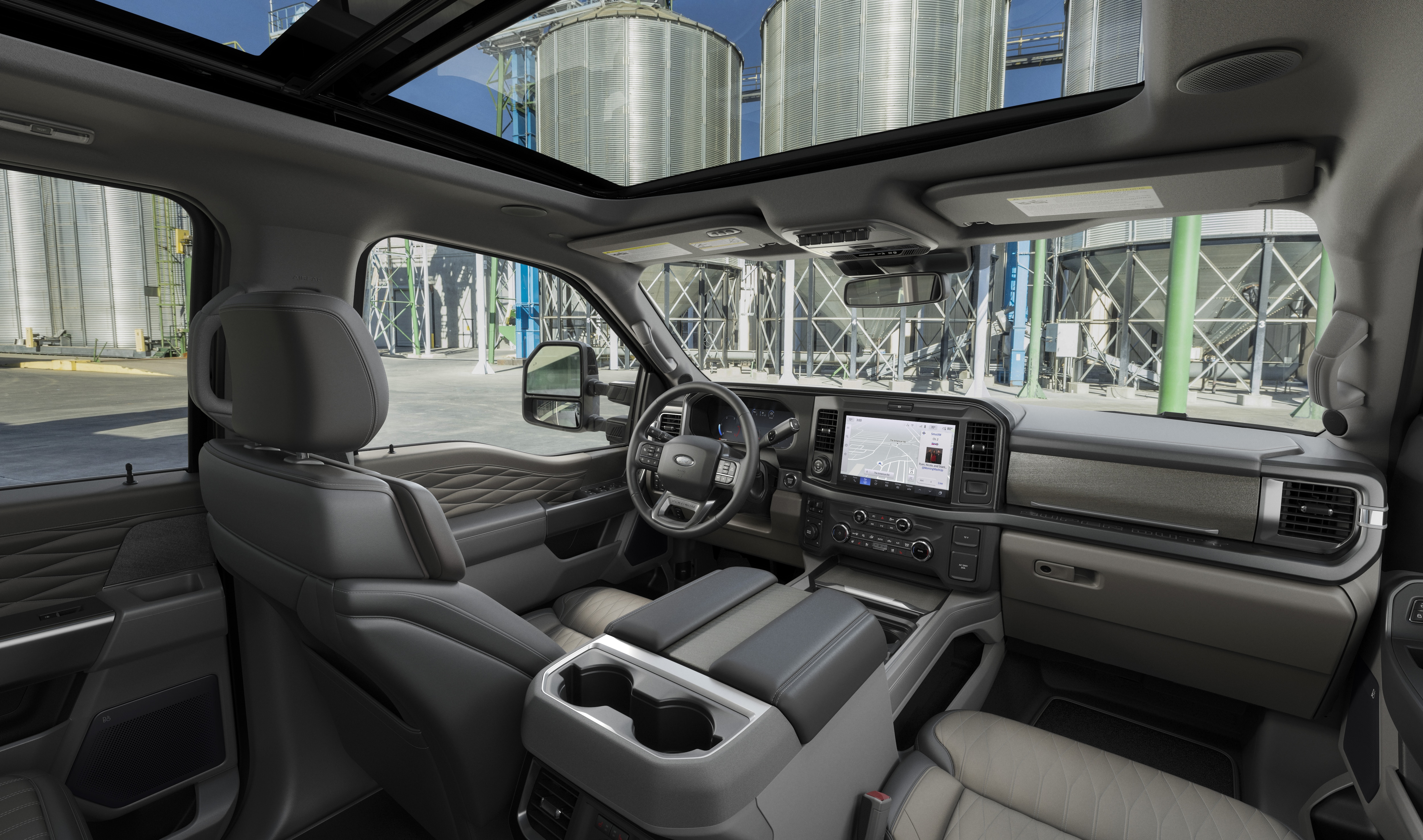
The official reference image shows a 2025 F-350 Platinum Plus interior. It identifies the model family, not the configuration or status of a reader's vehicle. A photographed cabin cannot establish what equipment is fitted to another pickup. The operator's own vehicle and its applicable documentation remain the basis for decisions. Do not select a procedure merely because the dashboard looks familiar.
Make the worksite-to-road transition explicit
For a crew that changes drivers during a shift, a practical handoff can record the working environment, the mode currently indicated and any unresolved message. The point is to make a condition visible to the next person. A note such as “review mode before paved-road departure” assigns a check; it does not certify that a shift has occurred. Keep the distinction between a requested action and a completed check clear.
A hypothetical example is a pickup used on a loose-surface worksite before a different employee takes it to a paved-road appointment. The second employee needs the applicable operating instructions and the actual vehicle status. This is a planning example, not a report of a particular truck's behavior. It does not establish a shift speed, a mechanical condition or permission to use a mode on a specific surface.
Separate the switch request from the message
Before treating an unfamiliar indication as routine, consult the matching section of the owner's manual. Write down the exact display wording and the circumstances in which it appeared once the vehicle is safely parked. Avoid translating every message into “it worked” or “the transfer case is broken.” Either conclusion can remove information that a qualified service provider needs. A short, accurate description is more useful than a guessed diagnosis.
Do not create your own disengagement sequence from a social-media clip or a different pickup's instructions. This article intentionally does not replace the manufacturer's complete operating procedure. If the vehicle's condition remains unclear, obtain appropriate service guidance before assigning it to work that depends on a confirmed system state. A dispatch plan should show the unresolved item instead of assuming that cycling a control has settled it.
Keep tire observations with the service request
The manual also discusses restrictions involving unequal tire wear and a dissimilar spare. That makes tire condition relevant information for a handoff or service conversation. It does not establish that a visible wear pattern has one particular cause. Record what is actually known about the tires and recent wheel service, and leave diagnosis to the inspection. Do not use this warning to order a part or promise that replacing one component will solve a symptom.
For a business sharing pickups, a concise request can identify the unit, the owner's concern, the displayed message and the documentation being consulted. Attach existing service records if available. Keep a reported noise separate from the proposed explanation for that noise. This helps the person receiving the request understand what was observed and what still needs to be checked, without inheriting an unsupported technical conclusion.
A handoff checklist that does not invent a procedure
- Identify the actual pickup and applicable model-year manual.
- Record the indicated drive mode and any unresolved display message.
- Review the surface conditions before leaving the worksite.
- Use the manufacturer's complete instructions for that vehicle.
- Keep tire and service observations separate from diagnoses.
- Document whether the check was completed or remains open.
The preventive step is straightforward: do not carry an assumption from the worksite onto a different surface. Build a small, repeatable handoff around the applicable manual and the actual condition of the pickup. That gives the next driver useful information without pretending that a brief article can certify the system or replace an inspection.
Continue with pickup maintenance coverage in Truck Savers News.
Reference image: 2025 F-350 Platinum Plus interior. Ford Motor Company, editorial use.
Original source: Ford, 2025 Super Duty Owner’s Manual — Four-Wheel Drive Limitations.