2025 Super Duty Chains: Check the Tire Size First
Check the tires before ordering chains. Ford’s 2025 Super Duty manual excludes specific sizes and limits their use.
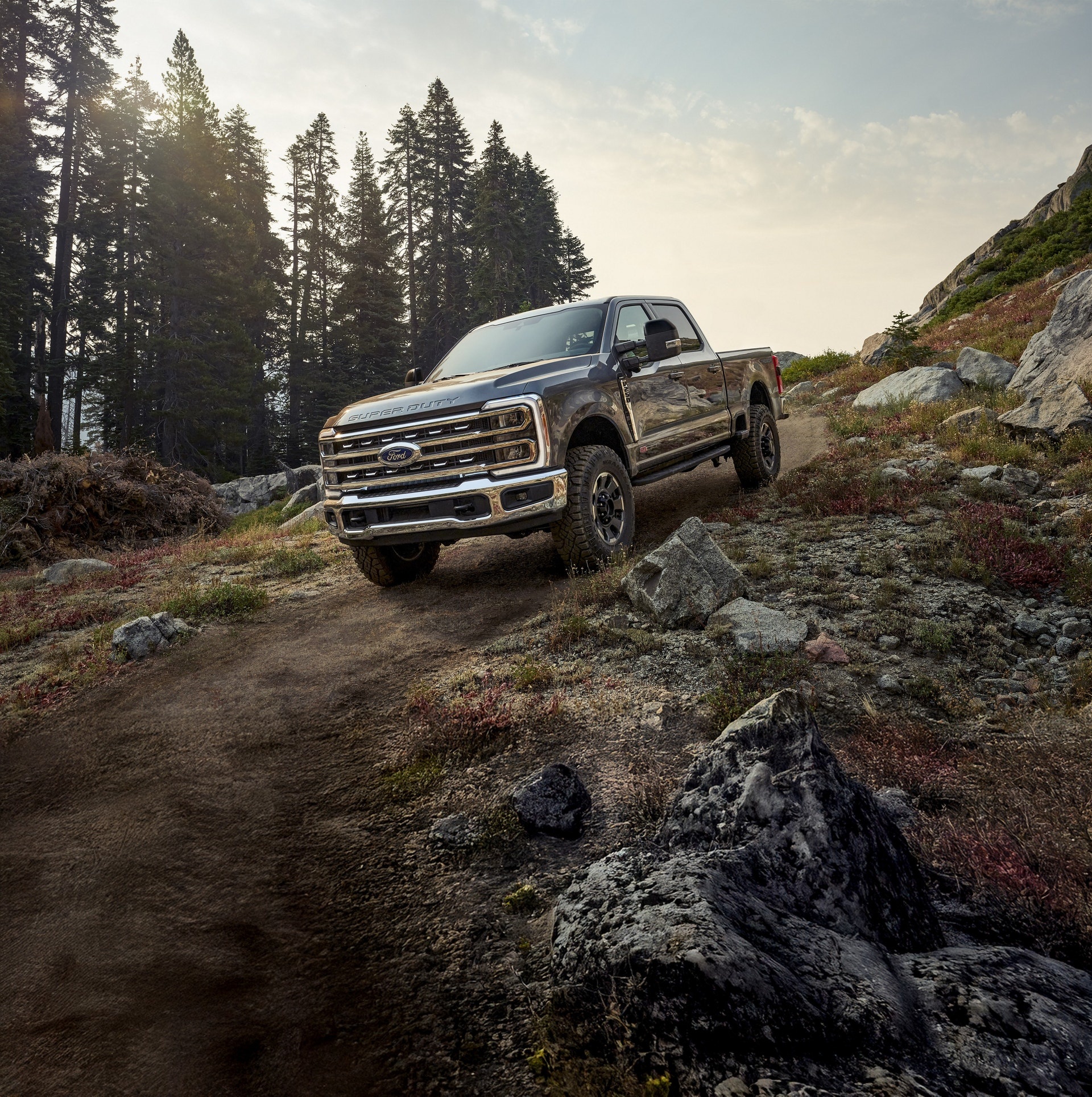
Illustrative 2025 Super Duty F-250 manufacturer photograph: Ford Motor Company. This is not a chain installation or evidence of tire size or accessory fitment.
Before ordering snow chains for a 2025 Ford Super Duty, identify the tires actually installed on the truck. The model name on a shopping page is not a fitment decision. Ford’s owner manual places specific restrictions on chain use, so a winter equipment order needs more than a box marked for a heavy-duty pickup.
The manual excludes LT275/65R20 and LT285/75R18 tires. Where chains are permitted, it specifies SAE Class S, rear-axle use and the outer wheels on dual-rear-wheel trucks, with a 30 mph maximum and no use on snow-free roads. Read the complete vehicle instructions before selecting or using equipment; this article is a purchasing worksheet, not installation training.
Build the request around one identifiable truck
Start a worksheet with the vehicle identification number, model year and the person responsible for the order. Record the full tire designation from the tires on the vehicle rather than copying an old invoice. If the paperwork and the truck disagree, leave the purchase unresolved until the discrepancy has been explained by the appropriate supplier or dealer.
Imagine a hypothetical contractor preparing two similar pickups for separate winter assignments. The office has one previous accessory order and assumes it covers both trucks. Instead of treating the old part number as approval, the buyer can place the two vehicle records side by side and ask for confirmation for each configuration. This is an illustrative office scenario, not a reported Ford customer experience.
Separate the vehicle restriction from the accessory listing
A supplier’s listing can help identify a product to discuss. Keep the vehicle manufacturer’s restrictions visible in the same file, however, so a broad catalog description does not become the only document behind the decision. Ask the supplier which exact product, application and supporting instructions its proposal covers. A reply that only repeats the pickup’s name leaves the key question unanswered.
Put any unresolved difference in writing. For example, if a proposed product is described using terminology different from the vehicle manual, ask the supplier and the authorized dealer to explain that difference for the actual configuration. Do not solve it by assuming the terms are interchangeable. TSN is not approving a substitute device, a different tire or a modification to obtain clearance.
Keep a legible record of the tire information
Save clear photographs of the tire markings and the relevant vehicle label with the worksheet. These are identification records, not proof that a chain is suitable. Review the characters before sending the request: a missing prefix or a transposed number can send the conversation toward a different application. Ask for clarification when a marking is unreadable instead of filling it from memory.
For a shared vehicle, name the unit in the file and on the request. That makes it easier for the next person to connect a supplier’s response to the pickup being discussed. It also avoids presenting the answer for one unit as a fleet-wide decision. A useful response should identify its scope clearly enough for someone who did not participate in the original conversation.
Ask for a complete written proposal
Request the product identifier, the application being evaluated, the instructions supplied with it and any exclusions the seller needs you to understand. Keep availability and delivery statements separate from technical suitability. A product being in stock does not answer the vehicle question; a technical discussion does not establish when an order will arrive.
For a hypothetical comparison, one seller may quote an identified product while another asks for additional vehicle details before recommending anything. Treat that second response as incomplete information to resolve, not automatically as a worse price. Give both proposals the same fields so the office can see what each actually includes. No price, lead time or outcome in this example describes a real supplier.
Prepare the people as well as the purchase
Decide who will review the final instructions, who can ask the dealer a follow-up question and where the approved vehicle-specific documents will be kept. Do that before the pickup is assigned to a trip. Buying an accessory and preparing an operator are separate tasks; a receipt does not demonstrate that either fitment or use has been reviewed.
Keep the road decision separate as well. This article does not establish current chain requirements, weather conditions or access for any route. Those checks belong to the actual trip and the applicable road authority. A completed purchasing file cannot promise that a particular mountain road will be open, or that the vehicle is ready for every winter assignment.
Close the request only when its scope is clear
- Identify the exact vehicle and tires being evaluated.
- Keep the manufacturer’s restrictions with the request.
- Obtain an application-specific written response.
- Separate suitability, availability and operator preparation.
- Leave unresolved questions visible before assigning the trip.
For another part of the identification file, read TSN’s guide to checking the pickup’s tire-pressure label. That is a separate pressure reference, not authorization to fit chains. The preventive purchase is one the office can explain: which unit, which equipment and which written instructions support the decision, with no assumptions hidden behind a model name.
Original source: Ford, 2025 Super Duty Owner’s Manual: Using Snow Chains. Purchasing worksheet and hypothetical scenarios: original TSN editorial guidance.