2025 F-150: Verify Your Pro Power Onboard Equipment
F-150 Pro Power equipment varies. Check the vehicle record, engine and option code before planning a tool-powered workday.
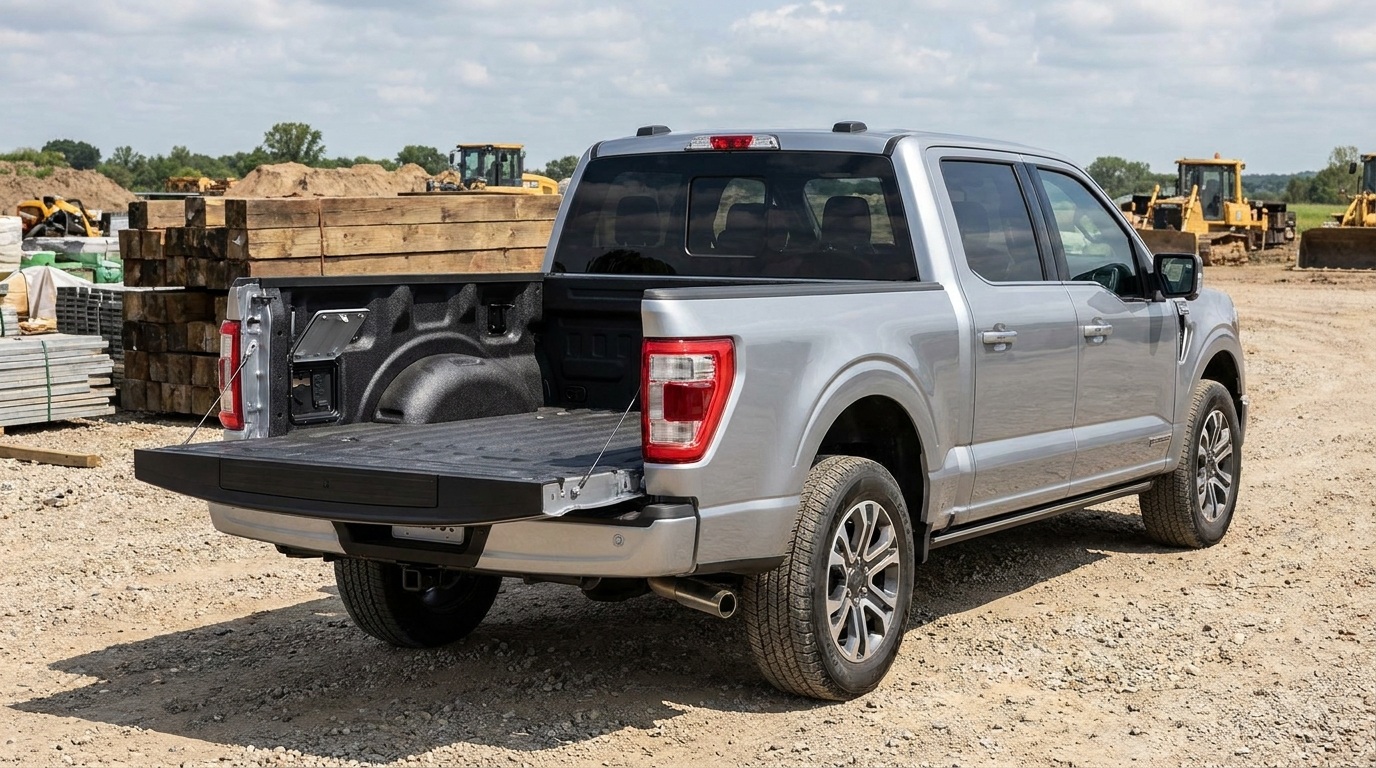
AI-generated editorial illustration; not a documentary photograph.
Ford’s June 13, 2025 F-150 order guide lists Pro Power Onboard configurations that depend on engine and equipment group. It identifies the 7.2-kW option as code 477 and requires the 3.5-liter PowerBoost hybrid engine for that option. Before buying a truck for electrical work, verify the configuration of the actual vehicle.
Start with the job your pickup must support
A contractor shopping for a pickup may see a power outlet in a photograph and imagine arriving with everything needed for a workday. Turn that expectation into a written equipment list first. Identify the devices you intend to use, which ones must operate together, and where the work takes place. The exercise helps define the question for the seller without assuming that every vehicle wearing the same badge provides the same equipment.
Keep two columns: equipment you already own and equipment you are considering. Record the exact model for each item, together with its manufacturer’s electrical requirements. Leave unknowns blank and ask the equipment supplier to clarify them. A familiar tool name can cover several versions. Shopping with the actual specification is more useful than asking whether a pickup can run a generic collection of tools.
Ask for documents tied to the vehicle
Request the vehicle identification number and its equipment record. Ask the seller to identify the factory power system and show where that configuration appears in the documentation. Then compare the information with the truck being offered. A brochure helps explain the product range; the purchase decision concerns one vehicle. Save the equipment description with the written offer so the agreed configuration remains clear after the sales conversation.
For a used truck, ask about modifications affecting the equipment you plan to rely on. Obtain the relevant records and have unresolved questions evaluated by a qualified professional. An outlet visible in a photograph cannot establish the condition of the system behind it. Request an appropriate demonstration under the vehicle manufacturer’s procedure before accepting a claim that a feature is present and working.
Read the equipment-group column carefully
An order guide is a map of possible combinations. Find the correct model year and series, then follow the engine and equipment-group columns together. Pay attention to the guide’s symbols and restrictions. If an option requires another selection, capture both in your comparison. A row copied without its column headings can create a misleading shopping note, even when every word in the row is reproduced accurately.
This matters when comparing listings from different sellers. One advertisement may name the engine, another may name a trim, and a third may simply mention onboard power. Ask each seller the same specific question and record the answer against its vehicle identification number. Resolve differences in writing before comparing the total price. Do not assign an unverified feature to the cheaper offer just to make the comparison look complete.
Separate the purchase check from operating instructions
Use the owner’s manual for the exact truck and the instructions for the devices you intend to connect. Ask a qualified professional about compatibility and a safe work setup when needed. This article is a vehicle-selection checklist. It does not specify cable sizes, protective devices, connection methods or a household installation. Those decisions require the applicable equipment instructions and the qualified people responsible for the installation or worksite.
A demonstration should answer the agreed purchasing question without improvisation. Ask the seller to explain the manufacturer’s procedure, identify the relevant labels and show the documented feature. If a warning appears or the configuration cannot be established, record the issue and seek proper evaluation. Do not turn a sales appointment into a troubleshooting experiment with borrowed tools or unknown electrical connections.
Compare a complete workday requirement
Describe how the pickup will fit into the day: travel, parking, tool storage and the work performed after arrival. Keep payload, towing and electrical-equipment questions in their own sections of the brief. One specification does not answer the others. List the people, installed accessories and carried equipment that belong in the vehicle-capacity review, then request the ratings and guidance that apply to the complete configuration.
Consider an illustrative buying comparison. Truck A has a clearly documented factory power configuration; Truck B has an attractive advertisement but no supporting equipment record. That is an information gap to resolve before ranking the offers. It does not establish that either truck is the better purchase. Ask for the missing records, include any required professional assessment and compare both vehicles against the same written work requirement.
Keep the handover record useful
At delivery, retain the agreed equipment description, the manuals supplied, any completed demonstration record and the seller’s written answers. Note who will handle a question about the factory system and who is responsible for any separately installed accessory. This record can shorten later conversations by identifying the configuration actually purchased. It does not replace warranty terms or establish coverage for a modification; obtain those terms directly.
- Write the exact tool and work requirements.
- Verify the model year, engine and equipment group.
- Match the power-system description to the vehicle record.
- Review condition and modifications with qualified help.
- Use the correct manuals for operation and compatibility.
- Keep the agreed specification with the purchase documents.
Choose the pickup with a verified equipment brief in hand. Once the vehicle is identified, its tires, steering and suspension still deserve a condition review appropriate to its work. Explore the verified service information at The Truck Savers™ and confirm the scope directly. Electrical installation and factory power-system repair are separate questions for the appropriate provider. A clear specification and a documented inspection help prevent an attractive listing from becoming an expensive assumption.
Original source: Ford, 2025 F-150 order guide, June 13, 2025.