2025 F-150: Trailer Blind-Spot Coverage Has Limits
The trailer must fit the system limits. Ford lists shape and size conditions that belong in the review before towing.
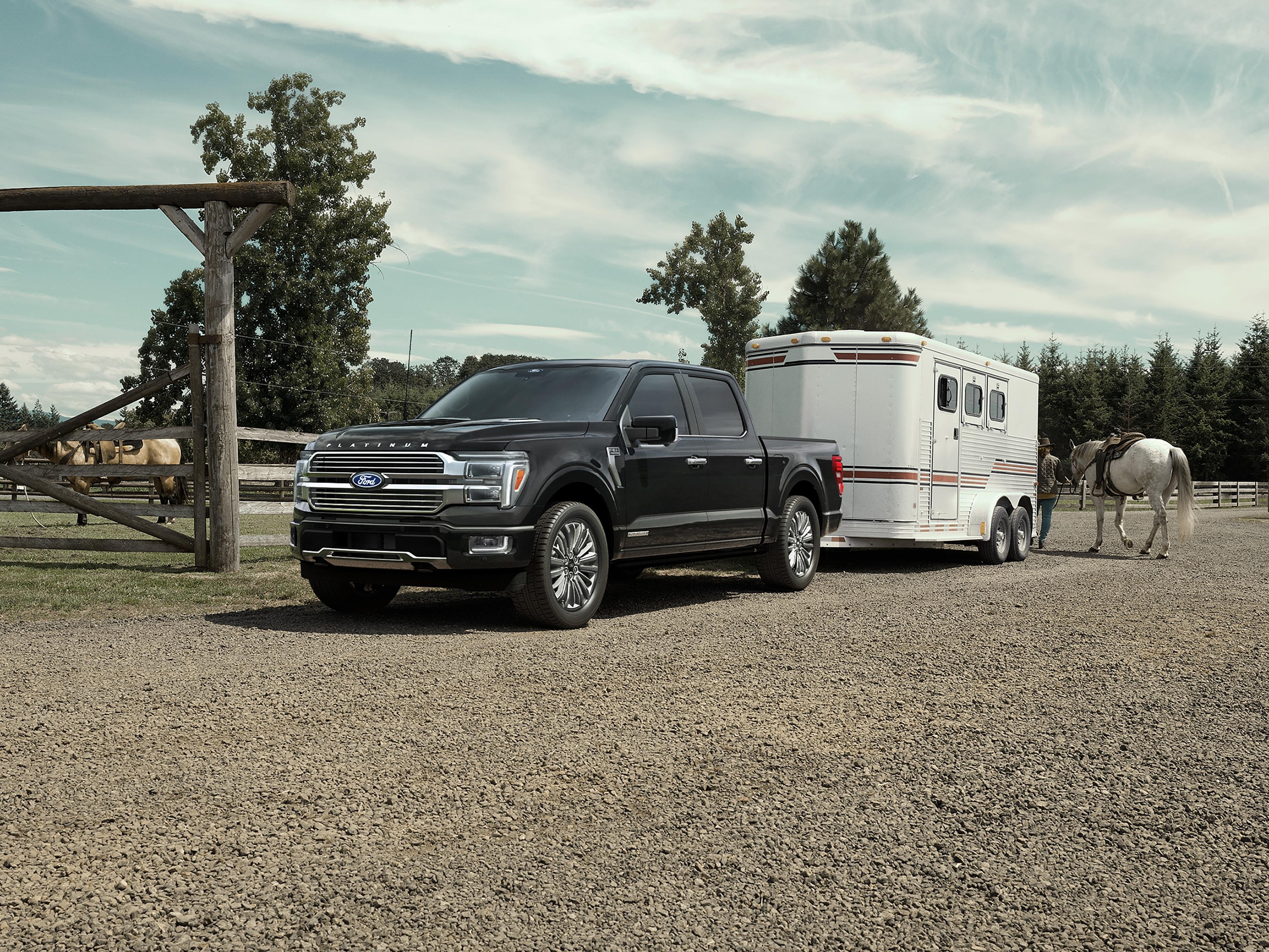
Official Ford photograph:2025 F-150 Platinum with trailer. Illustrative manufacturer image; not proof of the pictured trailer dimensions or feature compatibility.
Choosing a trailer for a work pickup involves more than asking whether a dashboard feature exists. The trailer's shape and dimensions also belong in the equipment conversation. For a driver moving between trailers, a familiar pickup does not make every combination equivalent.
The 2025 F-150 owner's manual limits blind-spot trailer coverage to conventional trailers, no wider than 8.5 feet and shorter than 33 feet. It also describes possible false or altered alerts with certain large box, v-nose and horse trailers. These are limits of that assistance feature, not towing-capacity ratings.
Name the feature precisely
Ask which blind-spot function the particular truck has before relying on a sales description. Keep the model year and the owner's manual supplied with the vehicle in the review. A reference for another Ford, a different model year or a similarly named assistance function should not silently replace the document for your unit.
Put the trailer description in the handoff
Our suggested equipment note includes trailer identity, style, dimensions and the source of those dimensions. If an office uses a nickname for several trailers, add a way to distinguish the actual one assigned. This avoids giving the driver a reassuring but incomplete statement such as “the truck has blind-spot coverage” when the unanswered question concerns the trailer.
For a hypothetical equipment discussion, imagine replacing an open utility trailer with an enclosed trailer. Before carrying assumptions across, ask the responsible person to review the new combination against the vehicle's documentation. The change in task is a reason to review the configuration, not evidence that the system has a fault. This example does not approve either trailer for any truck.
Do not turn a dimension into a rating
A dimension used to describe a driver-assistance feature is not a substitute for the vehicle's towing, loading or hitch information. Keep those questions on separate lines in a purchase or assignment review. Passing one equipment check does not answer every other question about the combination. When a specification or displayed message is unclear, obtain clarification for the actual vehicle rather than testing an assumption in traffic.
Before the next assignment
- Confirm the exact vehicle and assistance feature.
- Identify the actual trailer and documented dimensions.
- Read the applicable limitations with the responsible driver.
- Keep towing and loading verification separate from feature coverage.
For a different towing situation, read TSN's guide to flat towing an F-150. That procedure concerns the pickup being towed; it does not establish trailer coverage while the pickup pulls a load. Match the manual to the task before departure and do not use an assistance feature to replace normal driving observations.
Original source: Official source. Questions and comparison suggestions are original TSN editorial guidance.