2025 F-150 Hybrid: E15 Is Allowed, E85 Is Not
Hybrid does not mean flex fuel. Ford allows E15 in the 2025 F-150 hybrid but says it is not designed for E85; check the blend before filling.
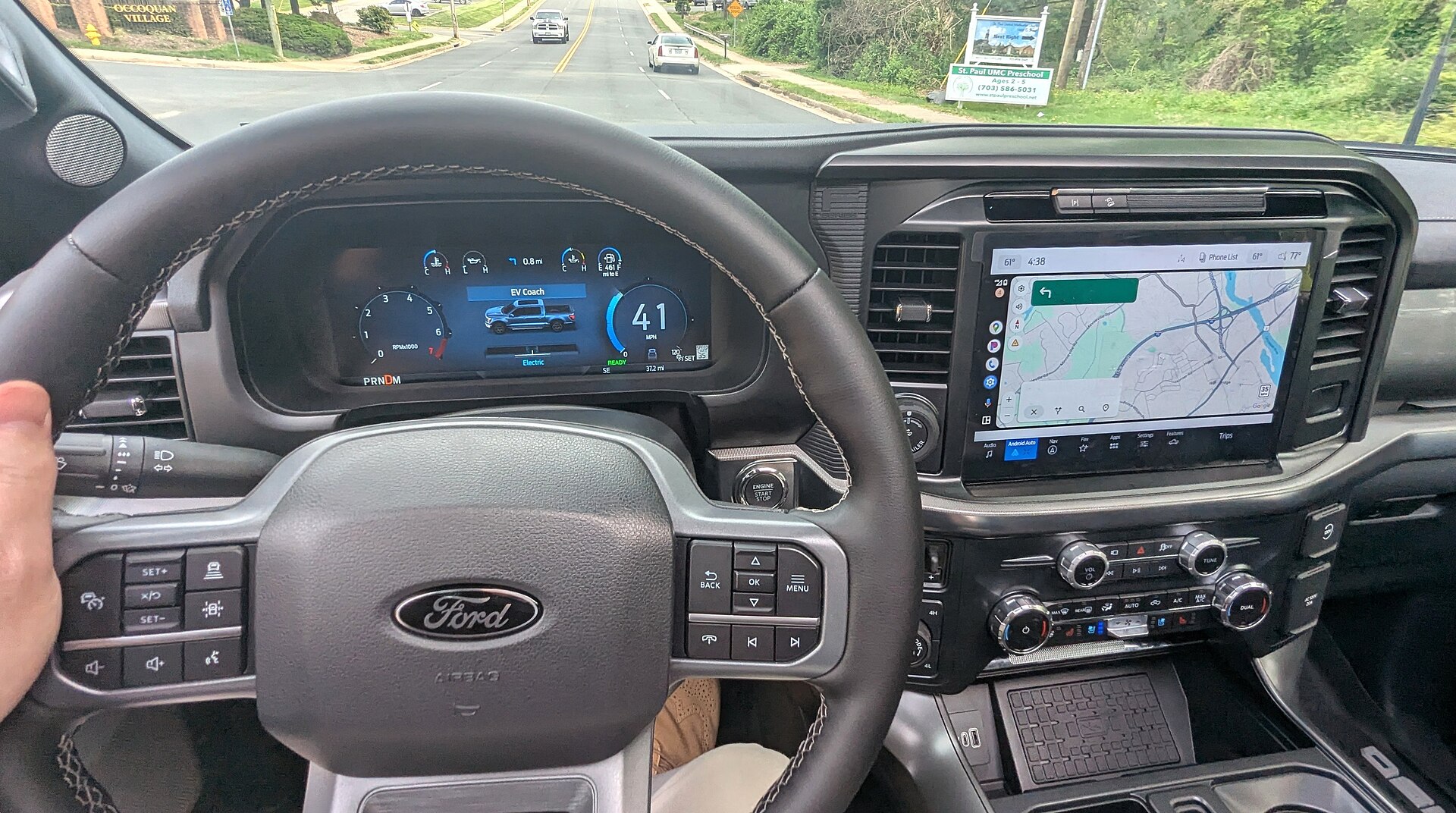
Illustrative archive photograph: dashboard of a 2025 Ford F-150 Lariat PowerBoost, April 21, 2025. It does not depict a fuel test or prove fuel compatibility. Unmodified image. McChizzle / Wikimedia Commons, public domain. Photo source
Check the blend before comparing the pump price
The 2025 F-150 hybrid owner's manual allows E15 and says the hybrid is not designed for E85. That is the vehicle-specific distinction to keep with the truck's fuel instructions. A hybrid badge does not mean that every ethanol blend on the same dispenser is suitable. Check the exact vehicle documentation before filling, rather than using another pickup's fuel choice as a shortcut.
For an owner-operator using the pickup between customer visits or a small fleet sharing vehicles, the practical task is to make the approved fuel easy to identify. A cheap-looking price on a different pump button is not enough information to authorize that purchase.
E15 and E85 describe different blends
The U.S. Department of Energy's Alternative Fuels Data Center describes E15 as gasoline containing 10.5% to 15% ethanol. E85 is the name used for higher-ethanol blends that can contain 51% to 83% ethanol, depending on season and geography. The name does not mean that every gallon sold under it contains exactly 85% ethanol.
Those definitions help explain why a driver should read the blend label rather than assume that similar names are interchangeable. E85 belongs to the flex-fuel discussion; it is not a recommendation for this F-150 hybrid. This guide does not extend the hybrid's manual to a different engine, model year, motorcycle, generator or other equipment carried on the job.
Keep a separate record for each vehicle
An uncomplicated fleet record can contain the model year, powertrain, fuel instructions and location of the relevant manual section. Keep it available to the people who actually refuel the vehicle. If the business also runs a flex-fuel vehicle, give it its own record rather than distributing a single blend instruction across the fleet.
As a planning example, a relief driver could receive the vehicle keys together with the correct fuel reference before a customer route. That is a proposed workflow, not a claim about an incident or a measured saving. If the pump label is unclear, resolve the fuel identification before dispensing; do not invent a compatibility answer from the price display.
Compare operating cost with comparable records
Compatibility comes first. Among fuels authorized for the actual vehicle, price per gallon and cost per mile answer different questions. A basic cost-per-mile calculation divides fuel spending by the miles covered over the same recorded period. Record the gallons and receipts as well, so the calculation can be checked later.
Do not compare a lightly loaded local trip with a different driver's towing trip and call the difference an ethanol result. Route, task and operating conditions can differ. A small set of receipts can help organize a business review, but this guide reports no controlled test, fuel-economy percentage or guaranteed saving for a particular blend.
Before the next fuel stop
- Confirm that the instructions belong to the 2025 F-150 hybrid actually being used.
- Read the ethanol-blend label at the dispenser before selecting the fuel.
- Keep E15 authorization separate from E85 compatibility; the two are not interchangeable.
- Record fuel spending and mileage over matching periods if reviewing cost per mile.
- Give substitute drivers the same vehicle-specific reference before handing over the keys.
Open Ford's manual below for the vehicle-specific answer, and use the DOE definitions to interpret the blend names. Preventing a mistaken fuel choice starts with identifying the truck and the product before the nozzle goes in.
Original source: Ford: 2025 F-150 Hybrid Electric Vehicle Information · DOE AFDC: E15 · DOE AFDC: E85.