2025 F-150: Full-Size Spare, Temporary Use
Check the F-150 spare before the next trip. Full-size does not mean unrestricted use; identify the assembly and its limits.
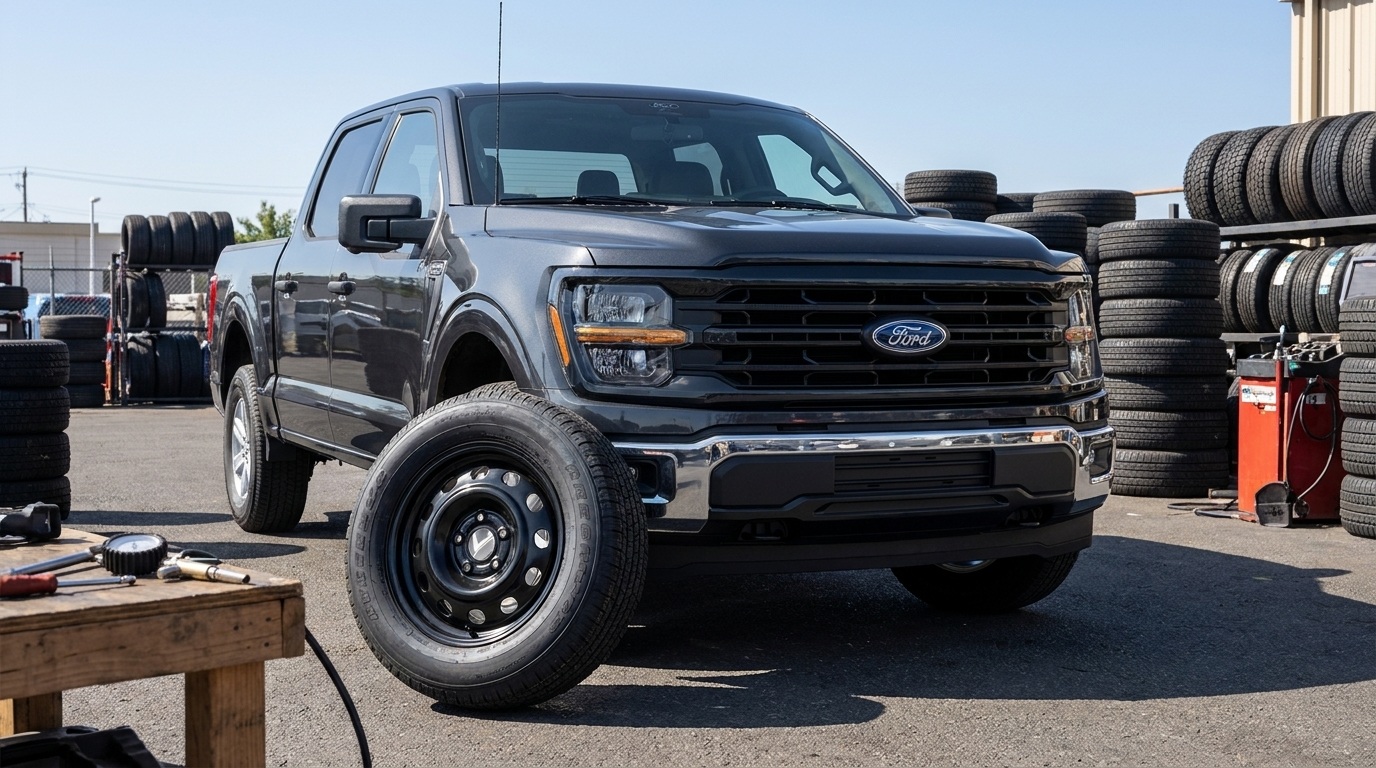
AI-generated editorial illustration; not a documentary photograph.
Ford treats a dissimilar spare on the 2025 F-150, excluding Raptor, as temporary equipment. It should be replaced promptly with the original size and type. A full-size label alone therefore does not establish unrestricted use for the next work trip.
Start with the pickup and the installed wheel
Identify the year, model and configuration, then open the manual that belongs to that vehicle. An F-150 instruction is not automatically an instruction for an F-150 Lightning, Raptor or Super Duty. Keep the vehicle identification available when discussing the equipment with a qualified provider. Ask the provider to identify the installed assembly and explain which instructions apply to it. A photo can support that conversation, but it does not replace an inspection or confirm compatibility by itself.
For a work pickup, the administrative question is simple: who confirms that the tire arrangement fits the next assignment? Record the answer rather than letting a previous driver's reassurance become the only reference. A tire may have been installed during an earlier trip, while the person assigning today's work has never seen it. Keep the current condition, the service appointment and the operating instructions in one dated note. That record should describe what was verified and identify anything still unresolved.
Read full-size and dissimilar as separate descriptions
The same section asks for added care when towing or carrying particular equipment. Consult the complete instructions for the actual equipment; do not treat this article as permission for a particular journey. The useful planning distinction is between the dimensions of an assembly and its approved use. Saying that a spare is full-size answers one description question while leaving other operating questions open.
Imagine an illustrative handover between two employees. One reports that the pickup has a full-size wheel installed after a tire problem. The next asks whether it matches the road assembly and whether the provider has addressed the upcoming assignment. That second question makes the note useful. It prevents an equipment description from being mistaken for an unrestricted release, without claiming that the pickup has a defect or offering a procedure for changing its wheels.
Give the provider a specific job description
Describe the work the pickup is expected to perform: driving to a service appointment, carrying supplies or working with a trailer are different situations to discuss. Do not ask for a generic answer while withholding that context. Keep actual load and equipment information available to the qualified person making the assessment. A capacity figure from an advertisement is not a substitute for the vehicle's own information and the condition of the installed assembly.
Prepare a short question list before calling. Which assembly is installed, what remains to be inspected, which replacement is being considered and what confirmation will be provided afterward? Keep the answers tied to the pickup. If the provider requests additional measurements or identification, record them as pending instead of guessing. This is a coordination checklist, not a tire-fitment calculation, a lifting procedure or a recommendation to operate equipment beyond a limitation in its manual.
Keep the warning and the service outcome separate
Record a visible warning and a completed service as separate observations. A visible indicator and a provider's completed work are different pieces of information. Record what the driver sees, then ask the service provider what it means for that vehicle. Do not diagnose a failed sensor from the light alone or assume that a replacement wheel restores every function. Any confirmation should state what was actually checked rather than simply say that the pickup is ready.
At the handoff after service, retain the work description and any instructions provided. Ask whether anything remains temporary and who is responsible for the next step. If a replacement is awaiting delivery, make that status visible to the person assigning work. An appointment on the calendar shows a plan, not a completed replacement. Clear wording prevents the business from turning an unfinished item into a permanent arrangement simply because several shifts have passed.
Build a short equipment record
- Identify the exact pickup, manual and applicable configuration.
- Record the installed wheel and tire as confirmed by the provider.
- Describe the next assignment and attached equipment accurately.
- Retain the operating instructions received for that situation.
- Separate an appointment, completed work and remaining limitations.
- Name the person responsible for following up on temporary equipment.
Review this record when the pickup changes drivers or receives a different assignment. Keep it short enough that the next employee can find the unresolved question without reconstructing a chat history. Avoid storing a collection of generic screenshots from unrelated models as if they were a vehicle-specific decision. The useful evidence is the applicable manual and the provider's documented response for this pickup, with its date and scope clearly attached.
If you are locating a tire service business, the Truck Savers News directory can help start the search. Confirm its capabilities and availability directly; a listing does not establish Ford authorization or a particular part's fitment. Prevention means treating a temporary assembly as an item to resolve, keeping its limits visible and obtaining a specific answer before assuming the pickup can resume every previous task.
Original source: Ford: 2025 F-150 Owner Manual, excluding Raptor.