2025 F-150: Four Pins Do Not Supply Trailer Braking
Ford identifies a four-pin trailer-braking limitation. Confirm the actual pickup, controller and trailer requirements before collection.
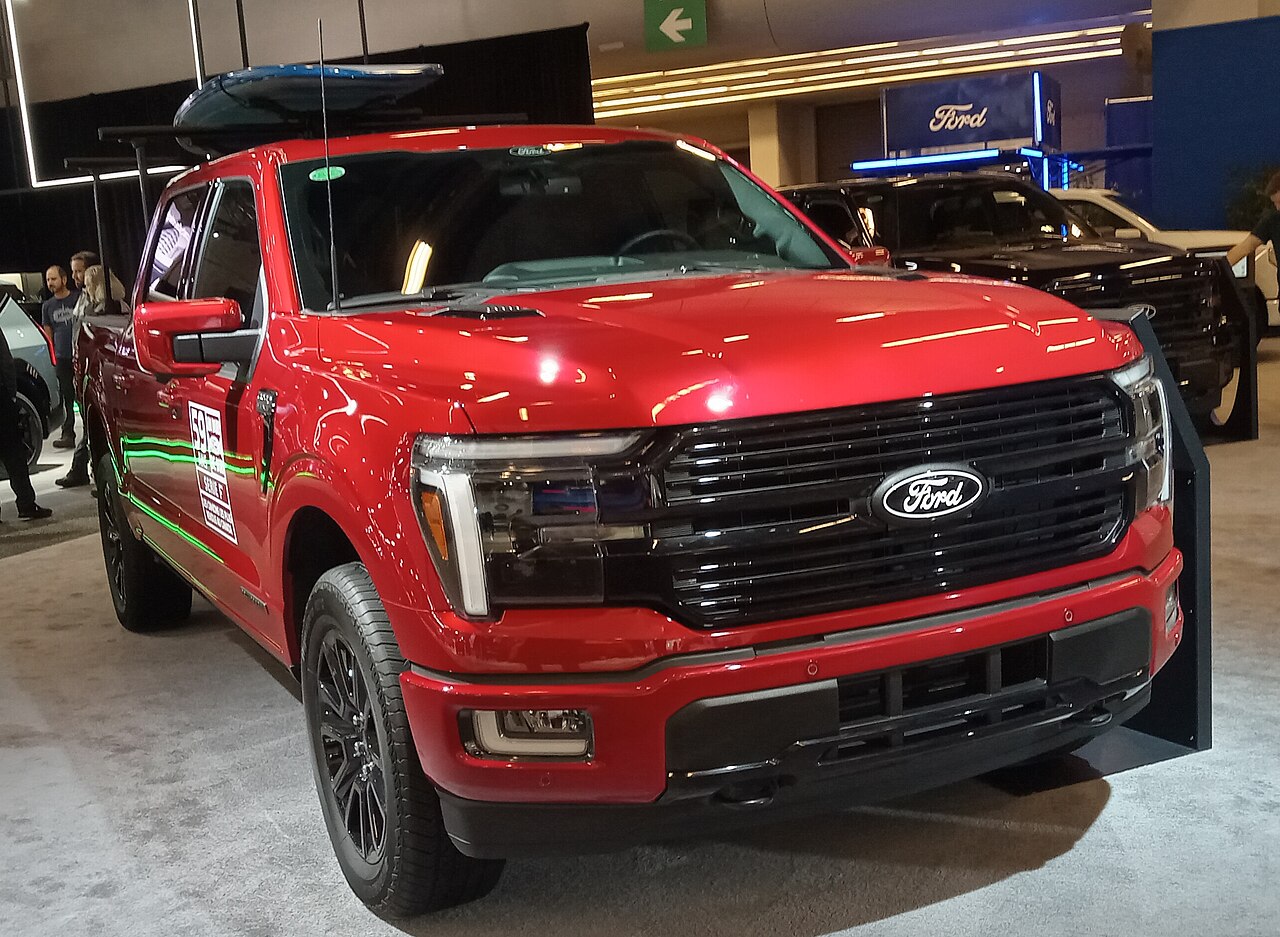
Illustrative file photograph: Bull-Doser, 2025 Ford F-150 at the Montréal International Auto Show, public domain via Wikimedia Commons. The photograph does not establish the towing equipment installed on a particular truck.
The 2025 Ford F-150 owner's manual identifies a clear limitation: a trailer connected through a four-pin connector does not receive the integrated system's trailer-braking function. For an operator collecting a trailer, that is a reason to verify the complete connection and braking arrangement before departure. Identify the pickup's installed equipment, the trailer's requirements and the instructions applicable to the actual combination.
Begin with the trailer's requirements
Consider a hypothetical owner who has used a small utility trailer and is now collecting different equipment. Familiarity with one combination can make the next pickup feel routine. The useful first question is what the new trailer requires and whether the actual towing vehicle is equipped for it. This example illustrates a planning problem; it does not describe a reported customer or diagnose a vehicle.
Ask the trailer provider to identify the braking system and the connection requirements in writing. Keep that information with the trailer reference, rather than relying on a description such as “standard plug.” Bring the pickup's own documentation to the discussion. If the parties are describing different equipment, resolve that difference before making a commitment to move the trailer.
Read the connector limitation in its proper scope
Ford's manual section concerns the integrated trailer brake controller, when equipped. It also describes a connection-confirmation message for compatible electrically braked trailers. That makes the vehicle's actual equipment important. Check the manual and have the responsible provider explain the indications relevant to the combination. This article does not supply a wiring diagram, an installation procedure or an individual controller setting.
A useful equipment record separates the physical connection, the installed controller and the trailer brake system. Give each item its own confirmation. An unanswered question in one field should remain visible even if the other fields appear complete. The purpose is to let the driver and the equipment provider discuss the same arrangement without treating a familiar-looking connector as a complete specification.
Prepare the handoff before collection day
Send the provider the correct vehicle and trailer references through the business's normal channel. Ask which information it needs to confirm the proposed pairing and which checks it will perform at handoff. Establish who will be available to answer a question when the driver arrives. This is a planning checklist for organizing the conversation, not a substitute for the manufacturer's operating instructions.
Keep agreed answers in one record. If the trailer, pickup or installed equipment changes, flag the affected answers for review. A previous confirmation may concern a different combination, even when the job description sounds similar. Have the responsible person identify whether the change requires new information or professional evaluation. Avoid carrying an old approval forward simply because it is already in the folder.
Ask for an explanation of the actual vehicle indications
During a properly arranged demonstration, ask the provider to show the relevant controls and explain what the vehicle should indicate for that setup. Follow the owner's manual and the professional's safe arrangements. If an indication is unexpected, record the message and the circumstances accurately. Ask who is responsible for evaluating it before the equipment is assigned to the road.
Preserve the distinction between the driver reporting an observation and a qualified person determining its cause. A message description can help the responsible provider understand what happened. It does not identify a failed component by itself. This article does not authorize testing on a public road, bypassing a warning or modifying wiring to make a trailer appear recognized.
Keep the work order specific
If inspection or installation is proposed, request a written scope linked to the actual vehicle and trailer. Ask the provider to identify the applicable components, intended function and documentation it will supply. Keep the quotation separate from approval for work. A general request to “make the trailer work” leaves too much room for people to understand different jobs.
Before collecting equipment after service, review what was done against that scope. Ask for the explanation and records needed by the person who will operate it. If a question remains unresolved, identify it explicitly and assign responsibility for the answer. A completed invoice and an understood operating arrangement are different records, and the driver needs the latter to carry out the assignment properly.
A short collection checklist
- Identify the exact pickup, its installed towing equipment and the trailer.
- Obtain the trailer provider's braking and connection requirements.
- Review the appropriate owner-information section for that vehicle.
- Have the responsible provider explain the controls and expected indications.
- Record unexpected messages accurately and refer them for evaluation.
- Confirm the scope and completion record of any agreed service.
- Give the next driver the documentation and outstanding questions.
Use this list to organize the handoff, then follow the instructions that actually apply to the equipment. It is intentionally a record of questions and responsibilities rather than a brake-adjustment recipe. The proper controller setup and any necessary repair depend on the real truck and trailer. Those decisions belong with the manufacturer's information and the qualified party responsible for the work.
Make the equipment discussion happen before the trip
The four-pin limitation is useful because it gives the operator a specific question to resolve early. Confirm the complete braking arrangement while the supplier and the vehicle documentation are available. Keep the answer associated with the exact combination, communicate it to the driver and revisit it when equipment changes. That creates a clearer handoff than discovering an unanswered compatibility question when a job is ready to leave.
Original source: Ford 2025 F-150 owner's manual, using the integrated trailer brake controller.